Till 6pm on Diwali day, Delhi’s average hourly particulate matter (PM) 2.5 concentration was within the permissible national standard of 60 micrograms per cubic metre, but pollution levels began to spike from 7pm onwards as firecracker emissions were released into the atmosphere – further aided by calm wind conditions.
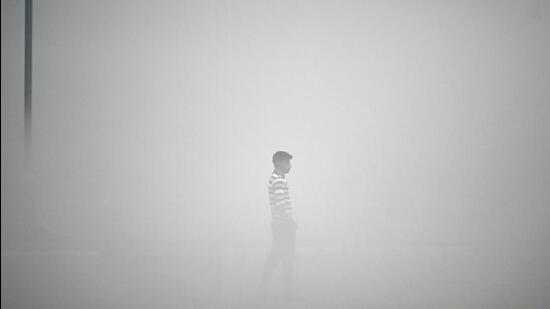
This led to a gradual spike in Delhi’s PM 2.5 concentration, which touched a peak of 570 micrograms per cubic metre at 1am – nearly 10 times the safe limit, Central Pollution Control Board (CPCB) data showed.
This spike in PM 2.5 concentration is also what led to Delhi’s air quality index (AQI) deteriorating to the ‘very poor’ category – touching a rolling average of 306 (very poor) at 11am – up from Sunday’s 4pm average reading of 218 (poor). In the absence of strong winds, this is expected to rise further, likely touching the higher end of the ‘very poor’ category by the end of this day.
Delhi’s hourly PM 2.5 concentration at 6pm was 57 micrograms per cubic metre, which rose to 78 micrograms per cubic metre at 7pm; 114 at 8pm; 179 at 9pm; 296 at 10pm; 445 at 11pm; 558 at midnight, peaking at 570 micrograms per cubic metre at 1am.
PM 2.5 levels then began to gradually dip, touching 563 micrograms per cubic metre at 2am and 556 micrograms per cubic metre at 3am, however, in the absence of strong winds, pollutants were still hanging over the city this morning, having not been able to disperse. Delhi’s hourly average PM 2.5 concentration at 10am was 304 micrograms per cubic metre – still five times over the permissible standards.
{{/usCountry}}PM 2.5 levels then began to gradually dip, touching 563 micrograms per cubic metre at 2am and 556 micrograms per cubic metre at 3am, however, in the absence of strong winds, pollutants were still hanging over the city this morning, having not been able to disperse. Delhi’s hourly average PM 2.5 concentration at 10am was 304 micrograms per cubic metre – still five times over the permissible standards.
{{/usCountry}}This sharp rise in pollution levels also reflected in Delhi’s 24-hour average AQI, which also began to gradually shoot up post 7pm. Delhi’s average AQI for the day – recorded at 4pm by the CPCB, was 218 (poor). There was a marginal increase to 219 at 6pm and to 220 at 7pm, but with firecrackers being burst widely across the city, the AQI too began to spike.
It was recorded at 222 at 8pm, 230 at 10pm, 240 at midnight, 244 at 2am, 250 by 4am, 266 by 6am, 283 at 8am and by 10am, had crossed 300 and was at 301. PM 2.5 remained the prominent pollutant, showcasing the impact of combustion sources – in this case being firecrackers.
Last year, Delhi recorded an average AQI of 302 (very poor) on October 25— the day after Diwali, which was the lowest AQI for Delhi post the festival in the last seven years. The average AQI on Diwali day, meanwhile, was 312 (very poor), with Delhi largely being helped by strong winds, which helped disperse firecracker smoke. Delhi’s average AQI is now already higher than the day after Diwali last year.
This, however, should still be lower than 2021, when the AQI was 462 (severe) the day after Diwali (November 5).
Stay updated with all top Cities including, Bengaluru, Delhi, Mumbai and more across India. Stay informed on the latest happenings in World News along with Delhi Election 2025 and Delhi Election Result 2025 Live, New Delhi Election Result Live, Kalkaji Election Result Live at Hindustan Times.
Stay updated with all top Cities including, Bengaluru, Delhi, Mumbai and more across India. Stay informed on the latest happenings in World News along with Delhi Election 2025 and Delhi Election Result 2025 Live, New Delhi Election Result Live, Kalkaji Election Result Live at Hindustan Times.