
 E-Paper



DDA study to assess water demand in land pooling areas in Delhi
In the first phase of the survey, DDA is assessing water demand in 16 priority sectors, and the report is likely to be ready by early next year

 Prefer HTon Google


A study by the city’s land-owning agency is assessing the increase in water demand due to the implementation of the land pooling policy, under which around 1.7 million new dwelling units will be constructed in the Capital’s urban extension areas, officials aware of the matter said on Sunday.
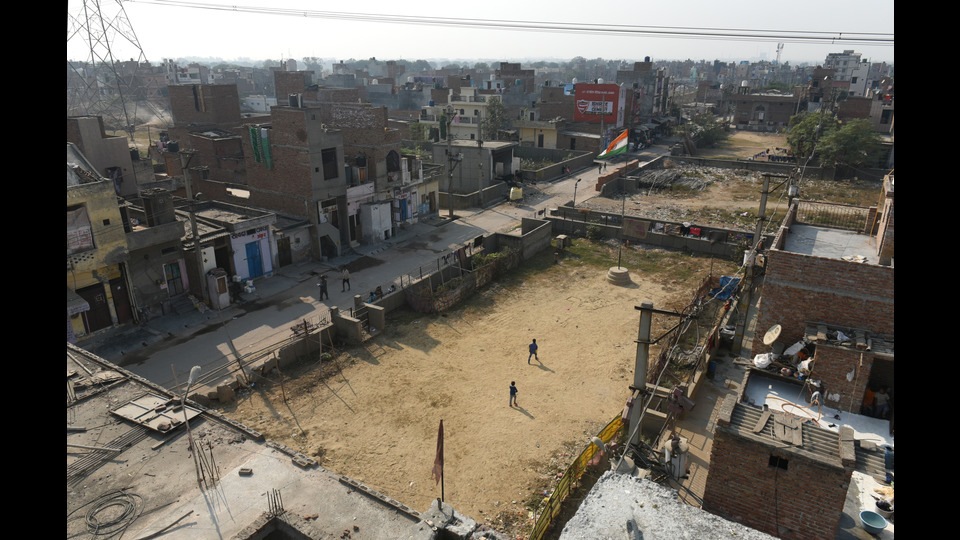
In the first phase of the survey, the Delhi Development Authority (DDA) is assessing water demand in 16 priority sectors, and the report is likely to be ready by early next year.
“We roped in an agency last year in November to assess how much additional water will be required once new developments come up. We will share the report with the Delhi Jal Board,” said a DDA official.
The land pooling policy, which was notified twice (in 2013 and 2018), will be implemented in 110 urbanised villages on the outskirts of the city. Under the policy, village residents will pool-in their vacant land to facilitate planned development of the area. DDA has divided the entire land pooling area into 109 sectors, each of between 250 and 350 hectares.
The national capital gets close to 935 million gallons daily (mgd) of regular supply, while the estimated demand is 1,236 MGD.
The 16 priority sectors are in villages in north and north-west Delhi, including Pooth Kurd, Bawana, Daryapur Kalan, Nangal Thakran, Bazidpur Thakran, Akbarpurmazra, Tigipur, Mohammadpur Ramjanpur, Mukhmalpur, Jindpur, Gadi Khasro, Kadipur, Neelwal and Hiran Kudna.
Explaining the assessment process, a senior DDA official said, “We are finding out the existing water requirement in the sector, locating the water bodies, looking at the groundwater levels etc. An assessment about increase in water demand will be done based on the available developable land in a particular sector and also the existing built up areas such as unauthorised colonies, slums, villages falling in the sector.”
The firm doing the assessment will prepare a water master plan for each sector.
“Sites for underground reservoirs will be identified, revival of water bodies, rainwater harvesting provisions, reuse of treated sewer water etc will be proposed. Each sector will be developed in such a way that there is zero discharge of waste water,” said the official.
DDA officials said that the exercise has been undertaken in a bid to avoid a situation like in Dwarka, where it took over a decade to provide regular water supply. In 2018, the DDA decided to reduce the floor-area-ratio (FAR) for residential areas from 400 to 200 citing scarcity of water.
Environment expert Diwan Singh questioned the need to develop new urban extensions when the city doesn’t have any new source of getting additional water. “It is good that they are doing an assessment. But the bigger picture is that there has been no increase in Delhi’s water supply for years and there is no source of getting additional water. Even if we harvest rainwater at a large scale, it does not even meet one-fourth of the total requirement,” he said.
He added, “We should learn from the past experience of Dwarka where it took over a decade to provide regular water supply. No new development should be allowed till arrangement has been made for water. A zero-discharge sector is a hogwash, as we don’t have any successful model.”


