
 E-Paper



Random tests, three strikes: India’s pilot drug-testing rulebook the AI2379 cannabis result has put in focus
An Air India’s pilot result after the Phuket-Delhi flight dropped 300-feet has put focus on DGCA’s 2022 rules. How India’s regime reads against the FAA and Easa

 Prefer HTon Google


The pilot-in-command of Air India Phuket-Delhi flight AI2379 that lost 300 feet of altitude on August 4, in an incident initially termed a turbulence-related, returned a confirmatory positive for cannabis, HT reported on Tuesday.
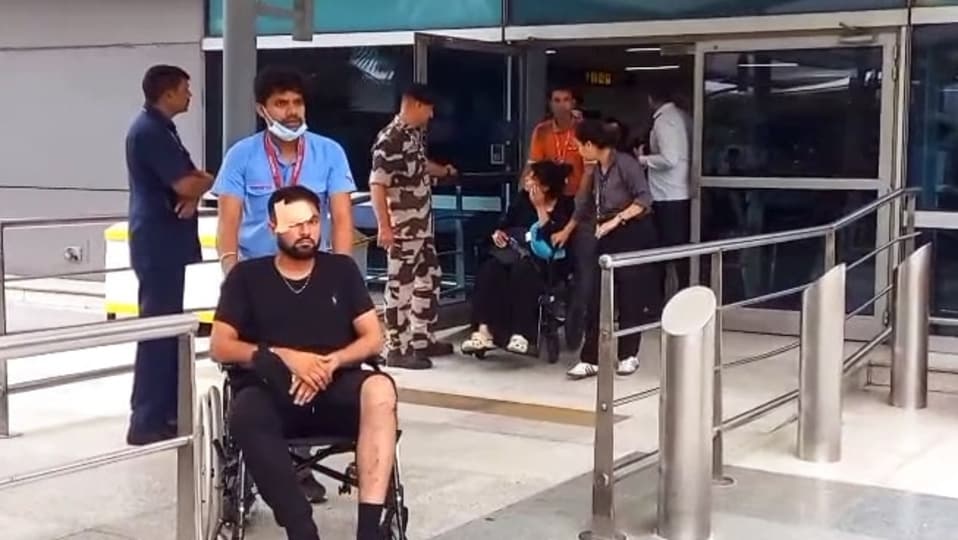
His screening test for samples collected the same day came back "non-negative" — the Directorate General of Civil Aviation's (DGCA's) term for an inconclusive first-round finding. Both the pilots have been off-rostered while the Aircraft Accident Investigation Bureau (AAIB) probes the case.
A look at what India tests its pilots for, how, how often, with what consequences, and how the country's rulebook compares with the US Federal Aviation Administration (FAA) and the European Union Aviation Safety Agency (Easa).
Also Read | Pilot on Air India's Phuket-Delhi flight that dropped 300 feet tests positive for marijuana: Sources
What the Indian rules cover
DGCA's Civil Aviation Requirement (CAR), Section 5, Series F, Part V — titled 'Procedure for examination of aviation personnel for consumption of psychoactive substances' was issued in September 2021 and took effect in January 2022.
The CAR says it was framed in line with International Civil Aviation Organisation (ICAO) policy on problematic substance use in aviation.
The rules cover flight crew, air traffic controllers (ATCO), aircraft maintenance engineers and certifying staff, trainee pilots, instructors and examiners. Only flight crew and ATCOs are covered by the mandatory rule that at least 10% of them be randomly tested every year. Other categories of employees are tested at the time of hiring, after specific safety events, and as follow-ups.
CAR requires urine sampling — split at the point of collection into two sealed containers, A and B — and prescribes testing for six classes of psychoactive substance: amphetamines and amphetamine-type stimulants, opiates and metabolites, cannabis measured as tetrahydrocannabinol (THC), cocaine, barbiturates and benzodiazepines.
A test can be triggered before an employee is hired, after an accident or serious safety incident, on a random selection basis through the year, and as follow-up testing of those who have previously tested positive.
How the test runs
Sample A is screened straight away at the collection point by personnel of a DGCA-authorised laboratory. If it comes back "non-negative", CAR requires the employee to be immediately taken off flying or safety-sensitive duties, pending the confirmatory result.
CAR uses "non-negative" — not "positive" — for the first-round result because a rapid screen can indicate the presence of a substance but cannot confirm it.
Sample B is then forwarded to a DGCA-designated laboratory, with the signatures of the sample collector, the pilot and the airline's medical personnel on the seal.
The confirmatory test uses high-complexity instrumentation — either gas chromatography with mass spectrometry (GC/MS) or liquid chromatography with mass spectrometry (LC-MS), as prescribed by CAR. The regime requires the laboratory to report directly to the DGCA’s director air safety at headquarters, and to preserve the chain of custody at every step.
Also Read | Number of injured on Air India Phuket-Delhi flight that dropped 300 feet rises to 24
A positive confirmatory result does not necessarily close the case. The airline's medical in-charge is required to consult a medical review officer (MRO), whose job is to establish whether the positive was caused by drug abuse or by a legitimate therapeutic source. Common cold and allergy medicines containing pseudoephedrine, for instance, can trigger a positive for amphetamines; some prescribed anti-anxiety medicines can trigger a benzodiazepine positive.
The Airline Pilots' Association of India (ALPA India), in an advisory issued earlier this week following the AI2379 non-negative result, urged pilots to avoid self-medicating, to consult their organisation's medical in-charge before starting any new medication, and to retain prescriptions and pharmacy receipts against a future MRO review.
The advisory also asked pilots to avoid foods with large quantities of poppy seeds — which can trigger a non-negative for opiates — and festival preparations such as bhang and thandai in the days before flying duty, given their potential to trigger a cannabis screen.
What follows a confirmed positive
If drugs consumption is confirmed the first time, the employee is referred by the airline to a specialist doctor, counsellor or de-addiction centre for rehabilitation, in consultation with the MRO. Return to duty requires a fresh negative test and a fitness certificate from the medical in-charge. A second time positive, after the pilot has been returned to duty following a first, brings a three-year suspension of the flying licence. A third leads to cancellation of the licence.
Refusal to submit to a test is treated by the CAR as near-equal in seriousness to a positive result. The employee is removed from duty and given 48 hours to clear a test. Failure to clear that test within the 48-hour window triggers a one-year licence suspension and mandatory rehabilitation. A second refusal, or a positive after a first refusal, brings a three-year suspension. Further violations will cost a pilot the flying licence.
And every case, positive or refusal, must be reported to the DGCA within 24 hours.
Alcohol test — the older, stricter regime
Alcohol has its own, separate rulebook, which is older and simpler than the drug regime. The bar sits in Rule 24 of the Aircraft Rules, 1937, which prohibits any person from acting as, or being carried in, a crew capacity while under the influence of alcohol.
The DGCA's rulebook — the alcohol-testing CAR, updated to Revision 5 on 9 February 2026 — sets a 12-hour dry period before duty and requires a pre-flight breath test. Any detectable alcohol grounds the pilot.
The reason alcohol is policed by breathalyser and drugs by a two-container, screen-then-confirm design is that the two substances behave very differently once consumed.
Alcohol clears the bloodstream in hours and a breath device gives an immediate answer. Cannabis metabolites — chiefly 11-nor-9-carboxy-THC (THC-COOH), an inactive breakdown product of cannabis that the body excretes in urine — can remain detectable in urine for days in occasional users and for several weeks in regular ones. That gap between the moment of ingestion and the moment of detection is why the confirmatory test matters.
Also Read | Air India turbulence scare: Should you worry on flights? What experts say on causes, precautions
Norms in the US
The US regime is set out in the FAA's drug and alcohol testing rulebook, which follows the procedures laid down by the US Department of Transportation for all federally regulated transport workers, from pilots to truck drivers.
Under the DoT procedure, US pilots are tested for five kinds of substances — marijuana, cocaine, opiates, amphetamines and phencyclidine (PCP). It does not include barbiturates or benzodiazepines, which are part of India’s panel.
But the FAA tests its pilots much more often. Each year, at least 25% of safety-sensitive aviation employees — including all flight crew — must be randomly tested for drugs, and 10% for alcohol. India's random-testing minimum, by comparison, is 10% for drugs.
The FAA reviews these annual random-testing percentages every year, based on how many pilots and other aviation staff across the industry tested positive the previous year.
In a Federal Register notice dated December 5, 2025, the agency held both rates same for 2026, citing an industry-wide random drug-test positive rate of 0.816% for 2024, which is below the 1% threshold that would have forced the FAA to double its random-drug-testing minimum from 25% to 50% of the workforce.
The alcohol violation rate for 2024 was 0.131%, well below the 0.5% threshold.
The FAA's alcohol regime, unlike India's, is not zero-tolerance in numerical terms. A blood alcohol concentration of 0.04 or higher is a positive result. A reading between 0.02 and 0.039 grounds the employee for at least eight hours but is not a violation.
FAA rules require verified drug positives, alcohol readings of 0.04 or higher, and any refusal by an employee to take a drug or alcohol test, to be reported to the FAA within two working days. For pilots, the violation is also entered into the Pilot Records Database. Return-to-duty runs through a substance abuse professional, and pilots specifically go through the FAA-recognised Human Intervention Motivation Study (HIMS) — a programme for treatment and long-term monitoring.
Also Read | High with ‘10 edibles’ man tries to open Dallas bound American Airlines' door mid-air
The European example
Europe's regime was built in the shadow of a specific accident. On March 24, 2015, the co-pilot of Germanwings flight 4U9525 flew an Airbus A320 into the French Alps, killing all 150 on board. The final report by the Bureau d'Enquêtes et d'Analyses pour la sécurité de l'aviation civile (BEA) — France's civil aviation accident investigation authority — concluded that the crash was a deliberate act.
Easa's response was Commission Regulation (EU) 2018/1042, which amended the bloc's air-operations rulebook, Commission Regulation (EU) No 965/2012, and applied from February 2021.
The regulation puts three obligations on European commercial air-transport operators. They must carry out a psychological assessment of flight crew before flying commercially.
They must give crew access to a support programme — in practice, a peer-support programme in which trained pilot volunteers help colleagues under professional supervision. And they must operate a policy on prevention and detection of psychoactive-substance misuse, including systematic testing of flight and cabin crew on employment.
A separate provision empowers national aviation authorities to carry out random alcohol testing of crew as part of ramp inspections — that is, the country's regulator does the random pull, not the airline.
Easa's regulation sets no numeric alcohol threshold in the rulebook. It requires operators and states to ensure that no person enters or remains in an aircraft under the influence of psychoactive substances to an extent that safety is likely to be endangered. A confirmed positive, or a refusal to cooperate with a test, will result in removal from duty.
In India, there is no equivalent, in regulation, of the pre-flight psychological assessment or the peer-support programme that Easa introduced after Germanwings.
Also Read | Phuket-Delhi flight controversy: Pilot failed drug test? Air India breaks silence after 300-ft drop
What is not yet known
The AAIB has yet to determine what caused AI2379's 300-foot altitude loss on August 4. The co-pilot's preliminary defect report, HT reported, has flagged multiple technical events, including an autopilot disconnect, a stall warning and a flight-control ECAM message.
So, the confirmatory drug test speaks only to the presence of a substance in the pilot's system. It does not on its own tell investigators what pushed the episode on the aircraft that day. Only a comprehensive AAIB probe report is likely to answer this question.
Civil aviation minister Ram Mohan Naidu, briefing reporters after his meeting with Air India CEO Campbell Wilson on August 11, said the ministry was awaiting the AAIB report before drawing conclusions. In the meantime, he added, "if there is anything related to substance abuse or substance-use and if we find that there needs to be some tweaking in the existing regulation, we are ready to do that as well".


