
 E-Paper



Defunct Doppler radars hit weather predictions in Delhi
DWRs at Lodhi Road and Ayanagar have both been out of operation for over a month, making forecasts reliant on the remaining radar at Palam


Despite almost a fortnight elapsing since the onset of monsoon in Delhi, two of the Capital’s three Doppler weather radars (DWRs), used to track clouds and predict rain, are not functional, officials aware of the matter said.
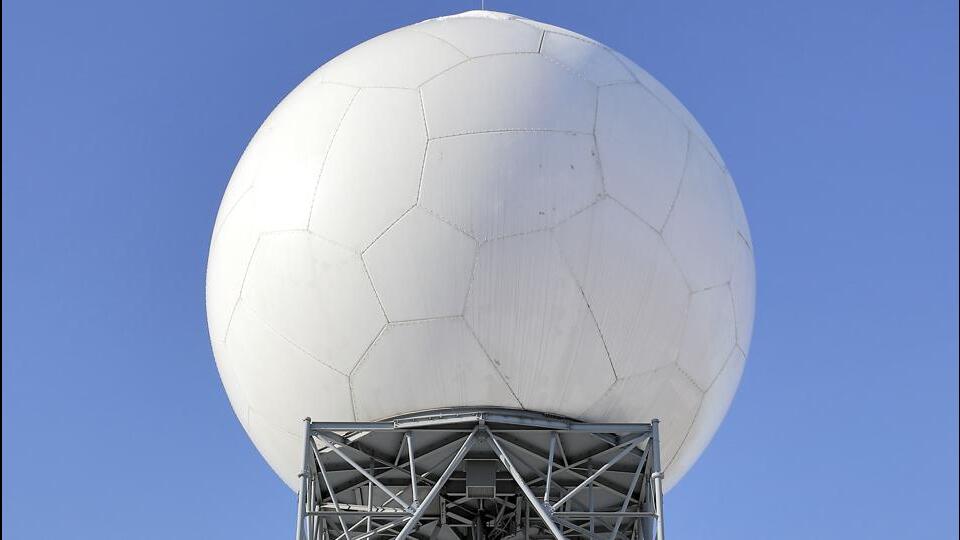
Delhi has three DWRs, at Palam, Lodhi Road, and Ayanagar, which have ranges of 400km, 250km, and 100km, respectively. The DWRs at Lodhi Road and Ayanagar have both been out of operation for over a month now, making forecasts reliant on the remaining radar at Palam.
The India Meteorological Department (IMD) attributed this to routine maintenance, but added that the Doppler at Ayanagar is likely to be made operational soon.
A DWR sends radio waves from its antenna, which hit clouds and bounce back, allowing it to gauge how far rain clouds or rainfall activity actually are from the city. Based on the distance and trajectory of the clouds, IMD forecasts when rainfall will hit a particular point in the city, along with the intensity expected.
Experts said that while the Palam DWR has the largest radius—not impacting monsoon forecasts significantly—the Doppler radars at Lodhi Road and Ayanagar have a shorter radius and thus, allow for more precise short-term forecasts, allowing weather forecasters to gauge more accurately which areas are likely to receive more rain.
“Lodhi road has been out of operation for nearly two months now. Ayanagar has also been out of operations for over a month. The two in theory work together to add to the Palam doppler by giving a more precise estimate on how fast clouds are moving and the storm intensity. If one has at least Lodhi road available alongside Palam, forecasts, along with the possible impact time and the area being affected becomes more precise,” said Ashwary Tiwari, a meteorologist who runs the page IndiaMetSky on X.
DWRs operate within the S, C and X bands of the microwave spectrum, allowing wavelengths ranging from 2.4 to 15 cm to be sent out to detect different weather systems. While the Ayanagar’s DWR has an X-band radar, the Lodhi Road one uses a C-band, and the Palam radar uses an S-band.
M Mohapatra, director general of IMD, however, said even with the two Doppler radars out for maintenance, there were no challenges to forecasting weather in Delhi for this monsoon. “We will operationalise Ayanagar soon,” Mohapatra added.
Last monsoon, both Palam and Lodhi Road radars were out of operation, with only the one at Ayanagar operational, when “almost a cloudburst” was seen in Delhi with 91mm precipitation recorded in a single hour between 5am and 6am, and over 228mm in a 24-hour window. The IMD had failed to forecast such an intensity, owing to the short radius of Ayanagar.


Stay updated with all top Cities including, Bengaluru, Delhi, Mumbai and more across India. Stay informed on the latest happenings in World News along with Delhi Election 2025 and Delhi Election Result 2025 Live, New Delhi Election Result Live, Kalkaji Election Result Live at Hindustan Times.


