New Delhi The Centre for Science and Environment (CSE) on Thursday released an analysis of winter pollution in Delhi since 2015, finding that this October has had the cleanest start to the winter season with respect to PM 2.5 presence since the data was compiled.
For the purpose of the study, CSE analysed PM 2.5 concentration for the period starting January 1, 2015 to October, 17, 2022, with winter being defined as the period between October 1 and February 28 in any given year. The analysis used real-time data available from the current working air quality monitoring stations in Delhi-NCR, covering 81 continuous ambient air quality monitoring stations (CAAQMS) spread across the region.
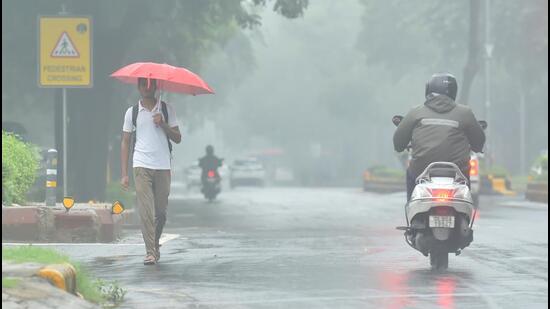
Anumita Roychowdhury, executive director, research and advocacy at CSE, said this clean start to the winter has largely been due to extended rainfall.
“If we analysed the air quality index (AQI) only based on PM 2.5 concentration, then there were a total of five good air days in the first two weeks of October this year. However, the PM 2.5 concentration has quickly risen since then and has already touched ‘poor’ levels, crossing the 90 micrograms per cubic metre concentration,” Roychowdhury said.
The CSE analysis also showed that the last three winter seasons in Delhi had a marked improvement compared to the winters between 2015 and 2018 -- the winter seasons of 2019-20, 2020-21 and 2021-22 averaged a PM 2.5 concentration of 150-160 micrograms per cubic metre, while it was around 180-190 micrograms in the winters from 2015-2018, the analysis said..
{{/usCountry}}The CSE analysis also showed that the last three winter seasons in Delhi had a marked improvement compared to the winters between 2015 and 2018 -- the winter seasons of 2019-20, 2020-21 and 2021-22 averaged a PM 2.5 concentration of 150-160 micrograms per cubic metre, while it was around 180-190 micrograms in the winters from 2015-2018, the analysis said..
{{/usCountry}}The winter PM 2.5 average for 2021-22 was found to be 10-30% lower on average when compared to the winter of 2020-21. Ghaziabad registered a 30% improvement -- the highest among NCR cities – followed by Greater Noida (28%), Noida (23%), Faridabad (16%), Delhi (12% and Gurugram (11%).
These levels, however, are still 2.5 times the national 24-hour standard of 60 micrograms per cubic metres.
“Overall, long-term data shows that improvement made in reducing pollution levels during the winter season has stagnated in last three years. Smog episodes are again starting to get longer and pose dire threat to public health not just in Delhi but whole of NCR. Delhi’s seasonal air quality for winter used hover around 180-190 µg/m3 before the pandemic and for last three winters it has come down to 150-160 µg/m3. Despite the improvement the seasonal average is still over 150 per cent above the 24-hour standard and almost four times the annual standard,” the report said.
Roychowdhury said the analysis will help identify long-term trends for the winter season.
“The intensity of winter pollution and severity of smog episodes will depend on the effectiveness of the long-term multi-sector action so far in the entire region of Delhi and NCR and also on the enforceability of the short-term emergency action. Only the effectiveness of the air pollution control measures targeting all key sources will determine if the winter pollution trend that had stabilised post-pandemic, will continue to hold and improve or worsen further,” she said.
Stay updated with all top Cities including, Bengaluru, Delhi, Mumbai and more across India. Stay informed on the latest happenings in World News along with Delhi Election 2025 and Delhi Election Result 2025 Live, New Delhi Election Result Live, Kalkaji Election Result Live at Hindustan Times.
Stay updated with all top Cities including, Bengaluru, Delhi, Mumbai and more across India. Stay informed on the latest happenings in World News along with Delhi Election 2025 and Delhi Election Result 2025 Live, New Delhi Election Result Live, Kalkaji Election Result Live at Hindustan Times.