E-Paper



Delhi pollution: Delhi govt asks CAQM to reopen schools
Delhi’s environment minister Gopal Rai on Monday said that since pollution levels in the Capital have improved this month, they would recommend to CAQM to reopen schools for students from Class 6 immediately

 Prefer HTon Google


The Delhi government will send a submission to the Commission for Air Quality Management (CAQM) in the National Capital Region and adjoining areas that educational institutions for students from Class 6 be reopened with immediate effect, while physical classes for primary schoolchildren be resumed from December 20 since pollution levels in the Capital have improved this month, Delhi’s environment minister Gopal Rai on Monday said.
Rai also said the government will continue the ban on entry of diesel and petrol trucks to Delhi until further directions are issued, and hold a review meeting for the ban on construction activities on December 16.
“Delhi’s air quality has started to improve and the situation is not as severe as it was post-Diwali. Delhi’s air quality index (AQI) levels between December 1 and December 12 have been hovering between 250 and 300 and therefore, a review meeting with all the departments was held today (Monday) to analyse the possible measures that can be taken around the restrictions imposed to curb air pollution,” Rai said.
The minister said a proposal was sent by the education department, which will now be sent to CAQM through Delhi’s environment department.
The commission is expected to hold a review meeting later this week to decide when and how to lift the existing curbs on air pollution that have been imposed across NCR, including the closure of schools and colleges, ban on construction activities, and the closure of some thermal power plants, among other restrictions.
The Supreme Court on Friday directed CAQM to take a decision on relaxing the restrictions imposed within a week’s time, noting that the air quality had “started improving” in the region.
Schools have been shut four times since March last year – twice owing to concerns over Covid-19, and twice since November because of the pollution problem. Schools were allowed to call all students for in-person classes from November 1 but the classes were suspended again for a week on November 13, after the apex court pulled up authorities over the city’s poor air quality. Schools then reopened on November 29 as pollution eased marginally, but were shut again on December 2.
The next day, on December 3, the Supreme Court clarified that it did not ask the government to shut schools, but had simply asked the reasons for change in the government’s stance in regard to schools.
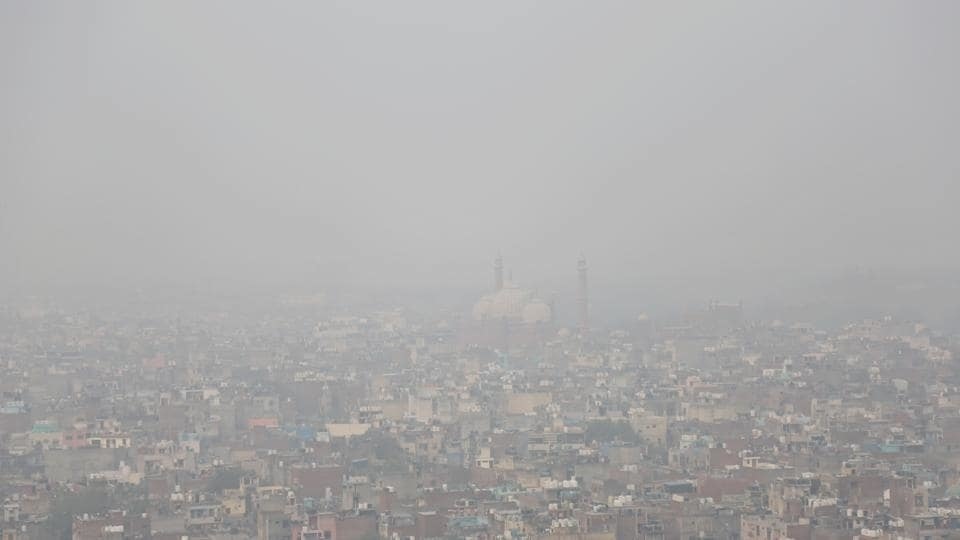
Delhi’s air quality has shown a slight improvement since the start of December, with only one ‘severe’ air day during this period. The air quality has largely hovered between ‘poor’ and ‘very poor’. In comparison, Delhi recorded 11 ‘severe’ air days in November.
A CAQM official said they were also listening to applications for possible exemptions to be given to various industries, with a meeting to decide relaxation to be taken this week. “All such applications will be analysed and the Supreme Court has given us a week’s time to look at the best way to reopen. A decision will be taken accordingly,” said the official, speaking on condition of anonymity.
For construction activities, Rai said the government met several construction agencies on Monday, but added that the decision to exempt them will lie with the commission. “We have asked these agencies to write to CAQM, but we will also be holding a detailed review on December 16 at 12pm, where agencies can submit reasons for a possible exemption to resume construction work. We will then be sharing this with CAQM,” he added.
The minister stressed that other campaigns to control pollution locally will continue in Delhi, with 6,953 inspections carried out so far as part of the anti-dust campaign. Out of these, 597 locations were issued notices, with fines of ₹1.65 crore imposed so far. “As part of the campaign against open burning, we have inspected 16,580 sites so far, with 2,490 notices and a total fine of ₹46.96 lakh issued so far.” the minister said, adding that agencies in Delhi will also continue to sprinkle water on roads.
Rai said as part of the Green Delhi app, 6,975 complaints had been received so far by the Delhi government since its launch on October 5, with 5,686 (81%) resolved. “Our campaign against polluting cars has meant 19.5 lakh cars have been inspected this winter season and around 49,000 cars have also been fined for not having a valid PUC certificate,” he added.
Sudha Acharya, the chairperson of the National Progressive Schools’ Conference, which has over 120 private Delhi schools as its members, said prolonged closures had thrown the academic cycle out of gear and hurt learning. “We don’t know by when will we able to start teaching the students in class 10 and 12...With so many school closures, we are left with little time to prepare students for the remaining part of the board exams,” said Acharya, who is the principal of ITL School in Dwarka.