
 E-Paper



Multiple strands, piles of evidence: Inside the Delhi riots probe
The clash snowballed into full-fledged Hindu-Muslim rioting between February 23 and 27 in parts of north-east Delhi. Fifty-three people were killed , 581 injured

 Prefer HTon Google


A year ago to the day, a clash between supporters and opponents of the Citizenship (Amendment) Act, or CAA, below the Jafrabad Metro station in north-east Delhi triggered one of the worst bouts of rioting in Delhi in recent years.
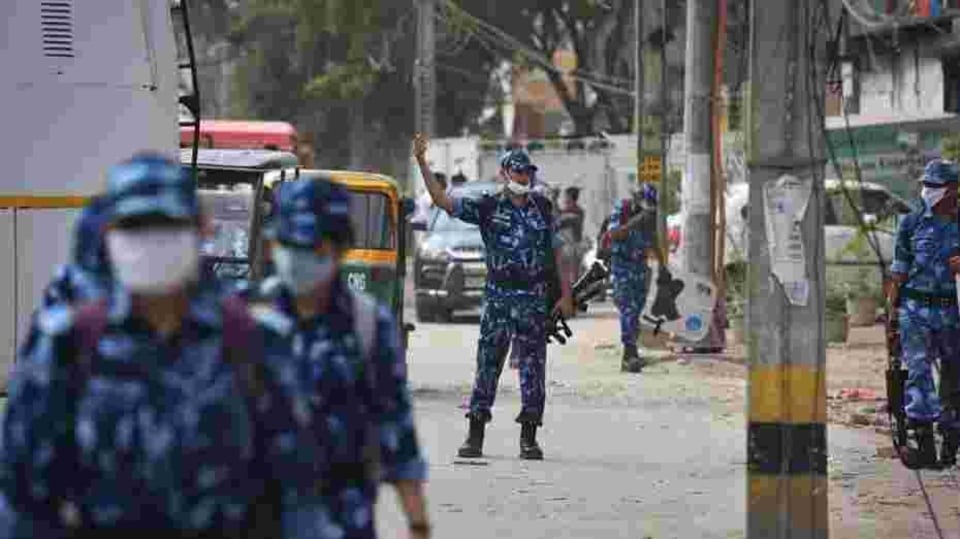
The clash snowballed into full-fledged Hindu-Muslim rioting between February 23 and 27 in parts of north-east Delhi. Fifty-three people were killed , 581 injured.
The following month, even as the country came to grips with the Covid-19 pandemic, Delhi Police started what would be one of the longest and most controversial investigations in recent years.
The police have claimed that the riots had been planned by prominent protestors against the CAA, which seeks to fast-track citizenship for members of minorities like Hindus, Sikhs, Christians, Buddhists, Jains and Parsis from Afghanistan, Bangladesh and Pakistan, the first time citizenship has been linked to faith in a professedly secular nation.
However, much before the first stones were hurled by supporters and opponents of the new Citizenship law below the Jafrabad Metro station at 7. 30pm, on February 23, 2020, Delhi had already reported at least nine incidents of rioting during the anti-CAA protest.
The police have alleged that the first two incidents of rioting outside Jamia Millia Islamia and around New Friends Colony was the “beta version” executed by the key conspirators before the February rioting two months later in north-east Delhi.
Linking the violence in the December and the February rioting, the police wrote in one of the charge sheets: “..every character who gained notoriety in February 2020 had been noticed as being present in the incidents of December 2019.”
Joining the dots
Of the 472 murders reported in 2020, at least 53 (11%) murders were victims of the Delhi riots. The police registered 755 cases, of which 697 were probed by the local police, 57 by the crime branch and one by the special cell. The local police investigated incidents of rioting and arson, the crime branch probed heinous cases (including all 53 murders) and the special cell is probing an alleged conspiracy behind the riots.
The special cell has arrested 21 people, including student leaders such as Natasha Narwal, local politicians Tahir Hussain and Ishrat Jahan, university student Sharjeel Imam, and activists like Umar Khalid and Khalid Saifi who the police say planned and orchestrated the riots. They have been arrested and charged under stringent sections of the sedition law Unlawful Activities (Prevention) Act.
Of the 1,825 people arrested, at least 40 have got bail till date. But these 40 do not include the 21 people mentioned above. The 40 are those who were arrested for isolated incidents of rioting.
The police have alleged that on January 8, 2020, more than a month before the riots, Umar Khalid had met AAP councillor Tahir Hussain at the Shaheen Bagh sit-in protest site to plan the riots. According to Delhi Police, the alleged conspirators had planned that the protests would dovetail with then US President Donald Trump’s official visit to India to create an international embarrassment for India and defame the country.
The suspects, denying the police’s claims, have said that as of January 8, news of the US President’s impending visit had not been published.
Videos, WhatsApp chats, protected witnesses
In all these months, the police have filed at least 400 charge-sheets against the 1,818 arrested suspects. A charge sheet is a document submitted to the court that lists charges and evidence against suspects. A trial starts in a case only after a court takes cognizance of the charge sheet.
An analysis of the charge-sheets shows that the police have relied on CCTV footages, WhatsApp chats and protected witnesses as evidence.
The police have taken help of at least 15 people who were insiders at the anti-CAA protest sites before the riots and have claimed to have seen or heard the main conspirators plan the violence. Referred to only by pseudonyms such as Alpha, Beta, Silver, Gold, James and Bond, these witnesses are currently in protective custody and are the key to the police’s claims that the violence was a “planned conspiracy”.
Apart from such witnesses, police also have the WhatsApp chats that the suspected main conspirators were part of during the riots. In its 7,500-page charge-sheet, the special cell attached at least 100 WhatsApp chats.
Controversy
Many civil society groups have also filed petitions urging courts to intervene alleging that the police did not act against certain people who were involved in triggering the riots. Several of those arrested also accused police of conducting a biased probe against anti-government voices.
Social activist Harsh Mander has filed a petition against Bharatiya Janata Party (BJP) leader Kapil Mishra for making an inflammatory speech which allegedly led to the riots.
Another person has filed a similar petition against Mander and other persons for delivering allegedly inflammatory speeches before the riots broke out. The courts are hearing the matter.
Police spokesperson, deputy commissioner of police Chinmoy Biswal, said police arrested 869 Hindu rioters and 956 from Muslim community. “The numbers speak for themselves. Our investigation is absolutely fair and impartial, replying only on credible, material and scientific evidence. We are also working to solve the unsolved cases,” he said.
Former Delhi police commissioner Neeraj Kumar believes investigations of the riots is one of the best conducted by the department till date. “Newer scientific technologies were adopted...unlike the past, when the accused were only those caught on the spot, Delhi police have unearthed the conspiracy and arrested the key accused.”


