
 E-Paper



Delhiwale: Before we talk of the rising inches
Most Delhi residents notice the Yamuna only during monsoon floods, yet it shapes the city’s history and landscape, reflecting a lost connection.

 Prefer HTon Google


Most Delhiwale are reminded of the Yamuna only when the monsoon arrives, the river spills across its plains, and flooding takes over the front pages of our newspapers. (A. K. Ramanujan’s A River best encapsulates this annual phenomenon; a line from the poem inspires the title of this dispatch).
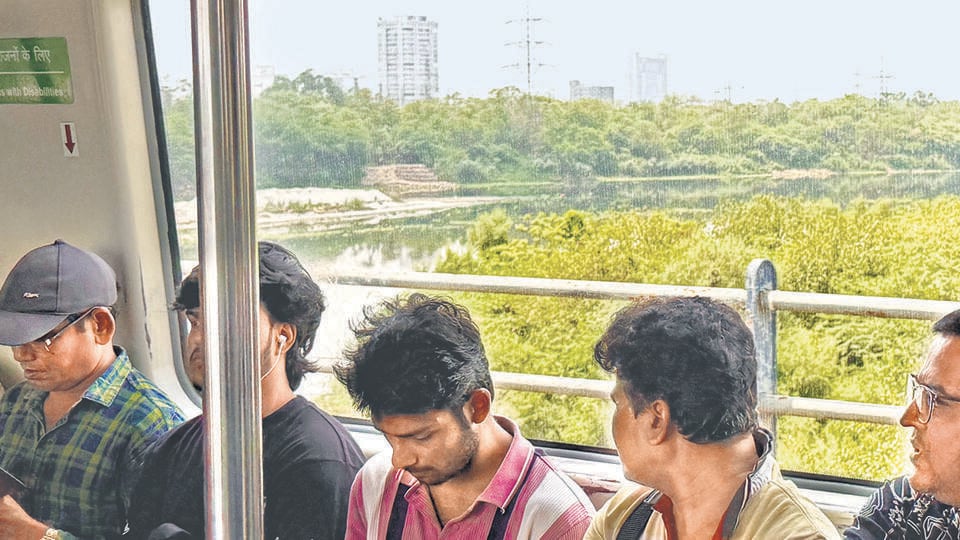
Just before the rains, as now, the city’s Yamuna appears narrow, lazy and sluggish. Buffaloes graze on its temporary islands. The blackish water giving no hint of the river’s bonds to the city. Yet this may be a suitable time to see the Yamuna not as a crisis but as one of Delhi’s defining landscapes.
Coming down from the Himalayas, the river flows for 20 kilometres through Delhi khaas, receiving waste from 20 principal drains, and passing beneath 15 road bridges, including the modernist Signature Bridge, whose cables evoke the strings of a harp. Further south, the DND Flyway offers the finest view of the Delhi Yamuna. Here the river widens, edged by tall grass and dense trees; while the distant business towers of Noida shimmer in the June heat.
Sadly, such panoramic views go unseen. Most citizens experience the great Yamuna merely as a commuting thing (see photo of the Blue Line Metro crossing the river). Indeed, for a long time, the “Yamuna paar” Dilli on the eastern side of the river used to be dismissed as a land bereft of cultural landmarks. Those neighbourhoods today have become thriving city centres having their own malls, multiplexes, clubs, cultural institutions, rail stations and lately, airports.
That said, Delhi once shared a much closer relationship with the Yamuna. For instance, centuries-old paintings often puzzle the viewer by showing the river flowing beside the Red Fort. Doesn’t the Red Fort overlooks Ring Road?! When the fort was built, however, it stood on the riverbank. Over time, the Yamuna shifted eastward. Take nearby Neeli Chhatri at the foot of Salimgarh Fort. It was Emperor Humayun’s beloved riverside pavilion, where he is said to have read or simply watched the river.
Long before Humayun, Sufi saint Hazrat Nizamuddin Auliya daily looked out over the Yamuna. His retreat, the Chilla, stood beside the river. One story tells of him enquiring a woman why she drew water from a well instead of the Yamuna. She replied that its water was so delicious it made her hungry.
Near the aforementioned Chilla stands the Humayun’s Tomb complex, where also stands the Nila Gumbad monument, originally built on an island in the Yamuna. Over time, as the river shifted course, the monument became landlocked. In fact, the nearby Hazrat Nizamuddin railway station stands where the river was.
The Yamuna also marks the end of life for many of us Delhiwale. Nigambodh Ghat, the city’s principal cremation ground, stands on its banks.


Stay updated with all top Cities including, Bengaluru, Delhi, Mumbai and more across India. Stay informed on the latest happenings in World News along with Delhi Election 2025 and Delhi Election Result 2025 Live, New Delhi Election Result Live, Kalkaji Election Result Live at Hindustan Times.


