Curbs like bans on diesel generators and the use of coal-fired ovens, and activities such as routine mechanised sweeping should begin in Delhi and the National Capital Region (NCR) on October 15 irrespective of the air quality at the time, suggested the members of an air quality commission in a meeting on Tuesday, recommending that all ‘poor’ and some ‘very poor’ protocols of the Graded Response Action Plan (Grap) be activated.
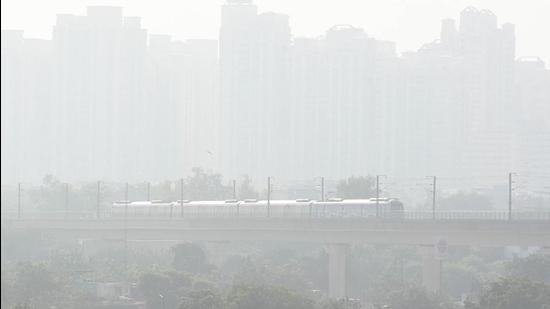
The recommendations were by a subcommittee of the Commission for Air Quality Management in Delhi-NCR and adjoining areas (CAQM), according to documents seen by HT. The panel will take a final call on what restrictions and activities to finally activate in a meeting on Thursday.
“The subcommittee was of the view that in addition to actions under ‘poor’ to the ‘moderate’ category, some of the actions under the ‘very poor’ category should also commence from October 15, though the air quality index (AQI) is expected to remain in the ‘satisfactory’ to the ‘moderate’ category range in the national capital,” said the CAQM recommendations.
Grap is a set of emergency measures approved by the Supreme Court in 2016 that come into effect when the air quality index (AQI) in Delhi and the NCR breach certain thresholds. The first of these is the ‘moderate to poor’ range, when the use of coal and firewood in restaurants and open kitchens is banned, strict checks are carried out to control garbage fires and regular mechanised sweeping is done.
These restrictions and pollution-control measures become stricter and more intense as the different thresholds are crossed.
{{/usCountry}}These restrictions and pollution-control measures become stricter and more intense as the different thresholds are crossed.
{{/usCountry}}The Capital and its adjoining areas are plunged into a health crisis in the days leading to winter as winds bring in toxic smoke from farm fires in neighbouring Haryana and Punjab. Local pollution, such as dust and transport emissions, as well as a dip in the temperature, make the problem worse, often pushing pollution levels to alarming levels.
On Tuesday, the 24-hour average air quality index (AQI) was at 171, a marginal improvement from 177 a day ago. An AQI between zero and 50 is considered ‘good’, 51 and 100 ‘satisfactory’, 101 and 200 ‘moderate’, 201 and 300 ‘poor’, 301 and 400 ‘very poor’, and 401 and 500 ‘severe’. Weather officials have predicted some improvement in the air quality this week due to strong winds and rains expected later.
The CAQM now monitors air pollution in the national capital and, in the meeting on Tuesday, suggested Grap measures come into force pre-emptively to avert a health hazard.
A senior Union environment ministry official said the CAQM subcommittee will take a decision on which measures will finally be enforced.
The CAQM’s recommendations to be implemented from October 15 also include the augmentation of bus and Metro services, strict action against open garbage burning and dumping around landfills, ensuring that brick kilns in Delhi and NCR are shut, enforcing regulations in industries and power plants, regular mechanised sweeping, action against visible pollution and drives to check pollution under control (PUC) certificates. Also, the panel suggested that constructions sites must be under scrutiny for dust suppression measures and congestion-prone stretches are manned by traffic police personnel to ensure there are no jams.
“Some measures from the ‘very poor’ category have been recommended to come into force from October 15. In the meeting it was decided that considering that the air quality is still in the ‘satisfactory’ to ‘moderate’ zone, there will be a review meeting on the diesel generator set ban and there will also be a meeting with the municipalities. It will be seen how prepared they are to impose the hiked parking fees,” said a senior official, who was part of the meeting.
Experts said pre-emptive action was imperative to ensure pollution sources are kept under control throughout the winter season.
“We need to do everything necessary to control the local pollution sources. Now the air quality is under control because of favourable conditions, but things will get bad and we need to be prepared,” said Anumita Roychowdhury, executive director (research and advocacy), Centre for Science and Environment (CSE).
Stay updated with all top Cities including, Bengaluru, Delhi, Mumbai and more across India. Stay informed on the latest happenings in World News along with Delhi Election 2025 and Delhi Election Result 2025 Live, New Delhi Election Result Live, Kalkaji Election Result Live at Hindustan Times.
Stay updated with all top Cities including, Bengaluru, Delhi, Mumbai and more across India. Stay informed on the latest happenings in World News along with Delhi Election 2025 and Delhi Election Result 2025 Live, New Delhi Election Result Live, Kalkaji Election Result Live at Hindustan Times.