
 E-Paper



Kejriwal gives nod for legalising bike taxis in Delhi; file sent to LG
The policy makes it mandatory for all cab aggregators to register with the government and obtain licences for operation


Chief minister Arvind Kejriwal has approved a policy to regulate cab and delivery aggregators operating in the Capital, officials aware of the development said on Tuesday, adding that the file for the scheme has been sent to lieutenant governor (LG) VK Saxena before it can be promulgated.
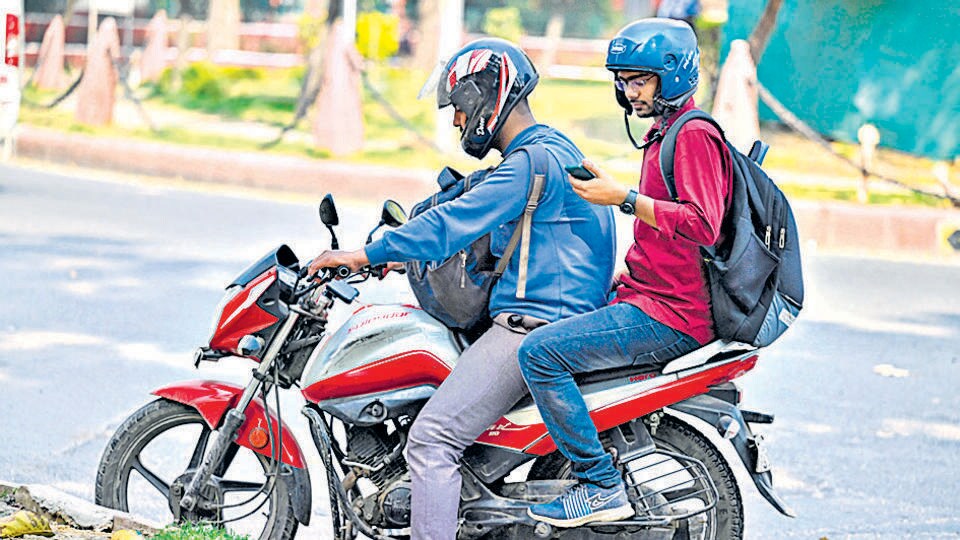
The policy, titled Delhi Motor Vehicle Aggregator and Delivery Service Provider Scheme, 2023, paves the way for electric bikes, or e-bikes, to operate as taxis in the Capital, officials aware of the contents of the file said. It also makes it mandatory for all cab aggregators to register with the government and obtain licences for operation, carry out phased electrification of their fleet, ensure users’ grievance redressal, develop a rating mechanism, and train drivers who get bad ratings by passengers, the officials said.
HT reached out to the LG, but an official in his office said they were yet to receive the policy file.
The development came after the Supreme Court in June brought the operation of bike taxis in the Capital to a halt, staying Delhi high court orders that permitted aggregators to ply private two-wheelers as taxis until the state government notifies pertinent regulations.
A Delhi government official said that, once the scheme comes into force, it will apply to all aggregators, delivery service providers, and e-commerce entities operating in Delhi which have 25 or more motor vehicles in their fleet — including two-wheelers, three-wheelers, and four-wheelers — and who use a digital intermediary such as an app or web portal to connect with consumers.
Other proposals in the policy include the setting up of 24x7 control rooms, the live tracking of vehicles, and passenger service badges for taxi hailing services to enhance users’ safety. However, the scheme is silent on the regulation of fares by aggregators. “A flexibility in surge pricing may be allowed to passenger service aggregators,” said a transport department official, adding that till now, no decision has been taken on it.
Kejriwal called the scheme a significant milestone in Delhi’s fight against pollution. “With this, Delhi has become the first state/UT in the country and among very few cities globally, to mandate a time-bound transition of commercial vehicle fleets of aggregators, delivery service providers and e-commerce entities to zero-emission electric vehicles. The scheme also paves the way for the launch of e-bike taxi services in Delhi. Delhi government is committed to take all possible measures to improve transport services, while promoting green mobility,” he said in a statement.
HT reached out to cab aggregators Ola and Uber for comments on the move by the Delhi government, but no response was immediately available.
Amit Bhatt, managing director (India) of the International Council on Clean Transportation, said, “For passengers’ convenience and to check pollution, aggregators’ rules are important. However, the government should ensure that the policy brings an enabling ecosystem for aggregators.”
Transport minister Kailash Gahlot said the scheme signifies a step towards achieving clean and efficient transportation. “By laying down clear guidelines for the transition to EVs and setting high standards for service quality, this scheme is poised to usher in a new era of transportation services in Delhi,” he said.
Transport commissioner Ashish Kundra said: “This is a space where pace of technology disruption has outstripped regulation. A light touch regulation, which strikes a balance between customer convenience, safety, sustainability was the need of the hour.”


