E-Paper



Delhi’s first night food street in the works near Salmgarh Fort
The Municipal Corporation of Delhi is planning to complete the night food street project before the next round of G20 meetings in Delhi set for September

 Prefer HTon Google


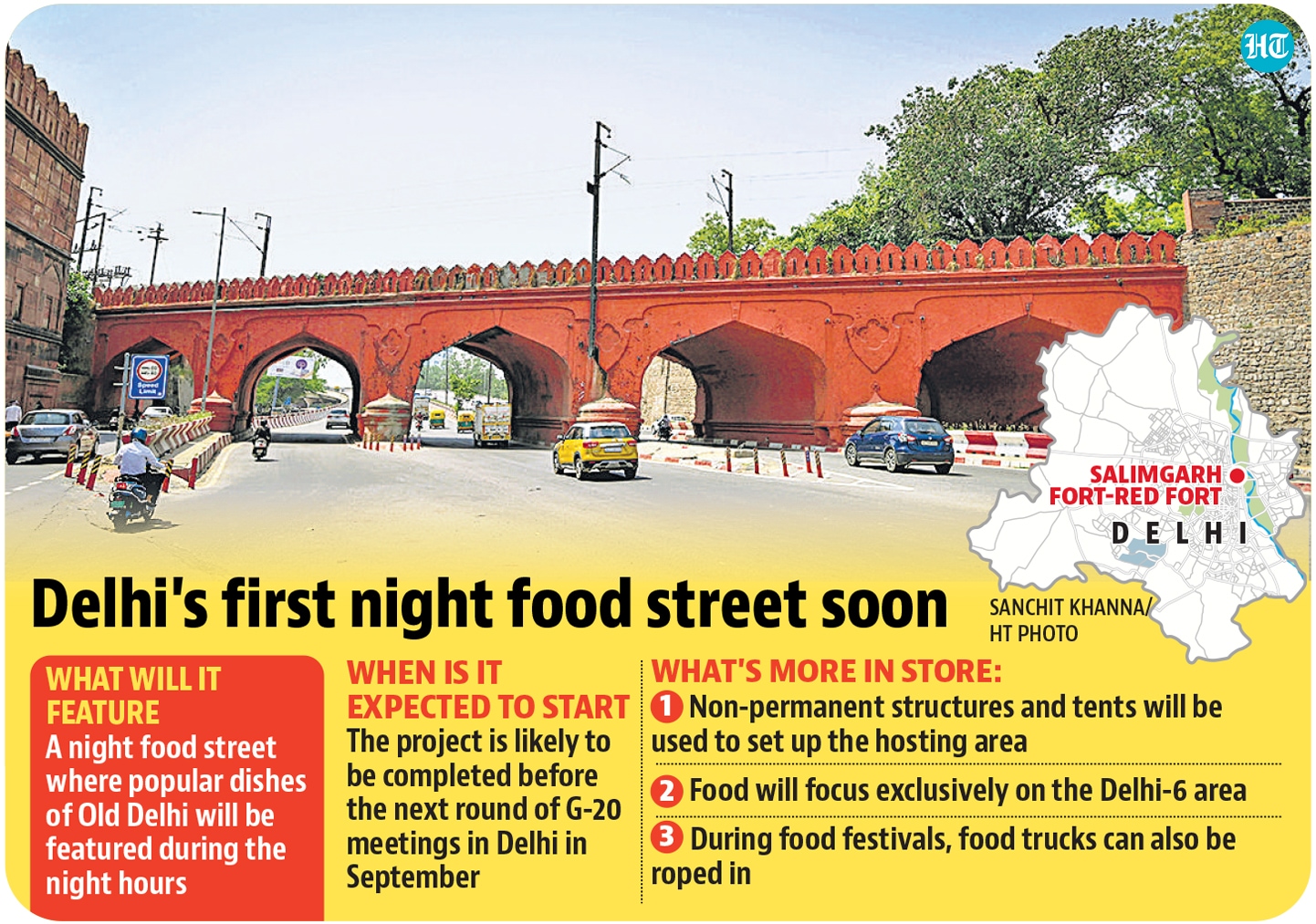
The Municipal Corporation of Delhi (MCD) is planning to set up a “night food street” near the Salimgarh Fort-Red Fort area along the Yamuna where popular dishes from the Old Delhi area will be featured during the night hours, civic officials said. MCD is preparing a report for the operationalisation of Delhi’s first night food street under a project which is likely to be completed before the next round of G-20 series of meetings set for September.
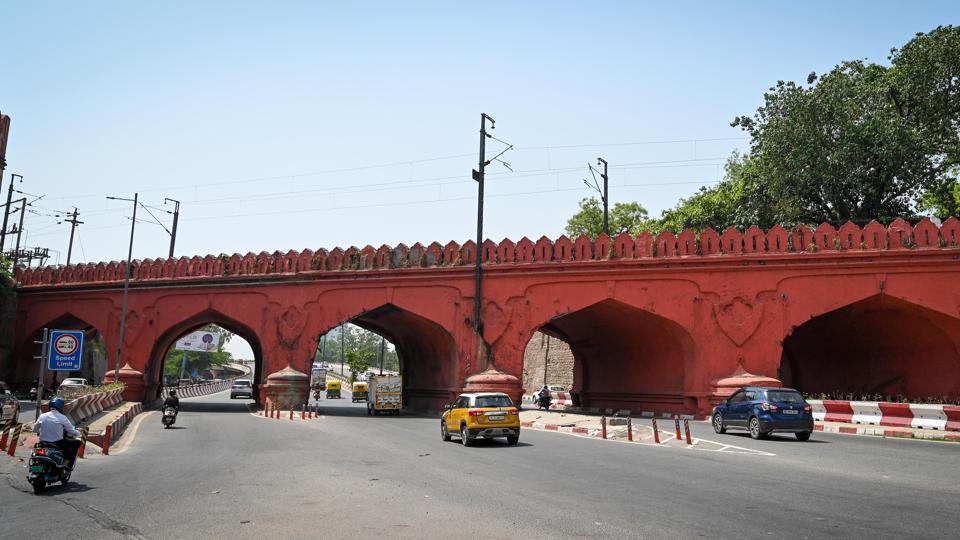
A senior municipal official said that the proposed site for the food street had been cleared of encroachments around two months back and the site is being levelled for development of the hosting area. “Since the site is located right next to Red Fort and Salimgarh Fort — monuments protected by the Archaeological Survey of India (ASI) — we cannot develop any permanent structures on this patch. Non-permanent structures and tents can be used to create the hosting area and major eateries from the Walled City will be asked to present their food items on the kiosks. The civic body will provide the basic infrastructure, water and space to them,” the official said.
On April 23, the Lieutenant Governor VK Saxena had inspected the site during which the idea of developing a night food street was floated and the removal of encroachments was directed. “The food street will be exclusively focused on the Delhi-6 area. The visitors from other countries coming for G20 meetings are expected. If the model is successful, it can be replicated in other parts of the city to showcase the variety of Delhi’s popular street foods. The site can also be utilised for providing space to food trucks during food festivals. A detailed project report is being prepared after which the tenders will be floated,” an official said.
On Monday, the 200m stretch along the Salimgarh Fort wall was being cleared and flattened.
Salimgarh Fort, also known as Salim’s Fort, was built in the 16th century on a former island of the Yamuna by Salim Shah Suri, son of Sher Shah Suri. The Red Fort and Shahjahanabad came up almost a century later. The Mughal emperor Aurangzeb had converted the fort into a prison, a practice which was continued by the British — who took control of the fort in 1857. The British used it as a prison to incarcerate the leaders of Indian National Army in 1945. Currently, the Salimgarh Fort is part of the overall Red Fort Complex which was declared as a UNESCO World Heritage Site in 2007, which obligates the ASI to ensure conservation measures for the heritage monument.
A senior ASI official, who did not wish to be named, said that permission needs to be sought if any such activity is undertaken within 300 metres of a protected monument. “Permission needs to be sought from the competent authorities — government of NCT Delhi and National Monument Authority — for carrying out any such activity,” said the official.
Anubhav Sapra, founder of Delhi Food Walks, said that the idea of night food streets, which is quite popular in Gujarat, should be implemented to promote the street food culture of Delhi. “Such night food streets are very popular in Gujarat and they help improve the security in the area. Many of the gold jewellery markets are operational during the day while they shut down at night. The street food vendors plying trade at nights offer security to these shops. Delhi is quite late to this trend and the idea will help boost food tourism in the city with a rich food history by offering all the delicacies of Shahjahanabad at one site. It is a good idea which should be implemented immediately,” he said.