E-Paper



Quicker deboarding for those on delayed flights at Delhi airport: How does it work
Special enclosures have been set up across all three terminals at Delhi’s Indira Gandhi International Airport.

 Prefer HTon Google


Special enclosures have been set up across all three terminals at Delhi’s Indira Gandhi International Airport (IGI) to allow passengers on flights delayed by over three hours to disembark, undergo security screening, and re-enter the terminal’s boarding area.
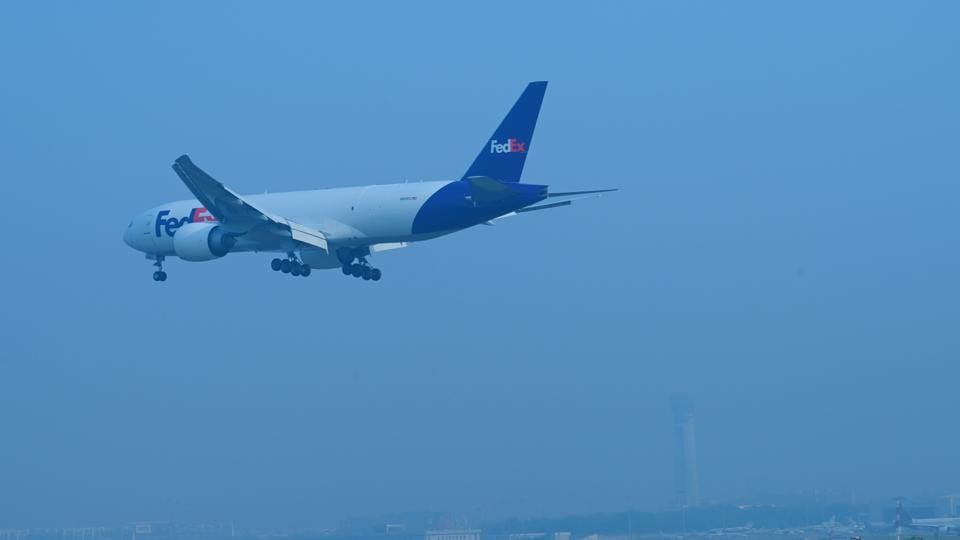
The airport operator Delhi International Airport Limited (DIAL) said the initiative aims to alleviate passenger inconvenience, particularly during winter, when dense fog often disrupts flight schedules.
In April, the Centre’s Bureau of Civil Aviation Security (BCAS) introduced new guidelines permitting passengers to disembark via airport departure gates in cases of prolonged delays after boarding. Previously, passengers had to re-enter the terminal through the main entrance— thus undergoing the entire security screening checks again — often requiring over two hours.
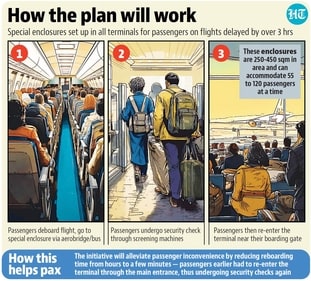
The new system directs passengers to either an aerobridge or a bus leading to the special enclosures. Within these enclosures, passengers undergo a streamlined security check, reducing the re-boarding process to under an hour, before can re-enter the terminals near boarding gates.
“Bringing such passengers directly to the reverse entry point significantly reduces the time taken in the de-boarding and boarding from around 2.5 hours to just a few minutes,” a DIAL spokesperson said.
“Earlier, the passenger would be taken to the entrance of the airport, which is the arrivals hall. There, they would re-join the security check area, with passengers of other airlines, a process which would typically take much longer. In these special enclosures, we have set up screening machines, aimed to carry out a security check only for these passengers,” the spokesperson added.
Also read: Stranded for over 13 hours, Indian passengers allege poor treatment at Kuwait airport
Ranging from 250 to 450 square meters, the enclosures can accommodate 55 to 120 passengers at a time. DIAL is also working to equip the enclosures with amenities like toilets and vending machines where feasible.
After completing the security check, passengers re-enter the terminal’s boarding area and gain access to standard facilities available there, the spokesperson added. Only airline staff escorting passengers and CISF personnel providing security will be permitted inside these enclosures.
DIAL CEO Videh Kumar Jaipuriar said the move should improve passenger experience by reducing the time they take to de-board and enter the terminal building again due to technical issues or fog.