January 2022 saw the cleanest air in the Capital in at least seven years -- and with air quality in February generally being better, the last restrictions related to bad air may soon be removed.
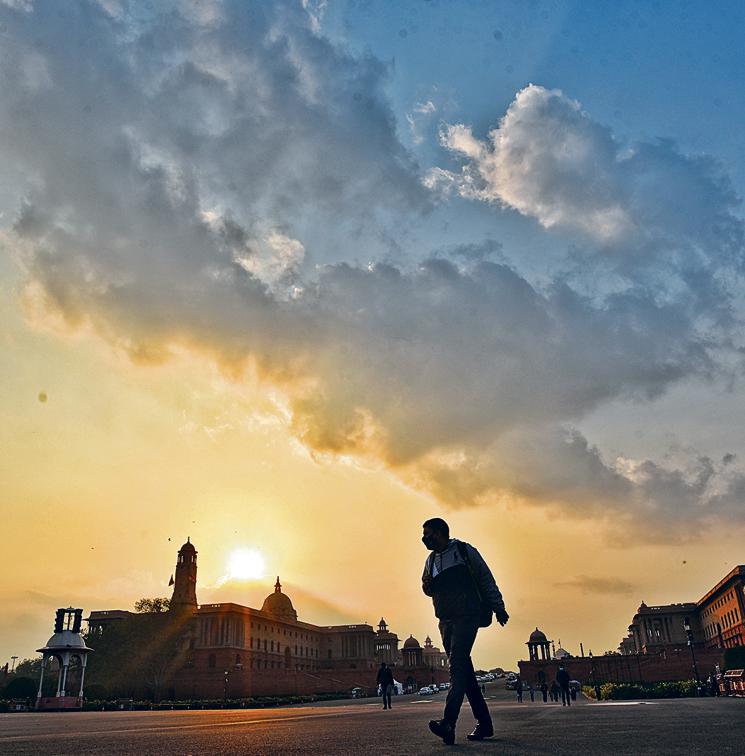
As daytime temperatures rise, the winter pollution season is all but over, with no “severe” air day recorded in Delhi since January 2, when the air quality index (AQI) touched 404. Since then, Delhi’s air quality has largely hovered between the “moderate” and “very poor” categories, even recording some “satisfactory” air days, with spells of rain and good wind-speed keeping pollution in check.
January 2022 saw only one “severe” air day as against six such days last January, two in January 2020, and seven in January 2019.
No severe days have been recorded in February so far.
In terms of the average AQI of the month, January 2022, at 279, was the cleanest January since AQI was launched by the Central Pollution Control Board (CPCB) in April 2015.
This spell of relatively cleaner air is likely to lead to the last of the Graded Response Action Plan (Grap) restrictions falling under the “very poor” category — particularly the ban on diesel generator (DG) sets across the National Capital Region (NCR) — being lifted by the end of the month, according to officials familiar with the matter.
{{/usCountry}}This spell of relatively cleaner air is likely to lead to the last of the Graded Response Action Plan (Grap) restrictions falling under the “very poor” category — particularly the ban on diesel generator (DG) sets across the National Capital Region (NCR) — being lifted by the end of the month, according to officials familiar with the matter.
{{/usCountry}}The Commission for Air Quality Management (CAQM) released a notification dated February 8, regarding the ban on DG sets in the region, and while it has not been lifted yet, the Commission has extended the list of exemptions, also allowing the telecom and IT sectors to use DG sets. Their use was also allowed across all sectors for a maximum period of two hours if they are run on 70% gas and 30% diesel.
“Based on a review of the DG set ban and several meetings held with stakeholders, a decision was taken to extend the list of exemptions to the IT and telecom industry too. In addition, non-diesel based generators will be allowed from next winter, even during GRAP,” an environment ministry official said, asking not to be named. He added that a decision on lifting the ban on DG sets altogether will also be taken soon. Last year, the Central Pollution Control Board lifted the ban on DG sets in NCR on March 5.
Experts say that unlike previous year when the impact of pollution continued till the end of January, this year, the second episodic smog event of the season occurred earlier than usual with Delhi recording six straight days of “severe” air between 21 and 26 December. According to data since 2015, after November, Delhi sees a second spike in pollution between December 31 and January 6, with some “severe” days being recorded until the end of the month.
“January has been quite unique this year in terms of the intensity of rain, and winter rains have been quite prolonged this year, largely eliminating peak pollution levels during the month. Instead, we saw six consecutive days of severe air in December and the impact of the episodic smog event was concentrated in December and November instead of being spaced out from October till January, highlighting the impact meteorological conditions can have on air quality,” said Anumita Roychowdhury, executive director, research and advocacy at the Centre for Science and Environment (CSE).
Stay updated with all top Cities including, Bengaluru, Delhi, Mumbai and more across India. Stay informed on the latest happenings in World News along with Delhi Election 2025 and Delhi Election Result 2025 Live, New Delhi Election Result Live, Kalkaji Election Result Live at Hindustan Times.
Stay updated with all top Cities including, Bengaluru, Delhi, Mumbai and more across India. Stay informed on the latest happenings in World News along with Delhi Election 2025 and Delhi Election Result 2025 Live, New Delhi Election Result Live, Kalkaji Election Result Live at Hindustan Times.