E-Paper



Urgent steps must to prevent Ashram mess worsening: Experts
Snarls resulting from the closure of the Ashram flyover have snaked through Delhi for nearly three days, prolonging commutes, and making getting in and out of their homes a harrowing experience for residents of nearby neighbourhoods

 Prefer HTon Google


Snarls resulting from the closure of the Ashram flyover have snaked through Delhi for nearly three days, prolonging commutes, and making getting in and out of their homes a harrowing experience for residents of nearby neighbourhoods.
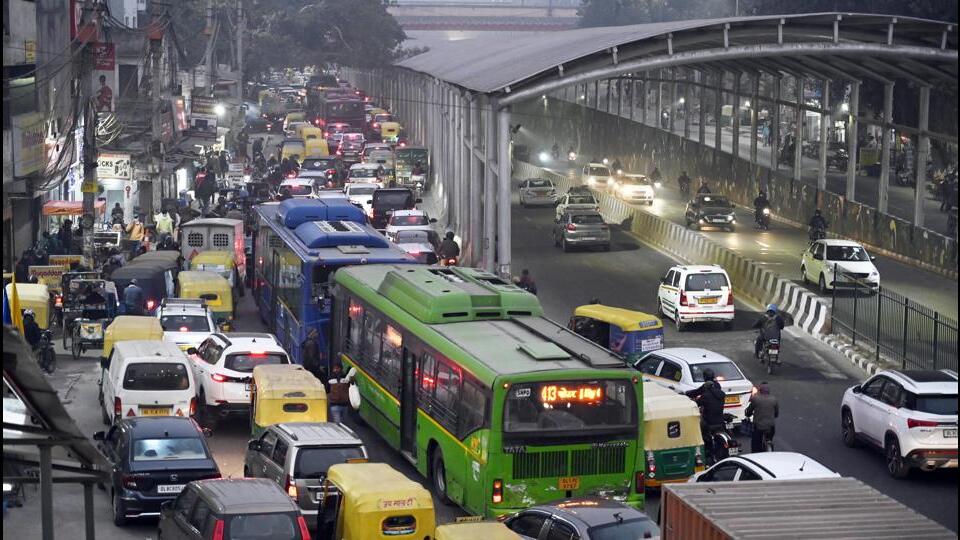
Ring Road, Mathura Road, Barapullah Elevated Corridor, DND Flyway, Lajpat Rai Road — few roads leading towards or away from south Delhi, south-east Delhi, New Delhi, Noida, Ghaziabad or even Faridabad have been spared the ripple effects of the closure without adequate mitigation measures..
Experts, in the run-up to the closure (which officials said will last at least 45 days), flagged a list of steps that authorities should implement, but most of these were not put in place, with commuters bearing the brunt of the lack of preparation.
Here are four experts underlining what could have been done before the key flyover was shut, and what can still be done to salvage the situation now:
Sewa Ram, professor of transport planning in the School of Planning and Architecture
Before
Alternative plans using software-based simulations: These days, software automatically help experts and authorities determine the best routes available between two points. It can map routes, analyse traffic, and simulate urban mobility patterns. Simulations run using such software could have helped the Public Works Department (PWD) and traffic police to understand which roads and diversions would have worked for a particular trip, and allowed the agencies to plan alternative routes.
Predicting the length of queues: Officials are currently grappling with winding queues that stretch far and wide. Using the number of vehicles and length of the roads available, authorities should have calculated approximately how long the snarls could be. This would have helped them plan interventions at certain spots to divert traffic and shorten the queues.One of the techniques that could have been used is known as shock wave theory. A shock wave, experts said, is the change in state of traffic -- either from standstill to rapid movement and vice versa, or a significant change in speed.Mobility experts use these calculations to determine how traffic will move in the future to plan specific interventions.
Planning the flyover integration: The linkage should have been designed so that the two carriageways were closed separately in phases. This way, traffic would have been impacted only in one direction, either towards Noida or towards Lajpat Nagar, and solved. Right now, both flyovers have been shut abruptly, throwing traffic from either side into disarray.
Now:
Segregating inter-city traffic: Separating traffic several kilometres before the Ashram intersection based on volume and destination, and not letting it all congregate at the busy junction will help alleviate the current mess. For instance, local commuters going towards Sriniwaspuri and Lajpat Nagar should not head towards Ashram intersection at all, and should be directed to alternate stretches with earlier diversions for long-distance travellers, and better use of internal roads for those in the vicinity. For instance, diversions need to start as far away as Dhaula Kuan. A chunk of vehicles should be asked to take Hyatt Regency to Brigadier Hoshiar Singh Marg and Lodhi Road. At the same time, traffic coming from Noida towards central or south Delhi should come from Akashardham and take the Pragati Maidan tunnel.
Better utilisation of the Metro: The Delhi Metro is essential to take the pressure off congested streets, since it does not add to the traffic volume on the road. Now that the Ashram flyover is closed, a few roads have to bear the burden of excess traffic; but the use of the Delhi Metro instead of taxis or private vehicles will greatly cut the volume on the roads. Metro corridors around the key intersection should be able to buffer the load on Ring Road, Mathura Road, and the Barapullah Elevated Corridor.
Staggered office timings: Traffic on the Ashram intersection peaks from around 8am-10am and 6pm-7.30pm. Staggering office times could help spread out some of this traffic out. For instance, if a significant chunk of commuters head to work at 6am or 12pm, the bulk of rush hour traffic would be cut significantly. This can be done by working with private offices and government departments.
Dr S Velmurugan, chief scientist, Central Road Research Institute (CRRI)
Before
Fixing pavements, better subways: The pavements along Ring Road and Mathura Road around the Ashram flyover are currently in a mess. Nearly all of them are damaged and unusable, and most are encroached by hawkers or shop owners. This pushes pedestrians to use the road, narrowing the main carriageways. Ensuring better, useable pavements would have ensured that pedestrians kept away from the street and allowed traffic to navigate the stretches undeterred.
Focus on amping up public transport: Delhi currently has just 7,000 buses, far fewer than the 11,000 it needs to meet its public transit demand. More buses, and increasingly frequent Metro trains, would have pulled traffic away from personal transport or taxis, which people currently bank on given the limitations of mass public transit. This would have led to more free roads, especially the arterial sections getting clogged by traffic spilling over from the Ashram crossing.
Now:
Jersey barriers at key points: Jersey barricades, which segregate or divert traffic just before the Ashram flyover don’t help since traffic has already bottlenecked at that point by then. Agencies should focus on channelling vehicular flow by placing the jersey barriers at key points earlier along the intersection, especially at the junction of CV Raman Marg and Ring Road.
Better use of internal roads: Allowing smaller vehicles such as two-wheelers and cars to pass through internal streets, like Central Avenue, will reduce the load on Ashram intersection. Such roads are currently used largely by residents to head to and from arterial stretches, and not necessarily as thoroughfares. In the absence of other steps, internal roads could act as temporary pressure valves. However, this move will need resident welfare groups in the regions on board.
Sonal Shah, the executive director the Center for Sustainable and Equitable Cities (C-SEC)
Before:
Ample advance notice: Commuters were informed on Friday that the Ashram flyover would shut for all traffic from Sunday morning, giving them effectively just 48 hours’ notice to prepare for the major change. However, advance notice would have allowed commuters, especially those who don’t frequent the intersection, to better plan their travel and keep away from routes leading to the crossing.
Now:
Frequent reminders to commuters: Signage and real-time message boards across the city can help in a big way -- they not just for non-regular users of the road, but also for regular commuters who can often head to the stretch by force of habit before realising it’s too late to take a detour.
Coordinate with DMRC to promote use: The use of public transport will help take the load off Mathura Road and Ring Road, as well as surrounding streets. Police and PWD officials can work with the Delhi Metro Rail Corporation (DMRC) to synchronise, and increase, the frequency of Metro trains with peak traffic on the streets during the 45-day closure.
What the Public Works Department (PWD) says:
A PWD official said “all possible steps are being taken to minimise the impact of Ashram flyover closure, with the help of traffic police”, without committing to what other measures may be deployed.
“The closure was inevitable, because there is no other way to integrate the extension with the existing flyover. We have deployed jersey barriers on the intersection and potholes have been repaired. The stretch cannot be recarpeted completely, as traffic needs to be completely halted for such a large-scale intervention. During the initial phase of closure period, around 10-15 metres of ramps in the Ashram flyover (towards Noida) will be demolished. The demolished section will be used to build the connection. We will try to complete the work early,” the official added.