The Municipal Corporation of Gurugram (MCG) has directed its field teams to intensify action against dust pollution, waste burning and illegal dumping as part of the revised Graded Response Action Plan (Grap) ahead of winter.
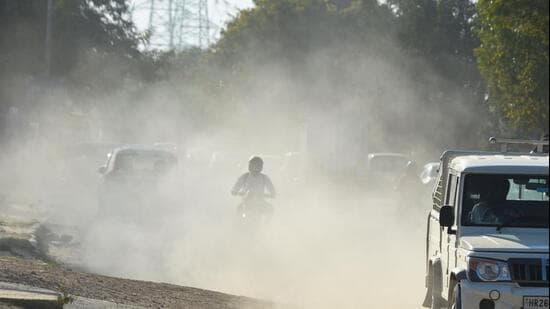
The directions follow the revised Grap schedule issued by the Commission for Air Quality Management (CAQM) on September 29. MCG officials have been asked to implement the measures in stages, depending on prevailing air quality, and ensure regular monitoring and compliance.
MCG commissioner Pradeep Dahiya said Stage I, applicable when Delhi’s air quality index (AQI) is in the ‘poor’ category (201-300), requires strict implementation of dust-control measures at construction and demolition (C&D) sites.
“This includes proper storage and covering of C&D material and waste, transportation in covered vehicles, use of anti-smog guns and water sprinkling. Projects with plot sizes of 500 square metres or more that do not meet prescribed registration and dust-monitoring requirements are also not to be allowed to continue,” he said.
The directions also focus on waste management, with officials asked to ensure regular lifting of municipal solid waste, C&D waste, industrial waste and hazardous waste from designated sites and industrial areas, and prevent illegal dumping.
{{/usCountry}}The directions also focus on waste management, with officials asked to ensure regular lifting of municipal solid waste, C&D waste, industrial waste and hazardous waste from designated sites and industrial areas, and prevent illegal dumping.
{{/usCountry}}Periodic mechanised sweeping and water sprinkling on roads have also been mandated, with dust collected during sweeping to be disposed of scientifically at designated sites or landfills.
The revised Grap schedule prohibits open burning of biomass and municipal solid waste, with environmental compensation to be imposed for violations in accordance with National Green Tribunal orders. Officials have also been instructed to maintain strict vigil against fires at landfills and dumpsites.
Dust-suppression measures, including anti-smog guns and water sprinkling, are to be intensified at road construction, widening, repair and maintenance sites.
The plan also calls for strict enforcement of pollution-under-control (PUC) norms and action against visibly polluting vehicles. It provides for increased inspections of industries, including those operating in non-conforming areas, and enforcement of pollution-control norms at brick kilns and hot-mix plants.
Under Stage II, applicable when Delhi’s AQI reaches the ‘very poor’ category (301-400), daily mechanical or vacuum sweeping will be required along identified roads, preferably at night or early in the morning. Water sprinkling and dust suppressants must also be used before peak traffic hours, particularly along congested corridors.
Officials have been asked to intensify inspections at C&D sites and take targeted action at identified pollution hotspots.
Dahiya said Stage II also requires resident welfare associations (RWAs) to provide electric heaters and electricity connections to security, sanitation, horticulture and other support staff to discourage the open burning of biomass and municipal waste during winter.
The revised plan further provides for staggered timings for public offices and municipal bodies in Gurugram, Faridabad, Ghaziabad and Gautam Buddha Nagar under Stage II. The respective governments will decide on their implementation.
Stay updated with all the Breaking News and Latest News from Mumbai. Click here for comprehensive coverage of top Cities including Bengaluru, Delhi, Hyderabad, and more across India along with Stay informed on the latest happenings in World News.
Stay updated with all the Breaking News and Latest News from Mumbai. Click here for comprehensive coverage of top Cities including Bengaluru, Delhi, Hyderabad, and more across India along with Stay informed on the latest happenings in World News.