The proposed Gurugram-to-Greater Noida Namo Bharat Regional Rapid Transit System (RRTS) corridor will require 109.04 hectares of land and the felling of 10,504 trees, according to the project’s detailed project report (DPR) and environmental and social impact assessment prepared in March 2026 and accessed by HT.
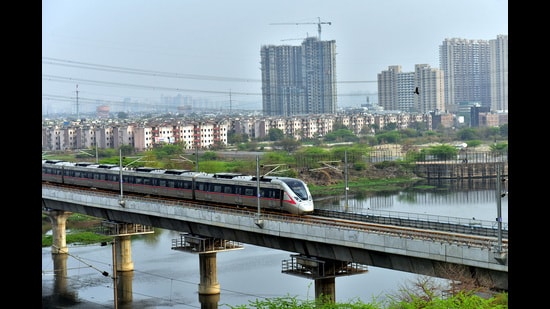
The 63-km corridor, which will connect Gurugram, Faridabad and Greater Noida, will require 77 hectares of land permanently for its alignment, stations, depots and related infrastructure, while another 32 hectares will be needed temporarily for construction depots and casting yards.
The National Capital Region Transport Corporation (NCRTC), which is executing the project, has proposed planting more than 100,000 trees as compensatory afforestation. The report estimates that ₹68 crore will be spent on environmental mitigation measures, including plantation.
Of the 10,504 trees proposed to be felled, 9,178 are located along the main alignment, station areas and depot, while the remaining 1,326 are in areas earmarked for station entry and exit points and multimodal integration facilities, the documents show.
The tree species identified for removal include neem, ashoka, peepal, palm, eucalyptus, pine, kikar, papri, jamun, shisham, bakain, gulmohar and babul, among others.
The largest concentration of trees marked for removal is near the proposed depot on Gurugram-Faridabad Road, close to the toll plaza, where more than 3,400 trees have been identified. Other affected stretches include Gurugram-Faridabad Road and areas around the proposed stations at Millennium City Centre, Wazirabad, Sector 57 and Gwal Pahari.
{{/usCountry}}The largest concentration of trees marked for removal is near the proposed depot on Gurugram-Faridabad Road, close to the toll plaza, where more than 3,400 trees have been identified. Other affected stretches include Gurugram-Faridabad Road and areas around the proposed stations at Millennium City Centre, Wazirabad, Sector 57 and Gwal Pahari.
{{/usCountry}}The environmental assessment acknowledges that removing existing trees would reduce the area’s capacity to absorb carbon dioxide. The report estimates that tree felling would reduce annual carbon dioxide absorption by 1,831.90 tonnes and result in an estimated oxygen-production loss of 4,117.57 tonnes over eight years. Compensatory plantation is intended to help offset these losses and improve the ecological balance over time, it states.
The proposed corridor was also discussed at a recent meeting at the Gurugram Metropolitan Development Authority (GMDA) office, where officials sought inputs from relevant departments and stakeholders to finalise the alignment.
“We have asked key departments to share information regarding their utilities, land and other assets falling in the proposed alignment,” a senior government official aware of the matter said.
According to the DPR, the corridor will run for 50 km in Haryana and 13 km in Uttar Pradesh. The NCRTC plans seven stations along the route.
IFFCO Chowk will serve as the starting interchange station, with two other stations at Sector 61 and Gwal Pahari in Gurugram. In Faridabad, stations are proposed at Sainik Colony, Bata Chowk and the Sector 87-88 intersection. The remaining stations will be at Sector 142 and Surajpur in Greater Noida.
Stay updated with all the Breaking News and Latest News from Mumbai. Click here for comprehensive coverage of top Cities including Bengaluru, Delhi, Hyderabad, and more across India along with Stay informed on the latest happenings in World News.
Stay updated with all the Breaking News and Latest News from Mumbai. Click here for comprehensive coverage of top Cities including Bengaluru, Delhi, Hyderabad, and more across India along with Stay informed on the latest happenings in World News.