Amid closure of industry and infrastructure projects, the discharge of sewage and effluents in the Buddha Nullah, dubbed as the city’s toxic vein, has also reduced significantly.
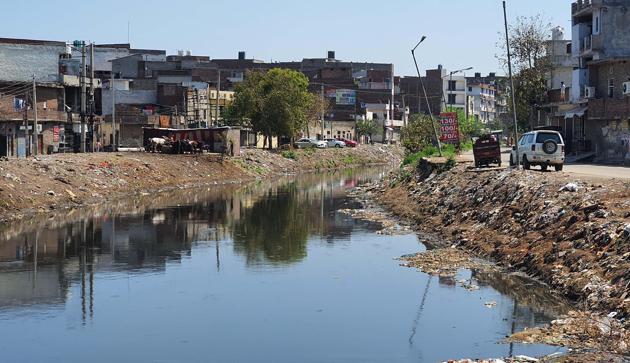
According to Jasvir Singh, sub-divisional officer (SDO) with the discharge wing of the irrigation department said, “The effluent discharge into the nullah has receded significantly after the closure of industry units. On March 2, an average of 255 cubic feet per second (cusecs) of discharge was recorded, on March 16, the discharge fell to 220 cusecs, while on Sunday it was merely 197 cusecs.”
Of the total 2,423 industrial units in Punjab polluting the Sutlej, the majority, 2,028, are in Ludhiana, including 228 dyeing and 1,649 electroplating and surface treatment units which directly or indirectly release untreated waste into the nullah.
Noted environmentalist Balbir Singh Seechewal, said that the current present situation of the nullah reaffirms his claim that the drain was being used for discharging of industrial and domestic waste. “We have been claiming that no water of Sutlej was entering the nullah and toxic water in the drain was nothing else but untreated sewage being discharged by the industry. We have been urging industrialists not to release untreated water in the drain, but they did not listen. Now, due to the lockdown, the effluent discharge has receded significantly”, said Seechewal.
While quoting a report of effluent discharge compiled last year, Seechewal said the nullah got around 3 lakh tonnes of untreated sewage and 60,000 cubic metres of industrial effluent discharge daily, comprising poisonous heavy metals like arsenic, chemicals like cyanide, harmful pesticides and toxic organic compounds.
{{/usCountry}}While quoting a report of effluent discharge compiled last year, Seechewal said the nullah got around 3 lakh tonnes of untreated sewage and 60,000 cubic metres of industrial effluent discharge daily, comprising poisonous heavy metals like arsenic, chemicals like cyanide, harmful pesticides and toxic organic compounds.
{{/usCountry}}He added that last year, the Punjab Pollution Control Board (PPCB) had accorded administrative approval for release of 200 cubic feet per second (cusecs) of fresh water daily from the Sirhind canal to the Neelon drain to bring down the pollution levels in the Buddha Nullah.
According to Kanwar Jatinder Singh Bajwa, 50, a property dealer, whose office is located near the nullah said, “I have never seen the level of water in the nullah recede as much. At some places, plastic dumped in the nullah has lead to water accumulation otherwise the drain would have dried up,” said Bajwa.
PPCB Chairman, Dr SS Marwaha said, “Due to no industrial and vehicular pollution, the air quality is becoming better. Then there has been absolutely no discharge from the industry and only the sewerage water is entering the drain so far.”
City breathes better too
March 29 27
March 28 27
March 27 56
March 26 34
March 25 27
March 24 39
March 23 36
March 22 70
March 21 105