
 E-Paper



10L eligible citizens in Gzb yet to be enrolled in voter lists: UP CEO
Draft electoral roll will be published on November 17, following which claims and objections will be accepted till December 16, says UP chief electoral officer

 Prefer HTon Google


LUCKNOW Uttar Pradesh chief electoral officer (CEO) Navdeep Rinwa on Friday said around 10 lakh eligible citizens in Ghaziabad are yet to be enrolled in the electoral roll and directed officials to undertake a special campaign to ensure their registration.
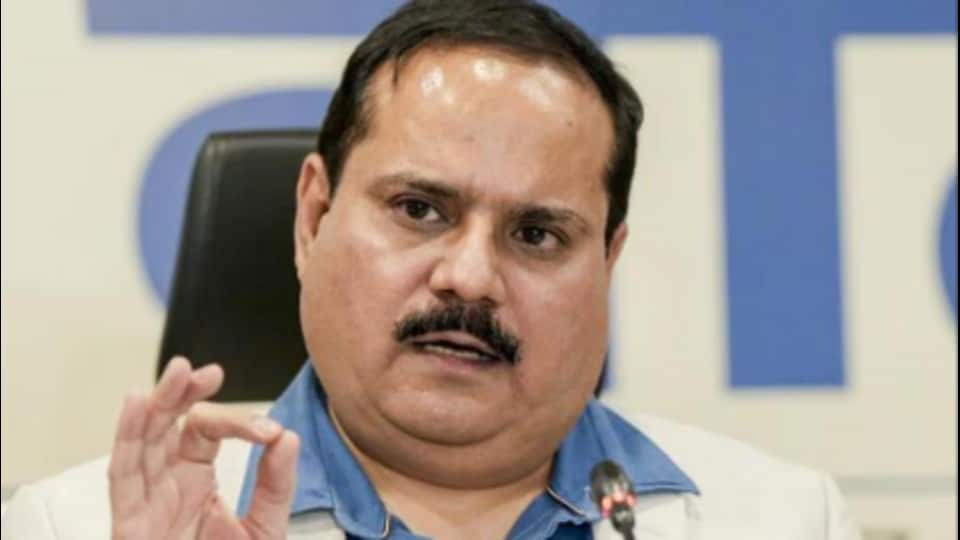
Chairing a meeting in Ghaziabad to review preparations for the Special Summary Revision (SSR) 2027, Rinwa said the district currently has over 23 lakh registered voters, but a large number of eligible citizens are still missing from the electoral roll. The meeting was attended by the roll observer/ divisional commissioner, DEO, deputy DEO, EROs and assistant EROs of all assembly constituencies.
He said the draft electoral roll would be published on November 17, following which claims and objections would be accepted till December 16.
Rinwa called for a “Whole of Government, Whole of Society” approach to achieve cent per cent voter registration, involving government departments, social organisations, resident welfare associations (RWAs) and educational institutions.
“With the cooperation of various government departments, social organisations, resident welfare associations, educational institutions and other bodies, eligible citizens will be identified and motivated to get their names enrolled in the electoral roll,” he said.
Eligible citizens can use Form 6 to apply for inclusion of their names in the electoral roll, Form 7 to raise objections to the inclusion of a name or seek deletion of an ineligible elector and Form 8 for corrections in particulars, change of residence, replacement of voter ID cards and marking of persons with disabilities.
Claims and objections will be disposed of by December 28, while the final electoral roll will be published on January 4, he said.
Referring to the statewide voter registration figures, Rinwa said UP has an estimated 16-17 crore citizens aged 18 years and above, while the current electoral roll contains around 13.56 crore voters.
This puts the estimated voter registration ratio in the state at around 84%, he said.
The ECI has launched ‘No Voter to be Left Behind’, campaign to ensure that no eligible citizen is deprived of becoming a voter, added Rinwa.
He urged eligible citizens to verify their names and those of their family members in the draft electoral roll and apply for inclusion or correction within the stipulated period.
The draft electoral rolls will be available on the websites of the chief electoral officer, Uttar Pradesh, and the district election officers, at all respective polling stations, and at the offices of the electoral registration officers. Copies of the draft electoral roll will also be provided to recognised political parties, he said.
Special campaign days will be organised at all polling stations on November 21, 22, 28 and 29. Booth level officers (BLOs) will remain present at their respective polling stations on these days to receive applications and objections.
GB Nagar has 15.27L voters against 28.34L population
Earlier in a review meeting in Gautam Buddha Nagar, district election officer (DEO) Medha Roopam informed the CEO that the estimated population of the district in 2026 is 28,34,139. Currently, the district has 15,27,428 registered voters, including 8,34,652 male voters, 6,92,729 female voters and 47 transgender voters. Additionally, there are 2,768 service voters, 9,420 physically challenged voters, 20,654 youth voters aged 18 to 19 and 7,954 voters aged 85 and above.
The district’s electoral gender ratio is 830 and the electoral population ratio 53.89%. The district has three assembly constituencies. It also includes a partial portion of one Lok Sabha constituency. There are total 766 polling stations and 1,926 voting booths, she said.
Giving constituency-wise details of voters, the DEO said a total of 5,93,236 voters are registered in 61-Noida assembly constituency, in which 3,27,446 are male, 2,65,779 female and 11 transgender voters. Similarly, a total of 6,17,352 voters are registered in 62-Dadri assembly constituency, in which 3,34,483 are male, 2,82,839 female and 30 transgender voters. Whereas a total of 3,16,840 voters are registered in 63-Jewar assembly constituency, in which 1,72,723 are male, 1,44,111 female and six transgender voters.
Regarding youth, senior citizens and physically challenged voters, the DEO informed that a total of 20,654 voters in the age group of 18 to 19 years are registered in the district, which includes 6,222 young voters in Noida assembly constituency, 8,772 in Dadri and 5,660 in Jewar. Similarly, a total of 7,954 voters aged 85 years and above include 3,244 voters in Noida assembly constituency, 2,580 in Dadri and 2,130 in Jewar. A total of 9,420 disabled voters are registered in the district, which includes 3,181 disabled voters in Noida Assembly constituency, 3,645 in Dadri and 2,594 in Jewar.


