E-Paper



After high court observations, pressure back on authorities to muffle hooters, horns
Taking a stern view of rising noise pollution caused by illegal hooters and modified silencers/pressure horns, the Lucknow bench of the Allahabad high court on March 16 directed officials to explain the steps taken over the past five years to curb the manufacture and sale of these devices.

 Prefer HTon Google


The Allahabad high court’s fresh observations on the rampant use of hooters and pressure horns have once again brought into focus Uttar Pradesh’s decade-old but weakly enforced regulatory framework, including an ambitious 2014 proposal that never took off.
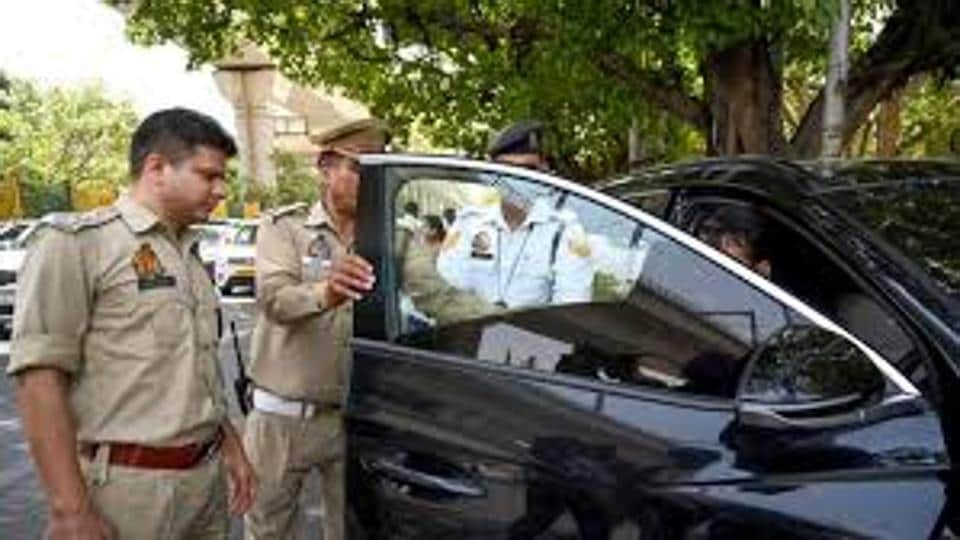
The weak enforcement, over the years, also stems from the fact that a section of those allegedly violating the norms are said to be the people responsible for implementing them, according to those in the know of things.
Taking a stern view of rising noise pollution caused by illegal hooters and modified silencers/pressure horns, the Lucknow bench of the Allahabad high court on March 16 directed officials to explain the steps taken over the past five years to curb the manufacture and sale of these devices.
The high court’s remarks echo concerns that had prompted the state transport department to move a detailed proposal in 2014 in the backdrop of a Supreme Court special writ petition seeking strict compliance with rules governing VIP trappings.
At the time, the government had planned a comprehensive mechanism not just to enforce the ban, but also to regulate the sale and purchase of beacons, hooters and similar devices, acknowledging that unchecked availability was fuelling misuse.
The proposal, as reported by the HT then, envisaged the sale of hooters, beacons through the State Employees Welfare Corporation’s depots only (not in open market) with the buyers required to produce entitlement/authorisation letters from the area’s assistant regional transport officer (ARTO).
The proposal also envisaged district-level committees under district magistrates to monitor sale and installation and take action against violations, while a high-level committee at the state level, under a senior official such as the principal secretary or even the chief secretary, was to coordinate among departments like home, transport, traffic and general administration to fix accountability and streamline enforcement.
Officials had then admitted that it was becoming increasingly difficult to check the unauthorised use, particularly by those not entitled to such privileges, even as the Supreme Court had taken a strict view of violations.
Despite the intent, the proposal was never implemented, leaving enforcement to routine checks and occasional drives and unregulated sale of these devices in the open markets across the state
“The proposal to regulate sale of hooters and beacons etc was discussed and mooted but finally failed to take the formal shape of law,” recalled former additional transport commissioner (enforcement) AK Pandey.
On January 10, 2017, the then chief secretary Rahul Bhatnagar issued a Government Order (GO) reiterating that pressure horns and multi-toned horns were completely banned and directed officials to remove them from all government vehicles, warning of action against the controlling officials.
Earlier, on March 10, 2014, government issued a GO clarifying that the use of hooters was permitted only for emergency vehicles such as ambulances, fire services, disaster management and vehicles used by police and transport department officials but only in emergency and not as a routine.
“However, these orders saw limited follow-up, and the practice of honking hooters and pressure horns for road clearance or as a marker of status has continued across districts,” another transport department official said.
On the ground, pressure horns remain in use in many vehicles and hooters are frequently deployed outside emergency situations, reflecting a gap between rules and enforcement. The absence of an institutional monitoring mechanism, particularly the shelved committee-based system proposed in 2014, has meant that violations rarely lead to sustained action.
With the high court stepping in again, there is renewed pressure on the administration to act more decisively, with officials indicating that the court’s intervention could revive stricter enforcement or even prompt a relook at regulating the supply chain of such devices.
“The core issue, however, remains the same — ensuring that legal provisions translate into compliance on the roads, where the line between emergency use and entitlement continues to be routinely blurred,” Pandey said.
“The government must strike at the source, that is manufacture and sale of hooters through strict ban or regulation,” he suggested.
LAW ON HOOTERS
Permission for the use of hooters (horns) shall be granted on the following categorized vehicles:
Ambulances or fire brigade vehicles, vehicles used for the purpose of disaster management, construction equipment vehicles, and vehicles used by police officers and motor department officials during the course of their duties (only in emergency situations) — UP Government GO of March 10, 2014.
LAW ON PRESSURE HORNS
The law bans them totally.
“No motor vehicle including agricultural tractor] shall be fitted with any multi-toned horn giving a succession of different notes or with any other sound-producing device giving an unduly harsh, shrill, loud or alarming noise”- Section 119 of the Central Motor Vehicle Rules, 1989