The Uttar Pradesh government has initiated steps to set up modern driver training centres across more than two dozen districts under centrally funded schemes of the ministry of road transport and highways (MoRTH). The move is aimed at enhancing road safety and ensuring scientific training for drivers.
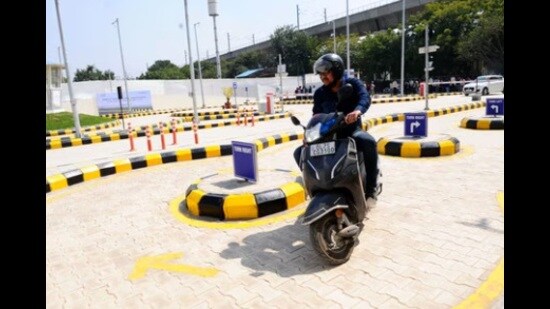
In two parallel letters, state transport commissioner Brajesh Narain Singh has asked district magistrates in 18 districts to provide three acres of free land each for setting up Regional Driving Training Centres (RDTCs), while nine other districts have been shortlisted for the establishment of an Institute of Driving Training and Research (IDTR), a larger and more advanced training facility.
The RDTCs, each to be set up at a cost of ₹5.5 crore (all inclusive), will be established in high-population districts that currently lack any driving research or training facility. DMs of districts including Varanasi, Ghaziabad, Meerut, Muzaffarnagar, Aligarh, Mathura, Ayodhya, Azamgarh, Banda, Mirzapur, Etawah, Saharanpur, Sitapur, Jaunpur, and Bijnor have been asked to identify land and submit proposals urgently.
The RDTCs will provide structured training to both private and commercial vehicle drivers and generate employment opportunities for local youth.
{{/usCountry}}The RDTCs will provide structured training to both private and commercial vehicle drivers and generate employment opportunities for local youth.
{{/usCountry}}Simultaneously, under the IDTR scheme, one major institute is proposed in UP with full financial assistance of ₹17.25 crore from the Centre. Districts shortlisted for consideration include Lucknow, Varanasi, Gorakhpur, Agra, Gautam Buddh Nagar, Jhansi, Kanpur Nagar, Shahjahanpur, and Prayagraj. One district will be selected based on land availability, population and other criteria. Each IDTR will require around 10–15 acres of free land.
According to the transport department, UP currently has over 30 lakh commercial vehicles but a large number of drivers remain untrained. Both schemes are designed to address this gap and curb road accidents through professional training.
“There are 30,37,166 commercial vehicles against which the available drivers are only 27,48,523 which means there is a shortfall of around 20% drivers. Besides, most of the available drivers also are not that trained and all this compromises on-road safety,” additional transport commissioner, road safety, P Satyarthi said.
Districts have been instructed to submit land proposals and related documents to the transport department and MoRTH.
According to MoRTH guidelines, an IDTR is a larger, model institute for training trainers, while a RDTC is a smaller, regional institute that focuses on training drivers, with IDTRs serving as “mother institutes” to guide and monitor RDTCs. One IDTR is already functional in Rae Bareli.