MEERUT To combat the challenge of climate change, the National Capital Region Transport Corporation (NCRTC) has adopted a solar policy aimed at increasing the share of renewable energy by generating over 11 MW of solar power across the entire Delhi-Ghaziabad-Meerut corridor.
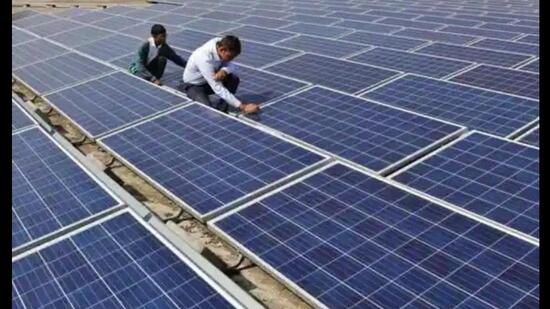
This initiative is expected to reduce CO2 emissions by 11,500 tonnes annually, marking a significant step in the fight against climate change.
In line with this initiative, solar panels are being installed at Regional Rapid Transit System (RRTS) stations, depots and other buildings.
More than 900 solar panels will be installed at New Ashok Nagar RRTS station’s roof that will generate over 6.5 lakh units of electricity annually.
Officials claimed that these initiatives were part of their solar policy aimed at increasing the share of renewable energy by generating over 11 MW of solar power across the entire Delhi-Ghaziabad-Meerut corridor.
Solar plants have already been installed at the Sahibabad, Guldhar, Duhai and Duhai depot stations on the operational section of the RRTS corridor, as well as at the Ghaziabad and Muradnagar receiving sub-stations and the RRTS depot. These installations, currently active, are generating over 3 MW of electricity in total. All these stations are carbon negative, producing more electricity than they consume.
Moreover, contributing to groundwater replenishment. NCRTC is constructing over 900 rainwater harvesting pits throughout the entire Delhi-Ghaziabad-Meerut corridor, with more than 80 percent of these pits already completed.
{{/usCountry}}Moreover, contributing to groundwater replenishment. NCRTC is constructing over 900 rainwater harvesting pits throughout the entire Delhi-Ghaziabad-Meerut corridor, with more than 80 percent of these pits already completed.
{{/usCountry}}In line with global environmental protection goals, NCRTC has already planted over 2.5 lakh plants from Delhi to Meerut. Tree plantation at other under-construction stations is also going on, with plants being placed in the medians beneath the corridor, as well as at stations and depots.