The temple-town Ayodhya has been undergoing a rapid transformation in various quarters, encompassing religious tourism, infrastructure and innovative works, all centred around the grand Ram Temple. However, there is also a lesser-known environmental care project in progress in ‘Ram Nagri’ to address its plastic waste and litter management.
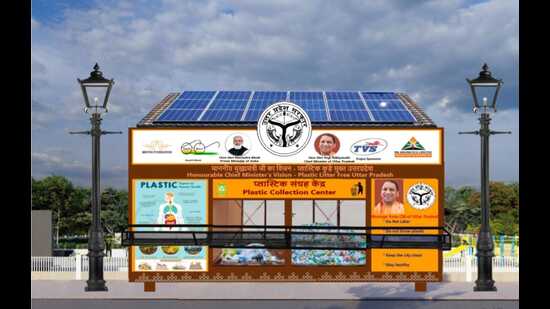
Ayodhya is all set to have north India’s and UP’s first plastic-to-diesel refinery. A 20 TPD (tonnes per day) plant is being established to convert all types of plastic waste, both non-recyclable and recyclable, into automotive diesel.
As of now, the district generates 30-35 tonnes of plastic waste per day, and it is projected to increase gradually once the Ram Temple is opened, leading to a further rise in tourist footfall.
In the second stage, the plant’s capacity will be increased to 40 TPD. Ayodhya Nagar Nigam has signed an agreement with a Bengaluru-based company.
“The company will build the mini refinery on a piece of land on the Lucknow-Ayodhya road. Work to install a total of 100 collection centres all around the district has already begun. Plastic waste from all over Ayodhya will be collected daily at the collection centres. Ayodhya will be the first in the state to have such a plant for the betterment of the environment and cleanliness”, said Vishal Singh, Ayodhya Municipal Commissioner.
The estimated cost of the project is ₹100 crore.
{{/usCountry}}The estimated cost of the project is ₹100 crore.
{{/usCountry}}“The plastic waste will be converted to crude oil and then refined into diesel, which will be sold to local farmers and other customers operating generators, tractors, pump-sets, heavy machinery, vehicles, earth movers, dumpers, or tippers,” said Imran Rizvi, co-promoter and director, MK Aromatics Limited Bangalore. Construction work is set to begin in April, and the plant is expected to be commissioned within a few months.
The company has already been operating such a plant in Chennai, Tamil Nadu, and one in Goa has been set up, along with the Bengaluru plant that is currently being established.
“1000-gram plastic waste will be converted into 800 ml of automotive diesel, which is cheaper for consumers than the diesel from oil companies,” added Rizvi.
The plant will first handle the plastic waste of the Ayodhya district, and gradually, all of the Ayodhya division’s urban local bodies and big panchayats will be integrated into it.
“All the plastic waste collected will be baled at the collection centre and sent to the plant’s reactor for processing. The plastic will be heated to 350 to 450 degrees Celsius, and a specially developed catalyst will ‘crack’ the plastic inside the reactor, converting it into hydrocarbon gases stored as condensate or crude oil. LPG (liquefied petroleum gas) will be produced in the process and used as fuel for the reactor, resulting in zero pollution,” continued Rizvi.
Each collection centre will be equipped with approximately five e-rickshaws and about 25 rag-pickers for collecting plastic waste in their respective allotted territories.
The project will not only aid in waste management, cleanliness, and environmental care but also contribute to employment and revenue generation. Additionally, it will help save the lives of stray cattle, as many die due to accumulated polythene in their alimentary canal. Cattle often consume polythene while foraging for food in streets and garbage dumps.
The company has signed an MoU with the Government of Uttar Pradesh to set up a total of five plants (including Ayodhya’s) in Uttar Pradesh, each with a 40 TPD capacity. The other four locations are Lucknow, Varanasi, Gorakhpur and Ghaziabad.