E-Paper



Power play in UP: Outages ignite political storm months before polls
While oppn parties have stepped up attacks on govt over outages and consumer distress, legislators from the ruling camp have publicly flagged power supply related issues in their constituencies

 Prefer HTon Google


LUCKNOW Amidst a severe heatwave, prolonged power outages across Uttar Pradesh have escalated into a political flashpoint, with both opposition leaders and ruling BJP legislators flagging failing electricity infrastructure, just months before the state assembly elections.
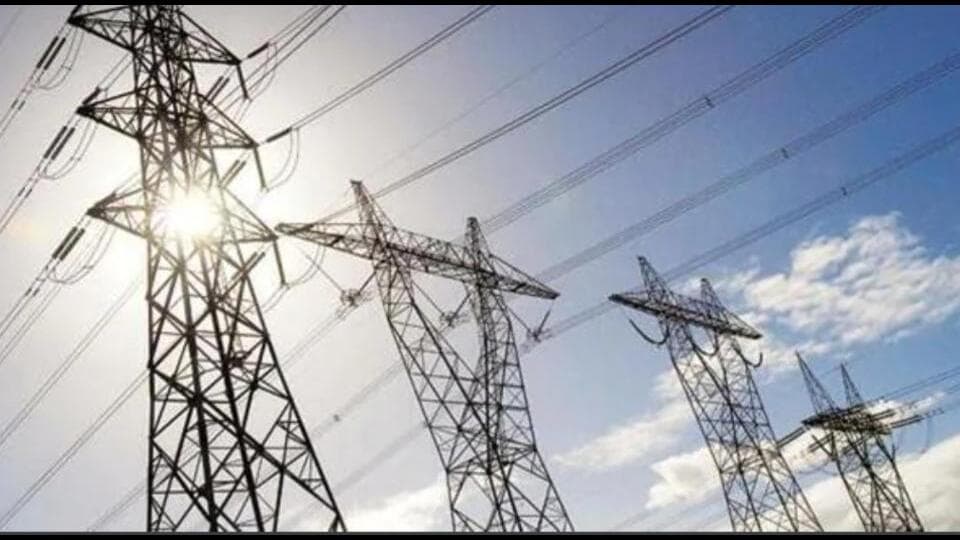
While opposition parties have stepped up attacks on the government over outages and consumer distress, legislators from the ruling camp have publicly flagged power supply related issues in their constituencies, indicating that the matter has reached a political flashpoint.
On Friday, BJP MLA (Lucknow East) OP Srivastava wrote to energy minister AK Sharma, raising concerns over alleged undeclared power cuts and inconvenience being faced by residents in his constituency comprising areas like Indira Nagar, Munshipulia, Laxmanpuri, Ravindrapalli, Nishatganj, Kalyanpur, Mahanagar, Vikas Nagar and Gomti Nagar, among others.
Recently, BJP MLA (Sarojini Nagar, Lucknow) Rajeshwar Singh and Lucknow North MLA Neeraj Bora also wrote to the minister regarding outages in parts of their constituencies.
A few days ago, newly inducted minister and Unchahar MLA Manoj Pandey had also raised concerns over disrupted power supply in his constituency after storm-related damage affected the local network.
Leader of opposition in the UP Assembly Mata Prasad Pandey also wrote to the UP Power Corporation Limited (UPPCL) managing director regarding prolonged outages in Siddharthnagar district. He alleged that large-scale power cuts were being imposed in several areas under Itwa Assembly constituency and sought immediate restoration of normal supply.
The issue also drew sharp reactions from two former chief ministers. In a post on X, BSP president Mayawati said inadequate electricity supply and outages during severe heat had made life difficult for the poor, middle class, farmers, small traders and workers and urged the government to take immediate corrective measures and improve long-term supply through additional power generation.
Samajwadi Party president Akhilesh Yadav wrote on X that while electricity demand and tariffs were increasing, supply was not keeping pace and sought to question the government’s planning regarding new generation capacity.
UP Congress Committee president Ajay Rai demanded that the state government comes out with a white paper detailing power production before 2017 and now. “People must know as to how much new power generation the BJP government added to the grid in the last nine years of its rule in UP,” he said.
The issue has assumed greater significance as some complaints, largely from BJP MLAs themselves, have emerged from Lucknow itself, the seat of government.
Meanwhile, the UP Rajya Vidyut Upbhokta Parishad on Friday moved the UP Electricity Regulatory Commission through a public importance proposal, seeking intervention to address the power situation. “Repeated breakdowns and delays in attending faults, rather than availability of power alone, were aggravating consumer distress,” parishad chairman Avdhesh Kumar Verma said.
Responding to the concerns, energy minister AK. Sharma said he welcomed suggestions from both ruling party legislators and opposition leaders and assured that all possible measures would be taken to address public grievances.
Sharma said power demand had reached historically high levels both nationally and in Uttar Pradesh.
“During the Samajwadi Party government between 2012 and 2017, average power demand in UP used to be around 13,000mw. Today, it has crossed 30,000mw and we are meeting the entire demand unlike during the SP and BSP regimes when large demand-supply gaps led to extensive scheduled and unscheduled power cuts across urban and rural areas. Protests, demonstrations and public anger over electricity shortages had then become a recurring feature,” he said over phone from Mau.
Targeting the opposition, Sharma said electricity had become a convenient political issue but added that critics were overlooking the situation during their own tenure.
He maintained that UP was not facing a demand-supply gap and attributed much of the disruption to local breakdowns and stress on the transmission and distribution network.
“Power supply is such a subject that as availability rises, expectations also increase. Some outages are occurring because of local breakdowns, often arising from overloading caused by a mismatch between planned load and actual consumption. We are looking into it,” he said.
The current challenge, according to officials, is less about availability of electricity and more about ensuring reliable last-mile delivery amid rising demand and pressure on the network.
With temperatures expected to remain high and demand elevated in the coming weeks, power supply is likely to remain both a governance and political issue in Uttar Pradesh.