The Union ministry of environment, forest and climate change on Friday launched the second nationwide range-wide survey of riverine and estuarine dolphins under Project Dolphin, with Bijnor in Uttar Pradesh serving as the starting point for the exercise aimed at assessing dolphin populations and river habitats across the country.
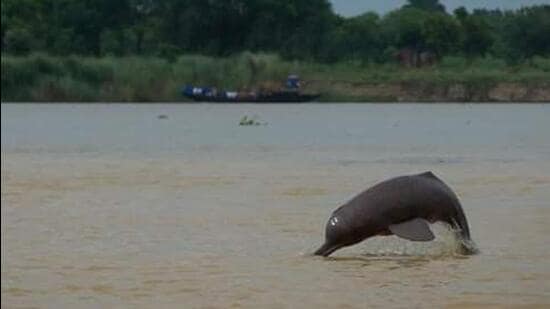
The programme is being coordinated by the Wildlife Institute of India (WII), Dehradun, in collaboration with state forest departments and partner conservation organisations including WWF India, Aaranyak and the Wildlife Trust of India (WTI). The exercise follows the release of population estimates from the first survey round by the Prime Minister during a National Board for Wildlife (NBWL) meeting at Gir in March last year.
The previous nationwide survey carried out between 2021 and 2023 recorded an estimated 6,327 riverine dolphins in India. Uttar Pradesh and Bihar reported the highest numbers, followed by West Bengal and Assam.
Experts associated with the project said the ongoing survey aims to determine the presence and distribution of dolphins across different river stretches and estimate their numbers. The teams will also assess habitat conditions and threats faced by the species.
According to officials, the survey will examine issues such as the use of mosquito nets for fishing, low water levels and other factors affecting dolphin habitats. Collection of pollution-related data is also part of the exercise. The findings are expected to help identify areas where government intervention is required and guide future policies.
{{/usCountry}}According to officials, the survey will examine issues such as the use of mosquito nets for fishing, low water levels and other factors affecting dolphin habitats. Collection of pollution-related data is also part of the exercise. The findings are expected to help identify areas where government intervention is required and guide future policies.
{{/usCountry}}As per the first comprehensive riverine dolphin report released in March 2025, Uttar Pradesh recorded 2,397 dolphins, the highest among all states. The report stated that the first-ever nationwide dolphin estimation covered 28 rivers across eight states, involved more than 3,150 mandays and surveyed over 8,500 kilometres. Bihar recorded 2,220 dolphins, followed by West Bengal with 815 and Assam with 635.
Bhupendra Yadav, Union minister for environment, forest and climate change, had launched the second round of the pan-India dolphin population estimation and its survey protocol at Dehradun during the last Wildlife Week.
A regional training workshop for forest staff from 13 districts of Uttar Pradesh was held at Bijnor ahead of the survey. Further training sessions will be organised in phases for groups of 10 to 15 districts to ensure uniform field practices, according to an official statement.
The survey began with 26 researchers deployed across three boats, documenting ecological and habitat parameters and using technologies such as hydrophones for underwater acoustic monitoring. In the first phase, the main stem of the Ganga from Bijnor to Ganga Sagar and the Indus River will be covered.
Apart from the Ganges River Dolphin, the survey will also assess the status of the Indus River Dolphin and Irrawaddy Dolphin, along with habitat conditions, threats and other conservation-priority species.