LUCKNOW: Shut for much-needed restoration in August 2022, the iconic Rumi Darwaza in the Old City, a must-see for visitors to Lucknow, was opened to the public on Thursday, nearly two years after it was shut and one and a half years after its conservation work was started by the Archeological Survey of India (ASI).
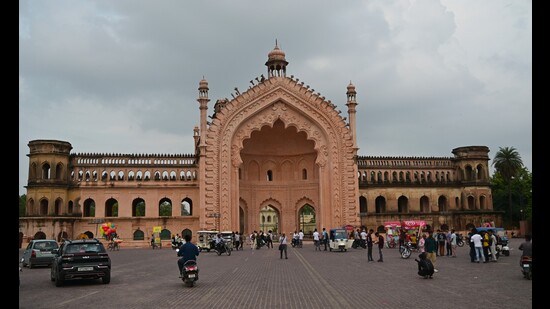
Sporting a fresh look, with the hue of ‘Surkhi’ mortar, now the 80-foot-high ornate and majestic structure, built in 1784 by Nawab Asaf-Ud-Daula, stands refurbished as a glowing testament to Avadh’s famed architecture.
Aftab Hussain, superintending officer, Archeological Survey of India (ASI), Lucknow circle, said that 99% work of the gate had been completed and it was opened to the public keeping in mind the upcoming Moharram. “It took nearly one -and-a-half years for restoration which was very intricate and involved a dedicated team of archaeologists to give a fresh lease of life to the 18th-Century structure ,” he said Aftab.
Restoration cost nearly ₹50 L
Restoration of the edifice was taken up by the Archaeological Survey of India (ASI) in June 2023. The estimated cost of the restoration is around ₹45-50 lakh.
Last year also, the gate was open for a few days due to the Moharram procession and was closed again for the restoration work. In its January 30, 2024, issue, the Hindustan Times reported about the details of the restoration work from cell to cell and the challenges faced by the ASI team.
{{/usCountry}}Last year also, the gate was open for a few days due to the Moharram procession and was closed again for the restoration work. In its January 30, 2024, issue, the Hindustan Times reported about the details of the restoration work from cell to cell and the challenges faced by the ASI team.
{{/usCountry}}“The structure was in bad shape for five decades. There were scores of cracks. When we scratched them further, they were found to be even bigger,” said Hussain, adding that home remedies were used in its restoration.
“Basic home materials like pulses, jaggery and eggs, among others, were used to make lime mortar. Lime mortar was made with multiple things such as ‘babool’ juice for adhesive, vigna mungo pulse, homemade jaggery, batasha (sugar candy ), eggs without yolk and fine jute. Lime mortar was prepared in a soaking pit,” he said.
Traffic to remain banned
To save the structure from further damage, the ASI has decided to keep traffic away from its gates. “The traffic will remain banned like it was before. It will be diverted from the adjacent road just like before, and for this we have taken permission from the district administration,” said the ASI officer.
“Only about one per cent work remains in which clamps will be put up at the entrance so that no traffic can pass through it,” Aftab added.