
 E-Paper



UP govt sanctions ₹27 crore for eight anti-drone radar panels
A security headquarters official explained that the radar panels would serve as the detection and tracking component of the anti-drone systems, enabling security agencies to monitor the surrounding airspace and identify suspicious unmanned aerial vehicles (UAVs), including drones that may pose a security threat.

 Prefer HTon Google


The Uttar Pradesh government has sanctioned ₹27.13 crore for procuring eight radar panels to strengthen anti-drone security at important religious and sensitive locations across the state. The equipment will form part of two anti-drone systems, with four radar panels allocated to each system.
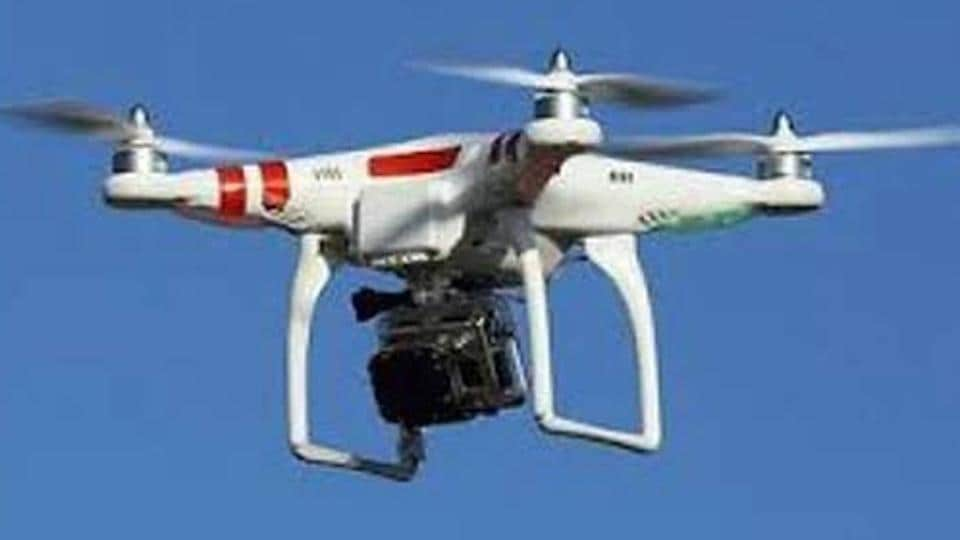
A security headquarters official explained that the radar panels would serve as the detection and tracking component of the anti-drone systems, enabling security agencies to monitor the surrounding airspace and identify suspicious unmanned aerial vehicles (UAVs), including drones that may pose a security threat.
Explaining how the technology works, the official said a radar panel transmits radio-frequency signals into the surrounding airspace and receives signals reflected by objects in their path. By analysing these returning signals, the radar can estimate an object’s distance, direction, altitude and speed. Continuous monitoring helps establish its flight path and track its movement.
“Unlike conventional visual surveillance, radar-based detection does not depend entirely on daylight or clear visibility. It can help security agencies identify aerial threats from a distance, including drones approaching sensitive installations, before they become visible to personnel on the ground,” he said.
“Once a suspicious object is detected, its tracking information can be relayed to the anti-drone system’s command and control unit for assessment. Depending on the system’s configuration and available countermeasures, security personnel can then initiate appropriate action, including electronic jamming to disrupt a drone’s communication or navigation signals,” he added.
The official further said radar detection was particularly important because small drones could fly at low altitudes, move slowly and have relatively small radar signatures, making them difficult to identify through conventional surveillance alone. Dedicated anti-drone radar technology is designed to detect and track such aerial objects.
The home department has accorded administrative and financial approval of ₹27,13,07,376 for the procurement during the financial year 2026-27. Each radar panel will cost ₹3,39,13,422, inclusive of taxes.
According to a government order issued on November 6 by special secretary Pawan Agrawal, the procurement follows a proposal submitted by the additional director general of police (headquarters) on September 15. The equipment is intended to strengthen security arrangements at important religious and sensitive locations across Uttar Pradesh.
The order, however, does not identify the locations where the two anti-drone systems will be deployed or disclose their technical specifications and operational configuration.
The procurement will be undertaken by the Uttar Pradesh Police Headquarters and Security Headquarters, Lucknow. The government has directed the authorities to verify that the funds sanctioned in 2025-26 for procuring eight radar panels for two anti-drone systems were not withdrawn before proceeding with the fresh allocation.
The entire sanctioned amount must be utilised by March 31, 2027, and the procurement must be completed within the approved financial allocation.


