The Uttar Pradesh transport department has identified 1,660 active black spots on roads across the state based on accident and fatality data for 2023-25, with National Highways emerging as by far the most dangerous road category.
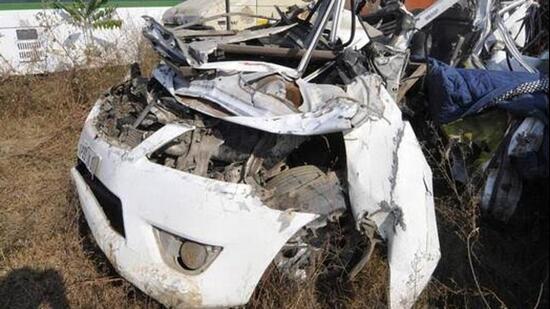
The recent data accessed by Hindustan Times shows that National Highways account for 1,103 black spots, or 66.4% of the total, but these locations recorded 9,002 fatalities, nearly 72% of all deaths reported at the identified black spots during the three-year period. In all, the black spots recorded 20,050 accidents and 12,447 deaths between 2023 and 2025.
A black spot is a specific short stretch (usually five metres) of road where a high number of severe accidents, injuries or deaths have occurred over a set period of three years.
Among districts/commissionerates, Lucknow has the highest number of black spots at 67, followed by Sitapur (55), Bareilly (54), Azamgarh (52) and Meerut (47). Prayagraj has 41, Rae Bareli 44, Firozabad 40 and Bahraich 37.
Also Read | Freedom the same night, but different dates: Why Pakistan marks its Independence Day on August 14
{{/usCountry}}Also Read | Freedom the same night, but different dates: Why Pakistan marks its Independence Day on August 14
{{/usCountry}}Prayagraj commissionerate recorded the highest number of deaths at black spots, with 538, followed by Lucknow (488), Mathura (410), Bahraich (335), Bareilly (334), Meerut (332), Azamgarh (304), Fatehpur (303) and Rae Bareli (295).
Individual locations reveal an even more disturbing picture. Atarasi in Amroha on NH-9 recorded 48 deaths in three years, the highest in the database. Lucknow’s CMS black spot on NH-27 recorded 45 deaths, while the Kanpur-Lucknow Highway location in Sarojini Nagar recorded 36 deaths. Jaith Sunrakh Cut on NH-19 in Mathura recorded 35 deaths.
Among National Highways, NH-19 has been the deadliest, with 145 black spots accounting for 1,481 deaths during 2023-25. NH-27 follows with 117 black spots and 1,055 deaths, while NH-30 with 92 black spots accounted for 598 deaths.
State Highways accounted for 250 black spots and 1,608 deaths, while major district/other roads had 279 black spots and 1,609 deaths. Expressways had only 28 listed black spots but still recorded 228 deaths.
Also Read | Lucknow pet trainer murder: Cops track garbage trail for dupatta used in killing
The Agra-Lucknow Expressway with 10 black spots accounted for 73 accidents resulting in 36 deaths, while the Eastern Peripheral Highway with six black spots accounted for 60 accidents leading to 56 deaths. The Yamuna Expressway’s listed black spots accounted for 38 accidents and 28 deaths.
Commenting on the black spots data released this year, former additional commissioner (road safety) PS Satyarthi said the figures suggest that the road-safety challenge in UP was not merely about the number of accident-prone locations but also their concentration on high-speed corridors and the unusually high fatality burden at several individual spots.
“A state-wide drive needs to launched to remove causes that make these spots accident-prone,” he said.