
 E-Paper



First Indian vessel crosses Strait of Hormuz after US-Iran ceasefire
The Indian LPG carrier Jag Vikram has crossed the Hormuz, marking the first such transit since a US-Iran ceasefire, and is expected in Mumbai by April 15

 Prefer HTon Google


An India-flagged liquefied petroleum gas (LPG) carrier, Jag Vikram, has successfully crossed the Strait of Hormuz and is now in the Gulf of Oman, marking the first such transit by an Indian vessel since a temporary two-week ceasefire between the United States and Iran was announced. It is expected to arrive at Mumbai on April 15, according to a statement from the Indian government.
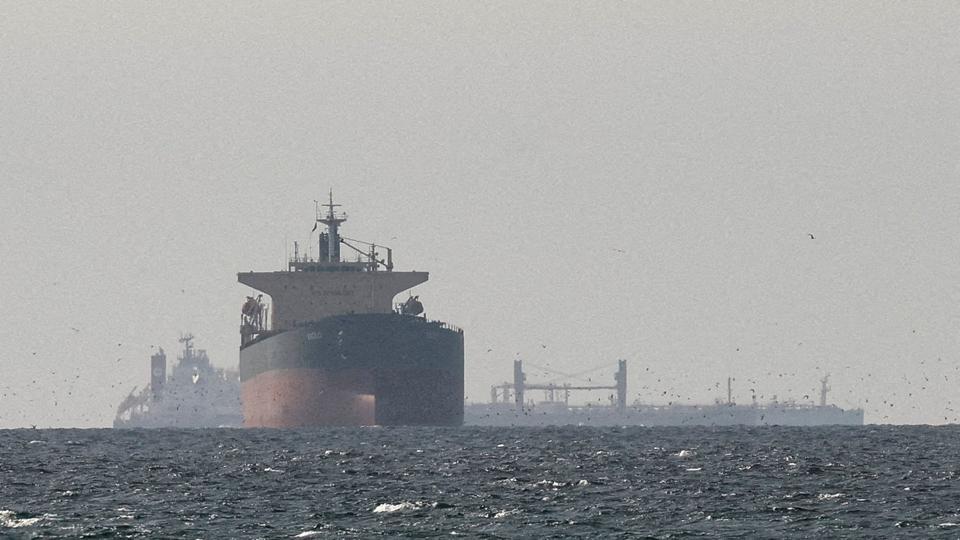
Ship tracking data showed the tanker moved through the strategic waterway between Friday night and Saturday morning and was located in the Gulf of Oman, east of the Strait on Saturday afternoon. The vessel exited the Ras Al Kuh traffic separation scheme at 1.30 pm, completing its transit through the strait.
“The India-flagged LPG vessel Jag Vikram has safely crossed the Strait of Hormuz today (Saturday),” said the government statement. “The vessel is carrying approximately 20,400 tonnes of LPG cargo with 24 seafarers onboard.”
Owned by Mumbai-based Great Eastern Shipping Company, Jag Vikram is a mid-sized gas carrier with a deadweight capacity of over 26,000 tonnes and has 24 seafarers onboard. It is the ninth Indian vessel to exit the Persian Gulf (west of the Strait of Hormuz) since early March.
Also Read | ‘Excessive demands', 'Strait of Hormuz’: Inside US-Iran peace talks in Pakistan
Government data shows that several Indian vessels remain in West Asian waters. As per a report by the Directorate General of Shipping, 14 Indian ships are currently in the Persian Gulf, six in the Gulf of Oman, three in the Gulf of Aden, and three in the Red Sea. Of these, six vessels in the Persian Gulf belong to the Shipping Corporation of India.
The government has also begun preparing contingency evacuation plans. A total of 17 vessels have been identified for evacuation by the Ministry of Petroleum and Natural Gas, including three LPG carriers, three LNG carriers, and 11 crude oil tankers. Of these, four are Indian-flagged while the remaining 13 are foreign-flagged vessels.
Separately, the Department of Fertilisers has identified 16 vessels for evacuation, including one Indian-flagged ship, Jag Arnav. When the conflict escalated, at least 28 India-flagged vessels were in the Strait of Hormuz region. While some have since moved to safer waters, several ships, along with hundreds of foreign-flagged vessels carrying India-bound cargo, continue to remain in the area.
Meanwhile, the Directorate General of Shipping has issued a circular to major ports, flagging concerns that concessions offered by port authorities are not being uniformly passed on to exporters.
The circular noted that benefits such as waivers on detention charges, ground rent and reefer plug-in charges are often routed through a reimbursement process involving terminal operators and non-vessel operating common carriers (NVOCCs), delaying relief to exporters.
It has now directed that all such concessions be passed on directly and transparently to stakeholders, including freight forwarders and NVOCCs, who must in turn reflect these benefits to exporters. The existing practice of post-facto adjustments and reimbursement claims has been ordered to be discontinued with immediate effect.
Despite the regional tensions, port operations across India remain normal, with no congestion reported. The Centre said it is closely coordinating with relevant ministries and maritime stakeholders to ensure seafarer safety and uninterrupted shipping operations.
India remains heavily dependent on energy imports, sourcing nearly 88% of its crude oil, about half of its natural gas, and close to 60% of its LPG requirements from overseas.
(With inputs from agencies)

Stay updated with all the Breaking News and Latest News from Mumbai. Click here for comprehensive coverage of top Cities including Bengaluru, Delhi, Hyderabad, and more across India along with Stay informed on the latest happenings in World News.


