
 E-Paper



Bhima Koregaon case: Jail hospitals well-equipped to monitor Varavara Rao: NIA tells Bombay HC
Asserting that Taloja jail hospital is well-equipped to monitor the health of Elgar Parishad case accused P Varavara Rao, Maharashtra government and the National Investigation Agency (NIA) on Wednesday informed the Bombay high court (HC) that the 82-year-old Telugu poet could be shifted to Taloja jail

 Prefer HTon Google


Asserting that Taloja jail hospital is well-equipped to monitor the health of Elgar Parishad case accused P Varavara Rao, Maharashtra government and the National Investigation Agency (NIA) on Wednesday informed the Bombay high court (HC) that the 82-year-old Telugu poet could be shifted to Taloja jail.
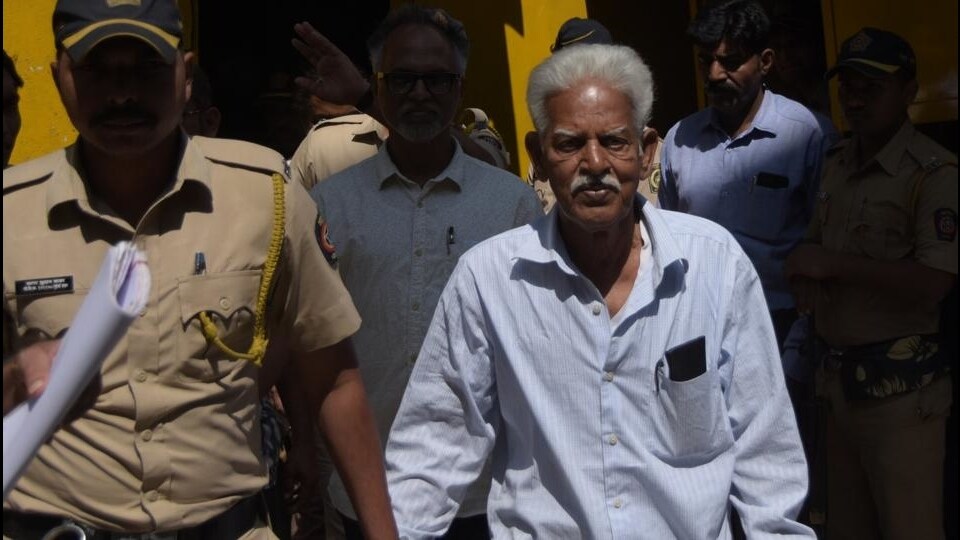
The submissions were made while senior counsel Anand Grover insisted that though Rao could be discharged from Nanavati Hospital, sending him back to Taloja jail would result in deterioration of his condition as the jails did not have the atmosphere recommended by Nanavati Hospital for monitoring Rao, after his discharge from the hospital.
A division bench of justice SS Shinde and justice Manish Pitale, while hearing the petition filed by P Hemlatha, wife of Rao, was informed by additional solicitor general Anil Singh for NIA, that the apprehensions of Rao’s wife about Taloja jail hospital is not equipped to take care of Rao, as per the recommendation of Nanavati Hospital, were unfounded.
Singh referred to the judgement passed last year in public interest litigations (PIL) that sought various reliefs for jail inmates during the ongoing Covid pandemic and said that the judgement had enumerated various measures for treating jail inmates who contracted the Covid virus and even for those suffering from comorbidities. Singh said that jails had complied with the measures mentioned in the judgement and in light of that Rao would not face the problems which Grover was anticipating.
On the question of the court as to whether Rao had dementia, Grover referred to medical study reports and stressed on the fact that delirium could result in dementia. Grover submitted that as the jail hospital was not equipped to monitor the sodium levels in Rao on a regular basis and he had slipped into bouts of delirium there was an apprehension that the delirium attack could progress to dementia which is incurable.
Later, senior advocate Indira Jaising also made submissions on behalf of Rao on whether the court had jurisdiction to grant bail on medical grounds under article 226 of the Constitution. She submitted that as Rao was old and had an underlying medical condition which could be life-threatening, if not kept under control, the court could grant him bail. She also referred to the bail on medical ground granted for former justice Mohit Shah to Prof Saibaba and said that though Saibaba was later convicted pending trial, he was granted bail on medical grounds.
She further added that though Rao was an accused and was imprisoned, it did not mean that he had to forego his fundamental rights to life of dignity and health. In light of these submissions, Jaising reiterated the prayer for granting Rao bail.
After hearing the submissions, the court asked Grover and Jaising to file a short affidavit to fortify their claims and list out the facilities which Rao would require after being discharged from Nanavati Hospital, but were not present in Taloja jail hospital.
The NIA and state will argue against the bail application on Thursday.


