MUMBAI: The civic administration has declared a war on garbage – one of Mumbai’s most stubborn and persistent challenges. Having identified 231 garbage vulnerable points (GVPs), the BMC claims to have “eliminated” 49 since the drive kicked off in December last year.
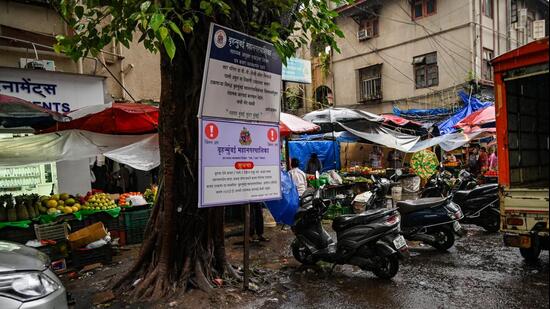
These results have been achieved by ramping up garbage-collection infrastructure at these spots, imposing penalties, and sometimes by deploying innovative methods.
However, civic watchdog groups and residents say a clean-up of this scale is about more than simple arithmetic. While the BMC’s drive may deliver impressive initial results, they question whether these gains can be sustained.
Civic officials claim they have used a unique approach – trying to figure out what turned a spot into a GVP before attempting to transform it. “Most GVPs are near slums. Residents generate waste and want to dispose of it immediately. The same applies to shops and establishments,” said a senior official with the BMC’s solid waste management (SWM) department.
Illustrating the “investigative” approach used, Sachin Gaikwad, assistant engineer, SWM, S ward, said at the Nahur Crematorium in S ward, the collection point had turned into a legacy dump. Conversations with residents revealed that several buildings in the area did not have house-to-house garbage collections. Private workers collected trash from these buildings, dumped it at the GVP, and with bins being inadequate, the waste spilled onto the street.
The BMC provided additional bins and extended door-to-door collection to 32 buildings, beginning about significant change. In neighbouring slums and gaothans, bins were installed close to these settlements, making disposal easier. Bin attendants working in three shifts penalised offenders.
{{/usCountry}}The BMC provided additional bins and extended door-to-door collection to 32 buildings, beginning about significant change. In neighbouring slums and gaothans, bins were installed close to these settlements, making disposal easier. Bin attendants working in three shifts penalised offenders.
{{/usCountry}}At Tagore Nagar in Vikhroli, a market GVP was tackled with a large end-of-day compactor, CCTV surveillance and a small closed vehicle that moved through the market so that shopkeepers could hand over waste.
At Mohtadevi Kanjur Marg east, adjacent to the Eastern Express highway, the solution was rather unusual. A small, closed garbage van parked regularly at the spot was roped into the cleanliness drive. The driver, who lived there, was assigned a civic worker, and the van was turned into a permanent collection point.
Sometimes, civic officials say, only the threat of penalties works. In P/North, on Lagoon Road in Malad, small-scale industries, including sofa makers and garment units, were dumping wood, cloth and other waste in several roadside patches. Here, financial penalties worked. “Once we started fining them, they realised we meant business,” said a senior official.
Civic activists are not convinced. Mandeep Singh Makkar, founder, Chandivali Citizens Welfare Association, believes change is possible only when corruption is rooted out of civic governance. “Garbage collection in slums is covered by the Swachha Mumbai Prabodhan Abhiyan (SMPA), with generous funds sanctioned for this purpose. But only 15% of the sanctioned strength turns up, with the money for the rest being pocketed by politicians and civic officials.Instead of cosmetic measures, they should focus on actually solving the problem.”
TrivanKumar Karnani, founder, Mumbai North Central District Forum (MNCDF), believes the civic drive is just a gimmick. “We have complained about so many chronic spots in the past but it hasn’t worked. Will the BMC put in place a strong mechanism to maintain these spots even after claiming they have been ‘eliminated’,” he asks.
Despite the scepticism, the BMC has claimed some astonishing results: S ward, covering Bhandup, Kanjurmarg and Vikhroli in the eastern suburbs, has eliminated five of its 12 GVPs—the highest in the eastern suburbs. F/North has eliminated nine of its 11, the highest in the city, while P/North has eliminated three of its 22, the highest in the western suburbs.
But beyond the arguably cosmetic nature of the drive, a senior civic official offers a nugget of truth: “When you try to dump waste, again and again, and are confronted by someone who is there just to stop you, you begin to feel ashamed and mend your ways.”
Stay updated with all the Breaking News and Latest News from Mumbai. Click here for comprehensive coverage of top Cities including Bengaluru, Delhi, Hyderabad, and more across India along with Stay informed on the latest happenings in World News.
Stay updated with all the Breaking News and Latest News from Mumbai. Click here for comprehensive coverage of top Cities including Bengaluru, Delhi, Hyderabad, and more across India along with Stay informed on the latest happenings in World News.