Mumbai: The Brihanmumbai Municipal Corporation (BMC) standing committee on Friday unanimously rejected the civic administration’s proposal for a massive road-washing drive to curb pollution and keep the streets clean, with corporators across party lines questioning the rationale behind the move amid a 10% water cut and concerns over water stock in seven dams which supply water to the city getting exhausted before May 17, 2027.
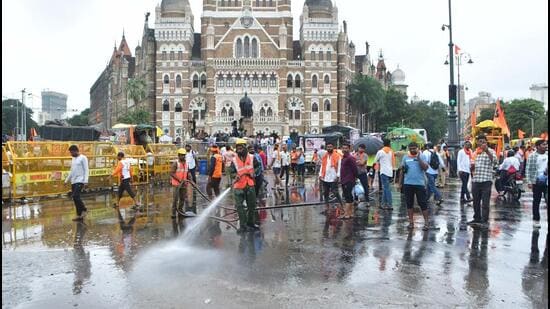
According to the proposal, 213 tankers (2,000-10,000 litres each) equipped with sprinkler jets were to be deployed for washing 377 public roads spanning around 677 kilometres. The move was intended to balance pollution control with infrastructure development, and in line with the Mumbai Municipal Corporation Act, 1888, which stipulates road washing and cleaning as an obligatory duty of the civic body.
A senior civic official said the proposal was prompted by rising air quality index (AQI) levels, and in line with recent orders of the Bombay High Court.
“Since the monsoon withdrew from Mumbai on October 3, the city’s overall AQI has spiked,” the official said.
In September, the city’s overall AQI hovered in the 36-75 range, indicating good air quality, but since the start of October, the air quality has slipped to satisfactory or moderate. On Friday, the overall 24-hour AQI in Mumbai was 99 (satisfactory), an improvement over the previous day’s reading of 120, indicating moderate air quality.
On Thursday, 14 of the 20 air quality monitoring stations across the city logged moderate AQI, with PM 2.5 and PM 10 being the prominent pollutants. The AIRWISE-Safar app, developed by the Indian Institute of Tropical Meteorology (IITM) in Pune under the Ministry of Earth Sciences (MoES), warned that even moderate AQI could cause breathing discomfort among people with asthma, lung and heart disorders.
{{/usCountry}}On Thursday, 14 of the 20 air quality monitoring stations across the city logged moderate AQI, with PM 2.5 and PM 10 being the prominent pollutants. The AIRWISE-Safar app, developed by the Indian Institute of Tropical Meteorology (IITM) in Pune under the Ministry of Earth Sciences (MoES), warned that even moderate AQI could cause breathing discomfort among people with asthma, lung and heart disorders.
{{/usCountry}}During Friday’s standing committee meeting, corporators unanimously opposed the BMC’s road-washing drive proposal, arguing that washing roads during a period of constrained water supply and a strengthening El Nino would be insensitive.
Congress group leader Ashraf Azmi called for a concrete policy to restore and utilise dysfunctional hydrants across the city for road cleaning, while questioning the absence of a comprehensive framework.
“Everything related to water supply in the city is dependent on tankers. A tanker-centric water distribution model is being put in place. If everything is dependent on tankers, we cannot cry about the tanker lobby,” Azmi said.
Maharashtra Navnirman Sena (MNS) group leader Yashwant Killedar said rising construction activity had made dust-control measures necessary, but questioned the availability of water for road washing. He asked if water discharged by sewage treatment plants could be used for the purpose.
Standing committee chairman Prabhakar Shinde said developers should be held accountable for controlling dust at construction sites.
After leader of the house Ganesh Khankar moved a resolution to reject the proposal, the standing committee directed civic authorities to explore alternatives that could suppress dust as well as keep roads clean.
Stay updated with all the Breaking News and Latest News from Mumbai. Click here for comprehensive coverage of top Cities including Bengaluru, Delhi, Hyderabad, and more across India along with Stay informed on the latest happenings in World News.
Stay updated with all the Breaking News and Latest News from Mumbai. Click here for comprehensive coverage of top Cities including Bengaluru, Delhi, Hyderabad, and more across India along with Stay informed on the latest happenings in World News.