MUMBAI: The Bombay High Court on Friday directed the Maharashtra government to set a fixed timeline for reimbursing private unaided schools for admitting children from economically weaker and disadvantaged sections under the 25% quota mandated by the Right to Education (RTE) Act. It also ordered the government to review the reimbursement rate, which has been fixed at ₹17,670 per child per year since 2016-17.
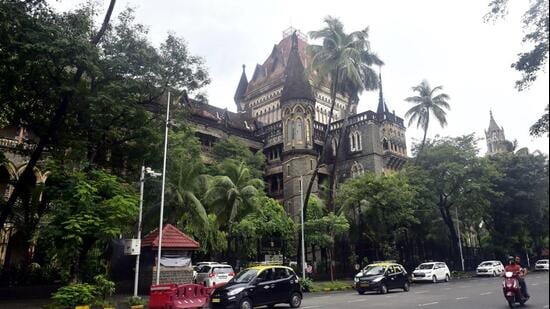
A division bench of justices RI Chagla and Farhan Dubhash passed the order while hearing a petition by Om Education Society. The educational institute had sought action against education department officials for failing to comply with an earlier court order directing payment of pending reimbursements.
Under the RTE Act, private unaided schools are required to reserve 25% of seats for children from weaker and disadvantaged sections and provide them free education. The state government is required to reimburse schools for the cost of educating these students.
In March, the court had recorded a statement by the government that pending reimbursements for children admitted under the RTE quota at three schools run by the petitioner institute would be paid by May 27. The statement was issued in response to the petitioner’s plea seeking reimbursement of ₹3.65 crore.
The institute had filed the contempt petition after the government failed to comply with the order. Responding to the petition on Friday, additional government pleader Kavita Solunke informed the court that the amount would be released to the institute latest by September 4.
{{/usCountry}}The institute had filed the contempt petition after the government failed to comply with the order. Responding to the petition on Friday, additional government pleader Kavita Solunke informed the court that the amount would be released to the institute latest by September 4.
{{/usCountry}}Although this substantially resolved the dispute, the bench expressed concern that private unaided schools are repeatedly required to approach the high court to secure reimbursement of fees for children admitted under the RTE quota. It noted that 133 such petitions have been filed in court so far this year.
The judges felt that unless the reimbursement mechanism was made time-bound, the legislative object underlying Section 12 of the RTE Act was liable to be seriously undermined. “The statutory obligation cast upon private unaided schools to provide free education to children belonging to weaker sections and disadvantaged groups is inseparably linked with the corresponding statutory obligation of the State to reimburse the eligible expenditure,” the judges said.
The bench said that delayed reimbursement over prolonged periods inevitably affects the financial viability of institutions which continue to discharge their statutory obligations. “The object of the RTE Act is to facilitate, and not discourage, participation of private educational institutions in the implementation of this important social welfare measure,” the judges said.
The court ordered the state government to appoint a committee of senior bureaucrats and review the entire system to ensure that the reimbursement is time-bound, establish an appropriate monitoring mechanism for ensuring compliance with such timelines and also to revise the rates— ₹17,670 per child per annum—fixed back in 2016-17, “notwithstanding substantial escalation in educational expenditure during the intervening period.”
The court ordered the government to complete the entire exercise by the end of the educational year.
Stay updated with all the Breaking News and Latest News from Mumbai. Click here for comprehensive coverage of top Cities including Bengaluru, Delhi, Hyderabad, and more across India along with Stay informed on the latest happenings in World News.
Stay updated with all the Breaking News and Latest News from Mumbai. Click here for comprehensive coverage of top Cities including Bengaluru, Delhi, Hyderabad, and more across India along with Stay informed on the latest happenings in World News.