MUMBAI: He was six years old when he first grasped the meaning of power, says Raj Thackeray. He recalls one day he was at Matoshree with Balasaheb Thackeray ready to accompany his uncle to the Shiv Sena office when they realised their driver had not turned up. “Balasaheb called a taxi just as Sudhir Joshi, then mayor of Bombay, arrived to meet him in his official car, an Impala. Joshi wanted to give us a ride but Balasaheb insisted on the taxi. I remember looking back on the drive to find the mayor’s Impala escorting our black and yellow fiat cab all the way to the Sena office. In that moment, my child’s brain registered that real power was not with the man in that long car with the red beacon; it lay instead with the man seated next to me.”
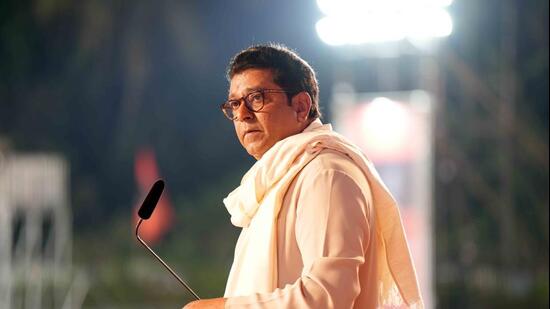
It’s a circuitous answer to a question about how he assesses himself as a politician. Thackeray, 58, who split from his uncle’s party in 2006 to form his own Maharashtra Navnirman Sena, says “leader” might be a more apt word for him.
It’s a fine distinction that may well define him. For the leader of a party that does not have a single lawmaker in either the Parliament or the Assembly, and only 13 corporators across 29 municipal corporations, Thackeray commands a disproportionate space in Maharashtra’s political imagination. His rallies routinely draw thousands of people, and he remains arguably the state’s best political orator. But like the early Shiv Sena, the MNS too lacks a coherent political or economic theory, coasting on the strength of its founder’s charisma.
In recent months, following the student protests, Thackeray has a new-found ubiquity. He’s making speeches, giving interviews, writing on social media…ensuring uninterrupted airplay for his anti-government views. Earlier this week, after the Mumbai police sent notices to several X users to cease and desist from sharing Sabeer Bhatia’s documentary on Narendra Modi and Gautam Adani, Raj Thackeray reposted it on his X account, getting four million views within 24 hours. This cocking a snook is reminiscent of the mischief he would get up to as a child. In his book ‘Cousins Thackeray,’ journalist Dhaval Kulkarni writes that Bal Thackeray often sketched Raj Thackeray’s childish escapades for ‘Marmik’, the magazine that he brought out together with Raj’s father, his brother Shrikant.
{{/usCountry}}In recent months, following the student protests, Thackeray has a new-found ubiquity. He’s making speeches, giving interviews, writing on social media…ensuring uninterrupted airplay for his anti-government views. Earlier this week, after the Mumbai police sent notices to several X users to cease and desist from sharing Sabeer Bhatia’s documentary on Narendra Modi and Gautam Adani, Raj Thackeray reposted it on his X account, getting four million views within 24 hours. This cocking a snook is reminiscent of the mischief he would get up to as a child. In his book ‘Cousins Thackeray,’ journalist Dhaval Kulkarni writes that Bal Thackeray often sketched Raj Thackeray’s childish escapades for ‘Marmik’, the magazine that he brought out together with Raj’s father, his brother Shrikant.
{{/usCountry}}But can Raj Thackeray become something more significant than the enfant terrible of Maharashtra politics?
Roll of the dice
“Have you seen ‘Octopussy’?” asks Thackeray pulling on a long cigarette holder in an air-conditioned sound-proof room lined with DVDs. “The villain in that Bond film is an Afghan prince played by Louis Jourdan who is a gambling cheat. No matter who plays, the dice always rolls in his favour. Our elections have become like that, the dice is always loaded in the BJP’s favour. This is why we (the opposition parties) are all on the streets, and will remain there until this is resolved,” says, forecasting a period of angry tumult in the months ahead.
It can sometimes be hard to take Thackeray at his political word. In the 2010s he was one of the earliest politicians in Maharashtra to champion Narendra Modi, and continued to do so until his election as prime minister in 2014. “When people even in the BJP were not saying it, I said at a speech in Gujarat that Modi should be prime minister. I admit I was optimistic that he would bring a big change in the country but those hopes have since been belied. All those campaigns he launched—Swachcha Bharat, Smart Cities, whatever happened to them? All we have now is an attitude of impunity from the government.” There are those though who will say that the reason for Thackeray’s disenchantment is because the BJP chose to go with Uddhav Thackeray in 2014, and not him.
But he attributes the turnaround to a genuine change of mind. “I had raised an alarm about the sudden spurt in voting percentage as far back as the 2017 civic elections in Mumbai. I was the one leader who went to the EC then to flag this suspicious jump in the numbers. In 2018, I raised this in my political rallies, and I also met Mamata Banerjee, (Sharad) Pawar saab and Sonia Gandhi to apprise them of this suspicious trend. The only person who understood the implication of what I was saying was Sonia Gandhi. Back then I had suggested that the opposition parties should boycott elections.” His friend Shiv Sena (UBT) MP Sanjay Raut said last week that he was talking to the Congress to get Thackeray and his party formally into the INDIA bloc.
There are a few reasons why this may not be priority for the principal opposition party though: Thackeray’s hardline Hindutva line in the past wherein he spearheaded a campaign against the use of loudspeakers at mosques, and his strident anti-north Indian rhetoric, reminiscent of Balasaheb Thackeray’s Shiv Sena of the 1990s. Secondly, the MNS’s diminishing footprint across the state makes it a minor player. In its first Assembly election in 2009 the party secured a 5.17 per cent vote share which dipped to 3.15 per cent in 2014 in the Modi wave, then to 2.25 in 2019 when Thackeray ran a spirited anti-BJP campaign. In the 2024 Assembly elections the MNS vote share came down to 1.55 per cent. Despite this slump Thackeray remains a key political figure with a hotline to leaders across party lines, industrialists, and film folk.
Behind the demagogy, he’s a sharp reader of the political climate. Despite engineering the 2022 split in the Shiv Sena, the BJP has been unable to capture the hearts and minds of the native Marathi speakers, he says. “So, they are trying to foment tensions between Hindi-Muslim, between Maratha-OBCs, between Marathi and non-Marathi speakers instead,” he says in chaste Hindi, something unimaginable a few years ago. More surprisingly, he continues: “I have told my cadre that no matter what the provocation, we will not react. Not because we can’t use the old tactics, but this is the BJP’s trap. They want us to react to their provocations so that they can set the narrative. But I and not they decide the narrative for my party.”
He sees no apparent contradiction between nativism and liberalism. The Mumbai Metropolitan Region has been reduced to a “humungous piece of property” in this government, he says. “If you get down to its core, what is socio-cultural identity? It’s the land you live on, where you build your house and create a life. From that emanates food choices, language and culture, but if you are divested of your land, your essential identity gets diluted. This is what I keep warning the Marathi people about in all my speeches: Do not sell your land unthinkingly.”
Thackeray, who himself has long had business interests in Mumbai real estate, says his opposition to the state government also stems from its policy of cheap disposal of public land to private players. “They are creating the Vaadhvan port, great. Why do you need an airport there? To move cargo, right? If the cargo operations move there and international flights to the Navi Mumbai airport, what happens to Terminal 1 that sits on acres of prime land in Santacruz? Adani will likely profit from building an aerocity there. Remember, this was all public land.” He then moves on, now in full flow, to the bullet train project which he has long opposed. “The world over, bullet trains are meant to bridge long distances. Why not build a Mumbai-Delhi or a Mumbai-Chennai bullet train? What’s the point of doing a Mumbai-Ahmedabad bullet train when about 40 trains run between the two cities daily? If raising these issues is nativism then so be it.”
Beyond Marathi manoos
“Raj Thackeray’s personality is simultaneously his biggest strength and weakness,” says Mumbai university researcher and Shiv Sena scholar Sanjay Patil. His larger-than-life persona attracts large crowds but it has also come in the way of the hard yards needed to build a pan-Maharashtra party from the grassroots. “He has a great grasp of Maharashtra’s socio-cultural ethos which he articulates well, and he raises the right issues but what beyond that?” asks Patil. In that, both cousins Thackeray appear bound by similar constraints. Raj and Uddhav, groomed by Balasaheb Thackeray, well understand the limitations of strongarm tactics in modern day politics, and are trying to steer away from it. In an era dominated by the BJP’s Hindutva, can they carry their base along is the question.
“They would do well to stay united but there is an essential mistrust between them going back to the early 2000s which hasn’t as yet been erased,” says Patil. Thackeray himself sidesteps questions about the future of his political alignment with Uddhav. “You ask me how I asses my role in the face of a hegemon like the BJP? I am the little ant that gets into the elephant’s ear.”
Stay updated with all the Breaking News and Latest News from Mumbai. Click here for comprehensive coverage of top Cities including Bengaluru, Delhi, Hyderabad, and more across India along with Stay informed on the latest happenings in World News.
Stay updated with all the Breaking News and Latest News from Mumbai. Click here for comprehensive coverage of top Cities including Bengaluru, Delhi, Hyderabad, and more across India along with Stay informed on the latest happenings in World News.