MUMBAI: The Dr Babasaheb Ambedkar Bhavan in Dadar East was crowded with books on sale, film-makers and theatrewallahs exchanging ideas, and the occasional chant of ‘Jai Bhim’, last Saturday. The occasion was Baburao Bagul.
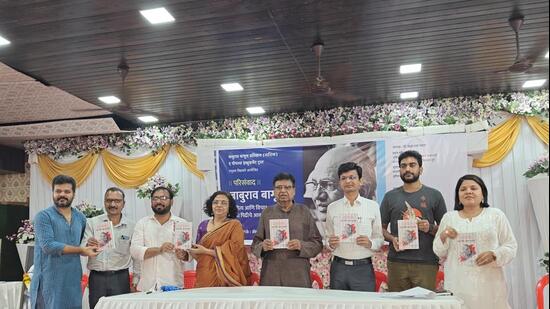
Eighteen years after his death in Nashik, and 63 years after ‘Jevha Mi Jaat Chorli Hoti’ (‘When I Concealed My Caste’) landed in Marathi literature like a stone shattering a window, the Baburao Bagul Pratishthan (Nashik) and The People’s Improvement Trust had organised a seminar with a pointed title: ‘Baburao Bagul Sahitya ani Vichar: Navya Pidhiche Aakalan,’ or Baburao Bagul’s literature and thought as a new generation understands it. Social and cultural theorist Arjun Dangle convened it.
The title carried a question. Does the new generation read Bagul at all? I did a small survey over the weekend. Gen Z recalls P L Deshpande and Vinayak Savarkar, but few have heard of Bagul. Those who have read him are often those preparing for the UPSC examination, where ‘Jevha Mi Jaat Chorli Hoti’ sits on the Marathi literature syllabus.
Which is why the evening at Dadar was, in part, a riposte. It began not with speeches but with Bagul’s own words. Theatre director Vinayak Kolwankar and actor Priyapal Gaikwad performed a selection of his stories and poems. Hearing Bagul read aloud (especially his short story ‘Vidroh’) is a reminder of how edgy his language is. In ‘Vedaadhi Tu Hotas’ (‘You Were There Before the Vedas’), the human being stands before every scripture and every god. It is man, the poem insists, who named the sun and the moon, and the universe accepted the names. In another poem he imagines a tomorrow in which he is no one’s slave, and the fragrance of the labouring class drifts from country to country.
{{/usCountry}}Which is why the evening at Dadar was, in part, a riposte. It began not with speeches but with Bagul’s own words. Theatre director Vinayak Kolwankar and actor Priyapal Gaikwad performed a selection of his stories and poems. Hearing Bagul read aloud (especially his short story ‘Vidroh’) is a reminder of how edgy his language is. In ‘Vedaadhi Tu Hotas’ (‘You Were There Before the Vedas’), the human being stands before every scripture and every god. It is man, the poem insists, who named the sun and the moon, and the universe accepted the names. In another poem he imagines a tomorrow in which he is no one’s slave, and the fragrance of the labouring class drifts from country to country.
{{/usCountry}}These are not abstractions. Bagul grew up in the Matunga Labour Camp, worked at Kohinoor Mill in Dadar and the railway workshop at Matunga. In 1955, posted to Surat, he hid his caste to rent a room. The deception troubled him so deeply that he quit the job, and the episode became the title story of his first collection.
He once asked how the gods within the human body could ever awaken in a slum where children grow up watching murder, gambling and illicit daaru being made (and consumed). That question has not aged.
The second part of the evening turned to discussion. Poet Dr Pradnya Daya Pawar presided, and doctor and poet Dr Shridhar Pawar set out the framing. The young speakers were authors, activists and academics Avinash Usha Vasant, Dr Padmakar Tamgadge, Sanjay Bhise, Manav Kambli and Priyanka Tupe, with Surekha Paithane as moderator.
Kambli, whose English translation of Bagul’s short stories carries the apt title ‘Lootaloot’, traced three influences on Bagul’s worldview: Ambedkar, Marx and Gorky. Bagul came to the workers’ movement through Annabhau Sathe, who lived in the same labour camp, and he measured his stories against Gorky and Chekhov before he found the roots of his philosophy in Phule and Ambedkar. Vasant spoke about three themes in Bagul: death, hunger and the importance of cultural politics. These run through Bagul’s fiction from ‘Maran Swasta Hot Ahe’ (‘Death Is Getting Cheaper’) onwards.
Then the second edition of Sanjay Bhise’s Hindi translation of Bagul’s stories was formally released. Between Bhise’s Hindi and Kambli’s English, Bagul now travels well beyond Marathi.
But the door is still open
Bagul once said that a writer sees much-more, but a Dalit writer sees (and suffers) much more. The line could stand as a summary of the evening. The writers and artists in the room were not merely commemorating him. They were inspired by him.
Activist Subodh More is in the midst of a crowd-funded documentary about Ambedkar’s Mahad Satyagraha, due to be completed by the end of 2026. Kolwankar, the creator of ‘Todi Mills Fantasy’, is composing a theatre piece dedicated to the Constitution, which will open on November 26. Neither project is about Bagul; yet both carry his argument forward. The Mahad Satyagraha was the struggle in 1927 that culminated in Ambedkar burning the ‘Manusmriti’. And ‘Vidroh’, the story Kolwankar read that evening, sets Bagul’s human-centred world against Manusmriti’s birth-based hierarchy; his refusal of the Vedas is a refusal of the order Manu codified.
Baburao Bagul would have liked that. This is the sort of cultural assertion that defined his work and his words.
I was in Dharavi in 1999 when Bagul presided over the first Vidrohi Sahitya Sammelan. This was the alternative to the establishment’s Akhil Bharatiya Marathi Sahitya Sammelan. From the dais, he spotlighted what few were willing to name at the time: fascism is at our doorsteps. He was not prophesying some distant future. He was describing the present, as he saw it from the bastis and gullies of Maharashtra.
Eighteen years on, one says, what if we had paid heed to his words. Bagul saw the writing on the wall long before most of us. That is his genius. And that is why we need Baburao Bagul in 2026.
(Ramu Ramanathan is a Mumbai-based playwright, poet and journalist)
Stay updated with all the Breaking News and Latest News from Mumbai. Click here for comprehensive coverage of top Cities including Bengaluru, Delhi, Hyderabad, and more across India along with Stay informed on the latest happenings in World News.
Stay updated with all the Breaking News and Latest News from Mumbai. Click here for comprehensive coverage of top Cities including Bengaluru, Delhi, Hyderabad, and more across India along with Stay informed on the latest happenings in World News.