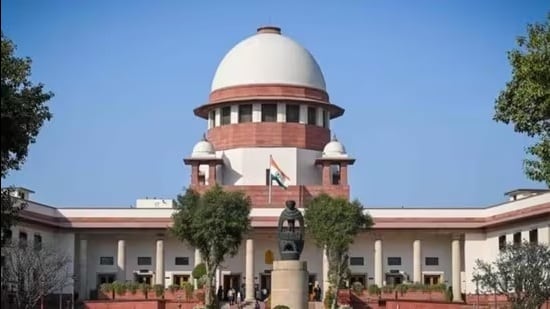
NOIDA: Untreated sewage continues to flow from Noida into the Yamuna river system despite repeated court directives, according to a note submitted to the Supreme Court by amicus curiae K Parameshwar.
The unchecked discharge into the Kondli-Noida drain is driven by incomplete drain trapping and malfunctioning society-level sewage treatment plants (STPs), the document stated.
The note is part of ongoing hearings in an appeal filed by the New Okhla Industrial Development Authority (Noida authority) and the Delhi Jal Board. The agencies are challenging a 2022 National Green Tribunal (NGT) order that imposed interim environmental compensation penalty — ₹100 crore on Noida and ₹50 crore on Delhi Jal Board — for sewage discharge.
The proceedings focus on pollution in the Kondli drain, a 17-km channel originating in Delhi that flows through Noida before joining the Yamuna.
Noida authority officials told the amicus on May 17 that the city has eight STPs with a combined capacity of 411 million litres a day (MLD). Current sewage generation is estimated at 240 MLD.
However, a Central Pollution Control Board (CPCB) inspection report submitted to the apex court revealed only three STPs — a 50 MLD plant in Sector 168, an 80 MLD plant in Sector 123, and a 54 MLD plant in Sector 54 — “were complying with all discharge norms.” The remaining STPs “violated one or more parameters,” the report stated.
{{/usCountry}}However, a Central Pollution Control Board (CPCB) inspection report submitted to the apex court revealed only three STPs — a 50 MLD plant in Sector 168, an 80 MLD plant in Sector 123, and a 54 MLD plant in Sector 54 — “were complying with all discharge norms.” The remaining STPs “violated one or more parameters,” the report stated.
{{/usCountry}}Noida has 26 drains flowing towards the Yamuna, four of which are dry. Treated effluents from STPs are discharged into these channels without in-situ treatment.
“Resultantly, significant volumes of untreated or inadequately treated sewage still reach Kondli–Noida drain and then Yamuna, mainly due to: malfunctioning/grossly under-utilised society-level STPs; and incomplete trapping of drains,” the note stated.
The NGT, in an August 2022 order, directed that canals, water bodies and storm water drains are not to be used for sewage discharge. The tribunal ordered that 30 identified drains be diverted to existing STPs instead of the Noida drain.
The Supreme Court, hearing the matter on March 19, stated a comprehensive plan for sewage discharge “is the need of the hour to ensure that these rivers which are national assets remain protected.”
The amicus note also cited broader coordination failures. Officials stated that while individual states maintain rejuvenation plans, “there is no single overarching document” for the Yamuna clean-up across jurisdictions.
Stay updated with all the Breaking News and Latest News from Mumbai. Click here for comprehensive coverage of top Cities including Bengaluru, Delhi, Hyderabad, and more across India along with Stay informed on the latest happenings in World News.
Stay updated with all the Breaking News and Latest News from Mumbai. Click here for comprehensive coverage of top Cities including Bengaluru, Delhi, Hyderabad, and more across India along with Stay informed on the latest happenings in World News.