New Delhi
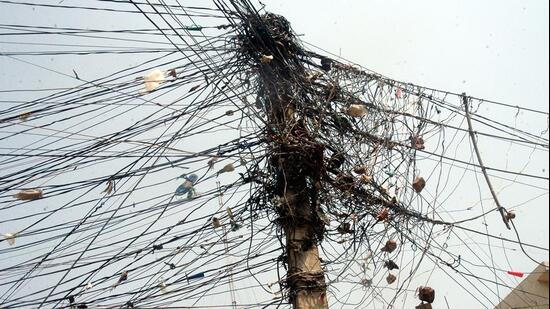
Delhi’s power distribution companies BSES and Tata Power Delhi Distribution Limited (TPDDL) have estimated a 6% loss in revenue from aggregate technical and commercial (AT&C) losses in the 2025-26 financial year, with power theft identified as the key driver that caused a financial impact to the tune of ₹383 crore, as per data accessed by HT.
Officials said that in areas catered to by BSES, south and west Delhi accounted for losses to the tune of around ₹211 crore, while east and central Delhi accounted for losses to the tune of ₹136 crore. Of the total, areas catered to by the TPDDL accounted for ₹36 crore of the losses.
A discom official said, “The losses were characterised by direct hooking from the network, meter tampering, illegal cables, unauthorised commercial and industrial loads and encroachments around electricity infrastructure.”
BSES discoms, BSES Rajdhani Power Limited (BRPL) and BSES Yamuna Power Limited (BYPL), cater to more than 5.44 million consumers and nearly 22.5 million residents across south, west, east and central Delhi. TPDDL caters to around 9 million people in north and northwest Delhi.
While discom officials acknowledged that losses were dramatically reduced—from around 54% when power distribution was privatised in 2002 in Delhi—enforcement is being tightened in some localities with support of the Delhi government and police.
{{/usCountry}}While discom officials acknowledged that losses were dramatically reduced—from around 54% when power distribution was privatised in 2002 in Delhi—enforcement is being tightened in some localities with support of the Delhi government and police.
{{/usCountry}}BSES’ BRPL and BYPL recorded AT&C losses of 6% and 5.83%, respectively, in 2025-26, while TPDDL reported losses of 5.41%. The figures mark a dramatic improvement from the levels recorded when power distribution was privatised in Delhi, when losses were around 55% for BSES and 53% for TPDDL, as per the data.
High-loss pockets under focus
In south and west Delhi, BSES has identified Khyala Village, Kamruddin Nagar, Jharoda Kalan, Dichaon Kalan and Tughlakabad Village among the chronic high-theft areas. In east and central Delhi, the focus areas include Jama Masjid, Lahori Gate, New Seelampur, Ghonda, Sunder Nagri, Krishna Nagar, Gandhi Nagar, Anand Vihar ISBT and Sadar Apartment-Chilla Village.
In the 2025-26 fiscal, BSES lodged 14,203 cases of electricity theft and meter tampering, with south and west Delhi accounting for 8,045 cases, and east and central Delhi accounting for 6,158 cases.
Officials said that enforcement action includes disconnection of illegal connections, recovery proceedings, police complaints and FIRs, besides cases in special courts.
In June, BSES removed illegal cables connected to its LT network in Kamruddin Nagar and Khyala, with the support of police and public representatives. According to BSES, electricity theft declined by about 34,000 units per day following the crackdown.
TPDDL, meanwhile, identified Bawana, Bhaktawarpur, Kanjhawala, Alipur and Narela as the areas where losses were highest.
Of 5.41% AT&C losses in 2025-26, Bawana accounted for 20.2%, Bhaktawarpur accounted for 15.41%, Kanjhawala accounted for 14.86%, Alipur for 12.54% and Narela for 12.24%, officials said. Other areas with relatively higher losses were Badli (8.94%), Karala (7.98%) and Kirari (7.51%).
TPDDL estimates that these high-loss areas account for around 200 million units (MU) of commercial losses.
The discom identified direct hooking, meter tampering and bypassing of metering systems as key offences, while saying unauthorised constructions and dense localities posed challenges to enforcement. Officials said TPDDL filed approximately 4,000 power theft cases in 2025-26.
TPDDL uses smart meters, advanced metering infrastructure, GIS mapping, data analytics, tamper alerts, OCR-based meter reading and a revenue protection engine to detect thefts.
Power distribution companies said that electricity theft was not merely a revenue issue, but that unauthorised consumption can overload transformers, feeders, cables and distribution boxes, resulting in voltage fluctuations, equipment failures and outages.
The discoms said reducing theft and commercial losses would help improve network reliability, reduce overloading and outages, and strengthen their financial position, potentially allowing greater resources to be directed towards infrastructure upgrades and consumer services.