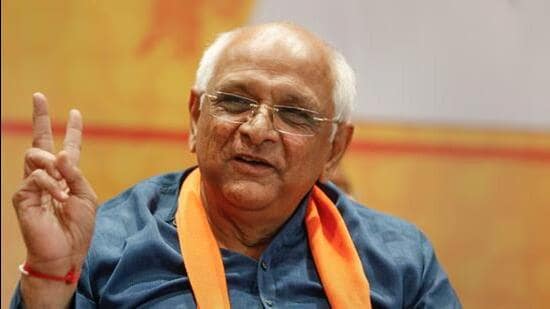
The Gujarat government on Wednesday announced the creation of a new district, Vav-Tharad carved out of Banaskantha district, which will have its headquarters in Tharad. The state cabinet led by chief minister Bhupendra Patel also approved the creation of nine new municipal corporations in the state.
“Banaskantha district is the biggest in the state in terms of talukas. It is also the second biggest in terms of area. The chief minister has taken this decision in the larger public interest to ensure that people of the district get facilities easily,” senior minister and government spokesperson Rushikesh Patel told media persons.
The Vav-Tharad district will comprise eight talukas: Vav, Bhabhar, Tharad, Dhanera, Suigam, Lakhni, Diodar, and Kankrej, along with four municipalities. The reorganised Banaskantha district will retain six talukas with Palanpur as its headquarters.
“After the split, Vav-Tharad district will be spread across 6,257 square km while Banaskantha’s area will be 4,486 square km,” Patel said, adding that each district will encompass approximately 600 villages.
Meanwhile, the Cabinet’s approval to the formation of nine new municipal corporations effectively doubles the state’s total number of municipal corporations from eight to 17. The new corporations will be formed in Navsari, Vapi, Anand, Nadiad, Mehsana, Surendranagar/Wadhwan, Morbi, Porbandar/Chhaya, and Gandhidham.
In the last such expansion, Gandhinagar was designated a municipal corporation in 2010.
{{/usCountry}}In the last such expansion, Gandhinagar was designated a municipal corporation in 2010.
{{/usCountry}}The transformation involves merging various municipalities and gram panchayats to create larger, more efficient administrative units. For instance, Navsari Municipal Corporation will incorporate the existing municipality along with four gram panchayats, while Gandhidham Municipal Corporation will combine its municipality with six gram panchayats, according to a government release.
“This decision will strengthen governance, ensuring a quicker, more efficient, and transparent process,” said the spokesperson minister. The restructuring aims to improve essential services delivery, including roads, sewerage systems, sanitation, and healthcare. The state government has committed to providing necessary financial and administrative support to rural areas merged into the municipal corporations, as per the media statement.
The changes align with NITI Aayog’s vision of ‘Cities as Engines of Growth’ and Prime Minister Narendra Modi’s policy of ‘Je Kahevu Te Karvu’ (Delivering on Commitments), it added. The initiative is part of chief minister Patel’s broader vision for ‘Viksit Gujarat@2047,’ focusing on ‘Earning Well’ and ‘Living Well’ goals, according to the release.
The new municipal corporations are expected to facilitate major infrastructure projects like BRTS, Metro Rail, and Riverfront development, while generating substantial employment opportunities. With these changes, Gujarat will have 17 municipal corporations and 149 municipalities.