: The Allahabad High Court upheld the life sentences of a husband and his parents for the murder of a woman who died of burn injuries, holding that her dying declaration could not be disbelieved merely because all prosecution witnesses of fact had turned hostile during the trial.
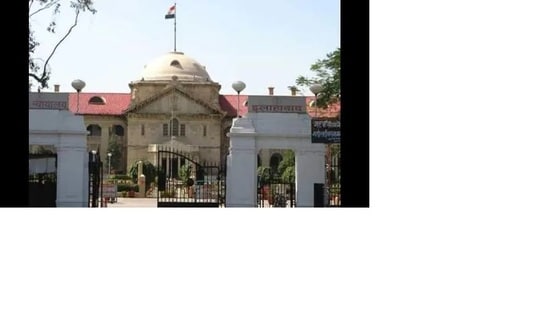
A division bench of Justice Siddhartha Varma and Justice Jai Krishna Upadhyay, in its October 16 order, observed that there could be instances where prosecution witnesses were won over, either emotionally or through material benefits.
However, the court acquitted two other accused, Vipin and Madan, after finding that the prosecution had failed to establish their identities. It noted that neither the informant nor any other prosecution witness knew them before the incident, no test identification parade was conducted and none of the witnesses recognised them in court.
The bench was hearing three criminal appeals challenging a November 2018 judgment of the Budaun sessions court, which had convicted all five accused under Section 302 read with Section 149 of the Indian Penal Code (IPC) and sentenced them to life imprisonment.
According to the prosecution, the deceased, who had been married to Anuj Kumar for around three years, was allegedly burnt after kerosene oil was poured over her at her matrimonial home in Budaun on January 4, 2017.
{{/usCountry}}According to the prosecution, the deceased, who had been married to Anuj Kumar for around three years, was allegedly burnt after kerosene oil was poured over her at her matrimonial home in Budaun on January 4, 2017.
{{/usCountry}}After learning about the incident, her father reached the matrimonial home and she was taken to the district hospital, where her dying declaration was recorded at around 4.48pm the same day. She died in the early hours of January 5. The postmortem report attributed her death to shock and extensive ante-mortem burn injuries.
During the trial, the deceased’s mother, sister, maternal aunt and brother did not support the prosecution’s case and were declared hostile. They either denied the alleged occurrence or claimed that she had sustained burn injuries in an accident.
Challenging their convictions before the high court, the accused questioned the reliability of the dying declaration, contending that the deceased was not in a fit condition to make the statement. They also raised questions over the absence of a kerosene odour in the post-mortem report and alleged that pages were missing from the hospital bed-head ticket. The state opposed the appeals, relying on the dying declaration and the evidence of the doctor and the tehsildar who recorded it.
After examining the evidence, the bench held that the dying declaration could not be rejected in its entirety simply because the prosecution witnesses had turned hostile. It distinguished the cases of the three accused whose identities were established from those of Vipin and Madan, whose identities remained unproved.
The court noted that the informant, other prosecution witnesses and the deceased knew Anuj Kumar and his parents, Rajeshwari and Brajpal, before the incident. Their identities, therefore, stood established, and the dying declaration naming them provided a basis for sustaining their convictions.
The bench accordingly dismissed the appeals filed by Anuj Kumar, Rajeshwari and Brajpal, leaving their life sentences intact.
Allowing the appeals filed by Vipin and Madan, the court set aside their convictions and directed that they be released forthwith if they were not wanted in any other case.