The Bhabha Atomic Research Centre (BARC) has designed a research reactor that can make radioisotopes available at low costs to medical and other industries.
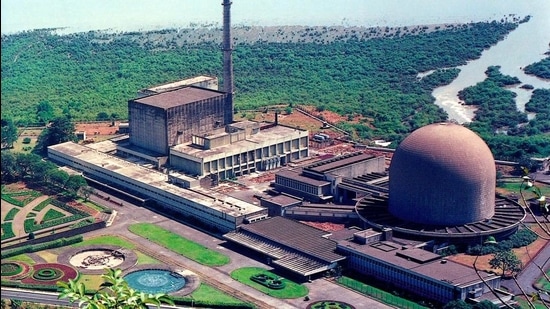
In a first, the premiere nuclear research organisation of the department of atomic energy (DAE) will share the technology with industries through a public-private partnership. This is expected to bring down costs of cancer treatment in India.
Radioisotopes are radioactive isotopes that have an unstable atomic nucleus. They emit energy and particles when they change to a more stable form. Radioisotopes are widely used in nuclear medicine for diagnostics as well as to treat diseases such as cancer. The industrial uses of radioisotopes include identifications of flow malfunctions, measurement of flow parameters, evaluation of design of chemical reactors, monitoring of product quality and process efficacy.
In India, all major radioisotopes are produced by the BARC, which houses research reactors in its Trombay campus and an accelerator in Kolkata. Some radioisotopes are imported from Europe, Australia and other Asian countries.
Radioisotopes in India can be procured and handled only by the users duly authorised by the radiological safety division (RSD), atomic energy regulatory board (AERB). Private entities that are willing to invest in the construction of the research reactor and its processing units will get exclusive rights to process and market the radioisotopes produced in the reactor.
Meanwhile, the demand for radioisotopes for nuclear medicine is on the rise. Between 2018 and 2020, the number of nuclear medicine departments in the country’s hospitals has grown from 293 to 349, according to AERB.
{{/usCountry}}Meanwhile, the demand for radioisotopes for nuclear medicine is on the rise. Between 2018 and 2020, the number of nuclear medicine departments in the country’s hospitals has grown from 293 to 349, according to AERB.
{{/usCountry}}“Typically, research reactors have facilities such as radioisotope production, testing of structural materials for its use in nuclear reactors, making neutrons available for material science studies etc. The research reactor planned by BARC primarily has facilities for radioisotope production. Apart from medical radioisotopes, provisions are also made for producing radioisotopes for industrial use like Cobalt-60, Iridium-192, Bromine-82 etc,” said an email response from the office of KN Vyas, secretary, DAE.
The proposed research reactor is expected to bring down the cost of nuclear medicine, which are extensively used for cancer treatment. “As the research reactor (under planning stage) is expected to produce a relatively large quantity of radioisotopes and the associated facilities are also catering to relatively large quantities of radiopharmaceuticals, it is felt that the cost of producing radiopharmaceuticals may reduce. As the radiopharmaceuticals are being manufactured indigenously, it is expected that increased self-sufficiency will lead to cheaper radiopharmaceuticals and consequently reduce the cost of cancer treatment,” read the response from Vyas.
DAE has said that it is in discussion with potential Indian and global investors and the identification of a suitable site for the reactor is in process. The research reactor is expected to come online in five years after the construct begins, said DAE.