Masks or “mukhas” are an integral part of Vaishnative plays called “bhaonas” started and popularised by 15th-century social and religious reformer Srimanta Sankardev.
In recent years, they have undergone a transformation. Innovations like masks with moveable jaws and eyes or those that can be used as decorative pieces at homes have helped revive this integral part of Assam’s culture.
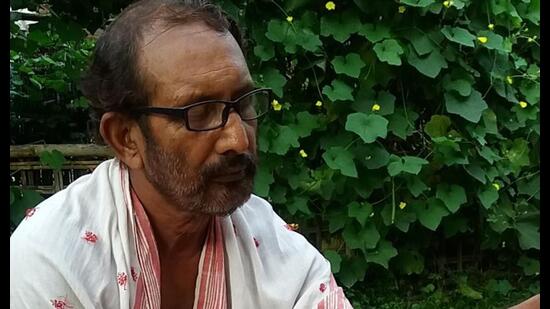
The man responsible for the turnaround is Hem Chandra Goswami, “satradhikar” or religious and administrative head of Samaguri Satra in Majuli, the world’s largest river island.
Satras are seats of neo-Vaishnavite culture and religion in Assam where Sankardev’s teachings and cultural legacy are taught and propagated.
Goswami’s efforts have won him India’s fourth-highest civilian award Padma Shri this year. The two other winners from the state are Hemoprova Chutia for art and Ramkuiwangbe Jene for social work.
Samaguri Satra has been making masks for over 350 years. Goswami learnt the art from his father Rudra Kanta. The tradition died in many other satras.
“Due to its use only in bhaonas and lack of appreciation by the masses, the art of making mukhas was on death bed. We were able to infuse fresh life to it through innovations,” Goswami earlier told HT.
Since the year 2000, the 64-year-old has experimented with several techniques to reduce the weight of the masks so that they are easier to make and comfortable for the actors wearing them.
{{/usCountry}}Since the year 2000, the 64-year-old has experimented with several techniques to reduce the weight of the masks so that they are easier to make and comfortable for the actors wearing them.
{{/usCountry}}The introduction of movable masks made them more expressive. But it was a change audiences welcomed.
Goswami’s masks made with bamboo, cloth and a mixture of cow dung and earth take 4-5 days to complete and weigh around 500 grams. They are much lighter than the earlier wooden and other masks which weighed several kilos.
But the focus still remains on sticking to the traditional aspects associated with the process of making masks. These masks can only be bought at Samaguri Satra to prevent commercialisation.
In 2016, London’s British Museum displayed five of Goswami’s masks from January to August during an exhibition called “Krishna in the Garden of Assam.”