New Delhi: The National Capital Region Transport Corporation (NCRTC) has finally initiated ground work for the proposed Delhi-Panipat-Karnal Namo Bharat corridor, with surveys commencing in Delhi and utility shifting activities beginning in parts of Haryana, officials familiar with the development said on Thursday.
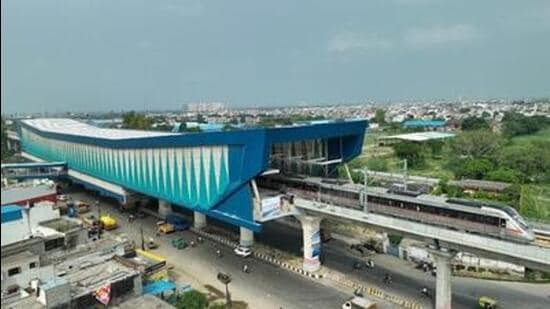
The 136-km high-speed regional transit corridor, forming part of the Regional Rapid Transit System (RRTS) network, is planned to connect Sarai Kale Khan in Delhi with Karnal’s New ISBT in Haryana, covering key urban and industrial centres across the NCR. While around 36 km of the alignment falls in Delhi, nearly 100 km will traverse Haryana.
Officials said that initial groundwork has begun in both states. “Detailed surveys are being carried out in Delhi to identify utilities falling within the proposed alignment. In Haryana, preparatory work, including the shifting of utilities, has already been initiated in select stretches,” a senior NCRTC official said.
To facilitate this, NCRTC has floated a tender for shifting civil utility services along a section of the corridor. The work includes relocating sewer lines, water mains, and stormwater drains, and is to be completed within 12 months, officials added.
According to project details, the corridor will have 17 stations, including six in Delhi and 11 in Haryana, linking areas such as Sonipat, Ganaur, Samalkha, Panipat and Karnal. Two depots are proposed at Murthal and Ganjbar, Panipat, to support train operations.
{{/usCountry}}According to project details, the corridor will have 17 stations, including six in Delhi and 11 in Haryana, linking areas such as Sonipat, Ganaur, Samalkha, Panipat and Karnal. Two depots are proposed at Murthal and Ganjbar, Panipat, to support train operations.
{{/usCountry}}The Delhi-Panipat-Karnal corridor is the third RRTS line being taken up by NCRTC in phase I, after the Delhi-Ghaziabad-Meerut and Delhi-Gurugram-SNB corridors. Once operational, Namo Bharat trains on this route are expected to run at a design speed of 180 kmph and an operational speed of up to 160 kmph.
Commuters are expected to benefit from significantly reduced travel times. The journey from Delhi to Karnal is expected to take around 90 minutes, while the journey from Kashmiri Gate to Panipat may take under an hour. Similarly, travel between Indraprastha and Sonipat is expected to take about 35 minutes, and from Kashmiri Gate to Murthal, around 30 minutes.
Officials said the system is designed for high-frequency regional travel, with trains likely to run every 15 minutes.
“The corridor is being planned to provide fast, reliable and comfortable connectivity for daily commuters, including workers, students and intercity travellers,” the official said.
The alignment passes through several major economic and educational hubs, including Kundli, the Barhi industrial area, Panipat city, and the IOCL refinery, as well as the Sonipat education cluster.
As of now, only the first corridor from Delhi to Meerut via Ghaziabad is operational, while initial groundwork has recently been initiated for the second phase connecting Delhi with Gurugram, Manesar, and Alwar.