
 E-Paper



Ajit Dada leaves lasting impression on city he helped shape over more than 30 years
While Baramati remained the political base that nurtured Pawar’s rise, Pimpri-Chinchwad was the city where his development-driven politics found its most visible expression

 Prefer HTon Google


Maharashtra deputy chief minister Ajit Pawar, who died in a tragic plane crash on Wednesday, leaves behind an indelible imprint on Pimpri-Chinchwad—one of the state’s most prominent industrial and urban centres that he helped shape over more than three decades of public life.
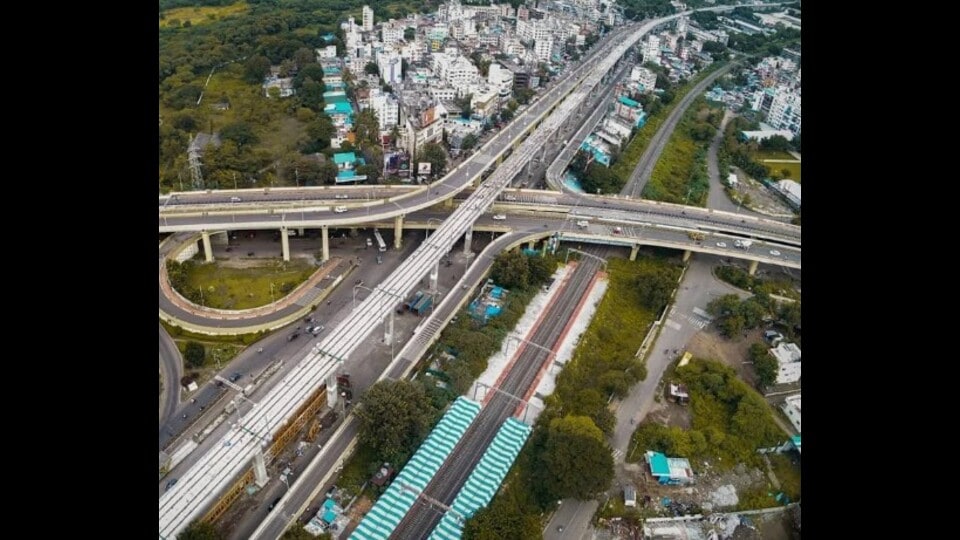
While Baramati remained the political base that nurtured Pawar’s rise, Pimpri-Chinchwad was the city where his development-driven politics found its most visible expression. Once known largely as an industrial estate with limited civic amenities, the twin city underwent a steady transformation under Pawar’s influence, particularly during periods when he held key portfolios in the state government and exercised authority over the Pimpri-Chinchwad Municipal Corporation (PCMC).
For years, Pimpri-Chinchwad’s poor roads, limited water supply, absence of flyovers, insufficient healthcare facilities and fewer educational institutions forced many residents to live in Pune while working or running businesses in the twin city. After becoming a member of Parliament (MP) in 1991 and later assuming senior ministerial roles, Pawar identified this imbalance as a major urban challenge and pushed for sustained public investment to make Pimpri-Chinchwad liveable and self-sufficient.
Former mayor Yogesh Behl, who is the city president of the Nationalist Congress Party (Ajit Pawar faction) and has been associated with Ajit Pawar since 1991, said Pawar’s decisions laid the foundation for Pimpri-Chinchwad’s long-term urban growth. Nearly two decades ago, Pawar took the crucial decision to widen the old Mumbai-Pune road from Bhakti Shakti Chowk to Dapodi. The 12.5-km stretch was expanded to a width of 61 metres; a move that significantly improved traffic flow and ensured that the arterial road remains congestion-free, even today. With the twin city’s population steadily rising, Pawar planned water supply in a phased manner wherein under phase 1 and 2, major investments were made in water tanks and pipeline infrastructure to meet future demand. Between 2005 and 2012, Pawar secured ₹2,500 crore for Pimpri-Chinchwad under the Jawaharlal Nehru National Urban Renewal Mission (JNNURM) which was utilised for a wide range of civic projects, including water supply, sewerage, drainage, road development, flyovers, slum rehabilitation, waste-to-energy projects and e-governance initiatives. “These development works transformed Pimpri-Chinchwad and helped the city win the ‘Best City’ award in 2012,” said Behl. Pawar played a key role in getting approval for water supply from the Andra dam in 2004 and later from the Bhama Askhed dam in 2014, both when he served as irrigation minister and as deputy chief minister, ensuring long-term water security for the city. In addition, several landmark projects such as the auto cluster, science park, economically weaker section (EWS) housing, Otta scheme houses, flyovers and civic infrastructure were developed during this period, strengthening Pimpri-Chinchwad’s position as a major industrial and urban hub, Behl said. “We have lost a visionary leader and a committed public representative. Ajit Pawar believed in beginning work early and always being ahead of time. He consistently thought 20 to 25 years into the future, with a strong focus on quality, discipline and hygiene. His passing is an irreparable loss to the state,” Behl said.
According to officials, when the Nationalist Congress Party (NCP) was in power in the PCMC between 1992 and 2017, large-scale development works were undertaken under Pawar’s guidance without resorting to loans or accumulating debt—an achievement Pawar often cited as a model for urban governance. The Pimpri-Chinchwad metro project was approved and extended up to Nigdi with an additional station added later. The Pimpri-Chinchwad police Commissionerate was also approved during Pawar’s tenure as deputy chief minister. Perhaps the most transformative decision associated with Pawar’s leadership was facilitating the development of the Hinjewadi IT Park. With support from Sharad Pawar, the then president of the undivided NCP, what began as a planned IT zone evolved into a major technology hub, generating employment for lakhs of professionals and fundamentally altering the economic profile of Pimpri-Chinchwad.
Politically, PCMC was long regarded as an NCP stronghold, with Ajit Pawar exercising direct and indirect influence over funding decisions, administrative approvals and major civic projects. Several corporators, mayors and local leaders rose under his mentorship, shaping the city’s political trajectory for years. But his efforts to reassert dominance in the city faced a setback in the 2026 civic elections, when the Bharatiya Janata Party emerged as the single largest party with 84 seats. The NCP led by Ajit Pawar won 37 seats—only one more than its tally in 2017—while the Congress, Shiv Sena (UBT) and Maharashtra Navnirman Sena failed to open their account.
BJP MLA from Chinchwad, Shankar Jagtap, said that Ajit Pawar shared a long and continuous bond with the city. “From 1992 till today, Ajit Dada had a deep association with Pimpri-Chinchwad. It would not be wrong to say that he was the true architect of the city’s foundation, progress and development,” Jagtap said. Shankar Jagtap recalled that his elder brother, late MLA Laxmanbhau Jagtap, worked closely with Pawar for nearly three decades. “Both worked tirelessly to transform Pimpri-Chinchwad. The void created by their passing is deeply painful,” he said. Shankar Jagtap added that leaders like Pawar—decisive and action-oriented—are rare. “A leader like him cannot be replaced. Every worker, leader and office-bearer in this city shared a personal bond with him. He worked with everyone, setting aside political differences. The void created by his departure can never be filled,” Shankar Jagtap said.
BJP MLA from Bhosari, Mahesh Landge, described Pawar’s death as ‘deeply shocking and heartbreaking’. “Ajit Dada was a dynamic leader with an extraordinary capacity for work. With his passing, the state has lost a resolute and people-oriented leader who began addressing public issues as early as six in the morning,” Landge said.
Despite shifting political equations, Ajit Pawar’s imprint on Pimpri-Chinchwad’s growth remains unmistakable. From an industrial township dependent on Pune, the city evolved into a major urban and employment hub under his leadership, leaving behind a legacy that continues to shape its present and future.


