
 E-Paper



Dependence on water tankers rises sharply as supply gaps widen across Pune
The data suggest that reliance on tankers is no longer confined to peak-summer shortages but has become a year-round necessity

 Prefer HTon Google


PUNE: Pune city’s dependence on water tankers is rising sharply, with data from the Pune Municipal Corporation (PMC) showing a steady increase in tanker trips over the past three years, driven by population growth, uneven water supply and rapid expansion on the city’s outskirts.
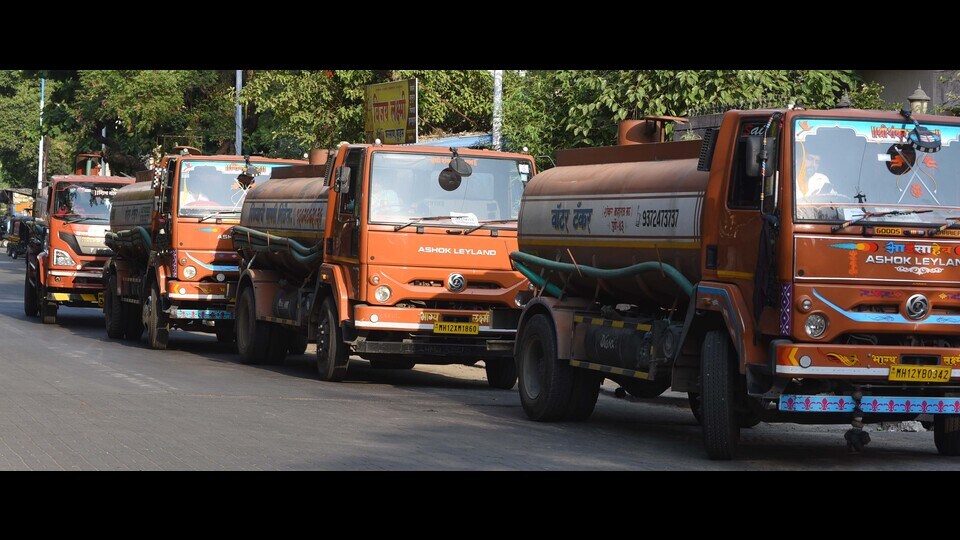
PMC records show that total tanker trips across the city climbed from 4,00,348 in 2023–24 to 4,89,202 in 2024–25, and then rose by nearly 6% to 5,17,422 in 2025–26. The trend points to mounting pressure on the city’s water distribution system.
The data suggest that reliance on tankers is no longer confined to peak-summer shortages but has become a year-round necessity in several fast-growing areas where infrastructure has lagged behind development.
Nandkishore Jagtap, chief engineer of the PMC water supply department, attributed the increase partly to population growth and rising demand in newly developed areas.
“A slight increase is normal due to population growth. Also, for some time, there was no elected political body in the corporation, and now there is greater pressure to provide tanker supply in areas where regular water connections are inadequate,” he said.
Officials said demand is likely to keep rising unless major upgrades are made to the water distribution network.
Tanker demand peaks between March and May, when reservoir levels drop, and consumption rises. In 2025–26, March alone saw 58,345 trips, the highest monthly figure in the past three years.
Private contractors dominate the system, accounting for over 80% of tanker trips annually. A sharp increase has also been recorded in “on-call” deployments, emergency tankers hired when routine supply falls short. In 2025–26, PMC logged 49,645 such trips, indicating that existing fleet capacity and contracted supply are struggling to meet demand.
Private tanker operator Sushant Lonkar said demand spikes immediately when civic supply dips.
“When PMC water supply decreases, demand for private tankers rises sharply. Many areas now depend heavily on tankers during shortages,” he said.
While PMC-operated tanker trips rose marginally from about 27,000 to 32,000 over three years, the increase has not kept pace with overall demand, deepening reliance on private operators.
Peripheral and rapidly developing areas, including Undri, Pisoli, Mohammedwadi, Bavdhan, Sus, Narhe, Ambegaon, Dhayari, Wagholi and parts of Kharadi, remain heavily tanker-dependent due to inadequate pipelines and inconsistent municipal supply.
Residents say this dependence has become routine. Sunil Aiyer, a resident of Undri, said most housing societies rely on private tankers year-round. “Most of our water supply comes from private tankers. After the recent tanker strike, operators have also demanded nearly a 35% increase in rates, which will further burden residents,” he said.
Experts warn the situation could worsen if weather conditions deteriorate. The possible emergence of El Niño has raised concerns about deficient rainfall and higher temperatures, which could intensify water stress and further increase tanker demand in Pune and surrounding areas.


