What goes up, must come down and find a new way up again …
I love innovation. I really do. But let me start at the beginning. The Sensex is up. Barely. It’s been down mostly the last few days. Or rather it’s been down, down, down, up and down, down and up.
Meanwhile, Nimbu (lemon) is up. As are prices of Mirchi (chilli). And other foods and vegetables. Those who have invested in organic vegetable farms might want to consider a little patch of Nimbu and Mirchi. Am also thinking the stock exchanges should add Nimbu to the 30 scrip Sensex and maybe the stocks would perk up.
Meanwhile, crude oil prices are up, up and away. Inflation is up as well. As is the average temperature in Pune - it’s just too hot. New Covid cases are up marginally while virus vigilance is down significantly, which may lead to more cases. Electric cars design and production is all set to rise. I wonder if that will have an impact on electricity prices in the not-too-distant future? Hmm?
We’ll just have to wait and see.
{{/usCountry}}We’ll just have to wait and see.
{{/usCountry}}Does all this affect me? Of course, it does puts all household and business budgeting out of whack.
What we can see right now is a whole lot of change, transformation, work in progress as far as the local, regional and national economy is concerned. Infrastructure is being built, governance is moving towards governance rather than control, prices are moving towards market dynamics (away from government control) and private and public organisations are scrambling to come to terms with professionalism, performance and predictive results and related accountability rather than the previous decades of “it’ll-get-done when it gets done, meanwhile pay-me-xyz-if-you-want-it-faster” culture.
The metro work in Baner is a classic example. They are working day and night. I mean really. Yes, it disturbs sleep, yes it necessitates closed doors and windows, but work is moving rapidly forward and the whole spectacle is fascinating me.
As all of us come to grips with city, state, and nation building, it is important for me to keep in mind that politics is for politicians, just as business is for business people. It is also good to remind myself to focus on what it is that I am doing and how well I am doing it, without getting swept away by rhetoric from leaders and visionaries and seers.
Because if everyone is envisioning and innovating and imagining and dreaming and ... who the heck is working to get anything done?
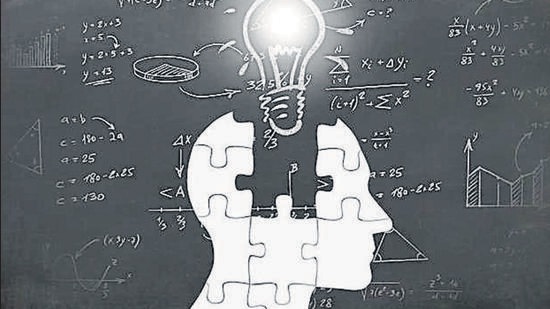
Allow me to declare: I do not innovate. In fact, I do not believe one can innovate if all one is doing is innovating.
Innovation started appearing in earnest in the media few years ago. And now, there are titles, teams, departments - business units even - that carry the tag of ‘Innovation’.
And, I have duly respected and read and watched and listened to and interacted with and tried to learn from the sundry innovators that have suddenly sprung up. A very, very, very few (government, people and companies) are truly innovating and making a big difference to the world around them.
Here’s what I have learned about the rest of the Innovation industry.
For the masses, it’s an aspirational buzzword, something to aspire for and be in awe of. For managers, it is a new instrument to use in everyday language to give the impression that they know what they are doing. For people in leadership positions, it is a new strategic communication tool that will solve all problems, bridge all gaps such that their organisations will - magically - be transformed overnight into an efficient, intelligent, coherent being.
And that’s the good way it is being used.
For the people and companies who are bad at what they do, innovation is a word that directly translates into ‘cheap, low cost, no budget or zero budget’ ways of getting things done and therefore, delivering ‘results’.
There is one clear class of winners in the ‘innovation’ industry - the evangelisers, (speakers, motivators, communicators, planners, advisors, consultants) who are creating more and more new levels of interpretations, theory and processes around innovative ways of innovating.
Meanwhile, work goes on as usual for most of humanity, the common human being (men and women, girls and boys from all walks of life), people like me - people who have no historical proof of anything in life changing without the discipline of a daily grind. It is obvious to me that I don’t have the intellectual or technological chops to cash in my chips on the innovation wave. And am not a bold enough dreamer to take that leap of faith into abandoning hard work for innovation at every step.
And that’s the thing with innovation. It holds a tantalising promise to people tired of the grind, a promise that the world is only green on the innovation side. And I see scores of people talking the lingo, brainstorming, talking, meeting, brainstorming, ideating ... and then coming back to people who work hard, asking them to work harder for longer and for less. What happens to all those ideas and new ways of learning and doing from all those meetings? I guess I know - they provide the data dump for Big Data platforms.
So, here’s what I have historical proof of: ideas are cheap. Anyone can come up with a dozen every minute. But fleshing out one idea requires a grind, and assuming it has some coherent shape, it has to be tested and then tried and then ... meanwhile its introduction into an environment has already changed the environment and now three environments have to be monitored and studied - original, new and the in-transition-hybrid environments.
And that’s how AI came into being ... to do the hard thinking on a million small matters on a daily basis. And the drive to go AI on everything hasn’t even started. We are still flying social on everything and we haven’t yet started paying the price of going social ... that’s because the real price will be paid by our children, the future generations.
That’s why the pace of the metro is fascinating. That’s why the price rises and falls are also fascinating. Price stability in market often means someone somewhere is hiding something, controlling something, subsidising something with taxpayer money or there is a vested interest at play behind the scenes. It does not necessarily mean stability in an economy but an artificial security blanket, populism in policy for the educated while millions of people continue to live in and die of hunger, malnutrition or some other man-made problem that man-made innovation cannot solve.
That’s why I prefer the kind of governance we are experiencing these past few years in India - a strong, innovative central government driving economy, infrastructure, social and political reforms and a vigilant state government that is prioritising regional development in collaboration with the Centre and local administration. The government understands the need to align AI, governance, business, private, public, finance et al so that common people can focus on their own work and progress (from surviving to living, from living to growing, from growing to thriving and so on).
Governments should continuously innovate because nations and economies are dynamic entities that have to evolve as the world evolves. Government innovation is what enables businesses and people to focus on their work to realise their potential. Prices that go up, will also come down if we are patient and stay the course.
I am now working with a smile thinking of the day when I can ride the metro right outside my house. It’s worth the trouble.
Mukherjee, author, learning-tech designer and management consultant, is founder of Mountain Walker and chief strategy advisor, Peak Pacific. He can be reached at thebengali@icloud.com