PUNE: The Indian Institute of Science Education and Research (IISER), Pune on Sunday withdrew a book based on the doctoral thesis of former Jawaharlal Nehru University (JNU) scholar and activist Umar Khalid after its inclusion in the library sparked criticism on social media.
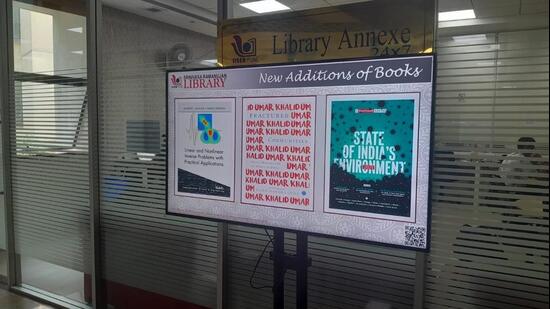
“Fractured Communities: Adivasi Histories and the Politics of Power”, based on Khalid’s 2018 doctoral thesis, was among the new acquisitions displayed on a digital screen in the institute’s library on Saturday. A photograph of the display circulated widely online, with several users questioning why a central government-funded science institute had acquired a book by Khalid.
In a statement issued on Monday, the institute said library acquisitions are based on recommendations from its members and overseen by a dedicated committee, with over 50 books across disciplines added each month. The book had been withdrawn as a precaution to avoid “any misunderstanding or unrest”.
The move followed social media posts questioning the book’s relevance to a science-focused institution and raising concerns over the use of public funds. Some posts contrasted Khalid with former President and scientist APJ Abdul Kalam.
Madabhushi Madan Gopal, a member of IISER Pune’s Board of Governors (BoG), said the matter had been addressed promptly. In a post on X on Sunday, he said the book had been retracted and action initiated against those responsible for what he described as “mischief”. He added that the institute’s director, Prof Sunil Bhagwat, had taken immediate steps to address the matter.
{{/usCountry}}Madabhushi Madan Gopal, a member of IISER Pune’s Board of Governors (BoG), said the matter had been addressed promptly. In a post on X on Sunday, he said the book had been retracted and action initiated against those responsible for what he described as “mischief”. He added that the institute’s director, Prof Sunil Bhagwat, had taken immediate steps to address the matter.
{{/usCountry}}Historian Ramachandra Guha, who wrote the foreword to the book, criticised the withdrawal. “It is deeply disappointing that the institute chose to withdraw the book simply because it attracted criticism on social media,” he said.
An institution dedicated to science and research, Guha said, should uphold academic freedom and intellectual openness rather than succumb to social media pressure.
Khalid came into national prominence during protests against the Citizenship (Amendment) Act (CAA) and the proposed National Register of Citizens (NRC). He was subsequently arrested in connection with the alleged conspiracy behind the 2020 Delhi riots.
The book examines Adivasi histories and power dynamics in India, focusing on tribal communities’ experiences of displacement, dispossession, exclusion, land and identity.