
 E-Paper



Kirloskar Vasundhara flags off student mission at Sant Tukaram School Pashan
The mission’s aim is to restore the Ram Nadi, nearest to its former state of continuous pure flow, and to bring back the glory of this small and once beautiful river

 Prefer HTon Google


The Kirloskar Vasundhara Ramnadhi Restoration Foundation on Thursday flagged off its one-year student mission at the Sant Tukaram School Pashan as part of its Ram Nadi restoration mission. In the introductory session on Thursday, students were briefed about the Ram Nadi, its origins, the importance of caring for it, and what they and the foundation would be doing together in the coming year.
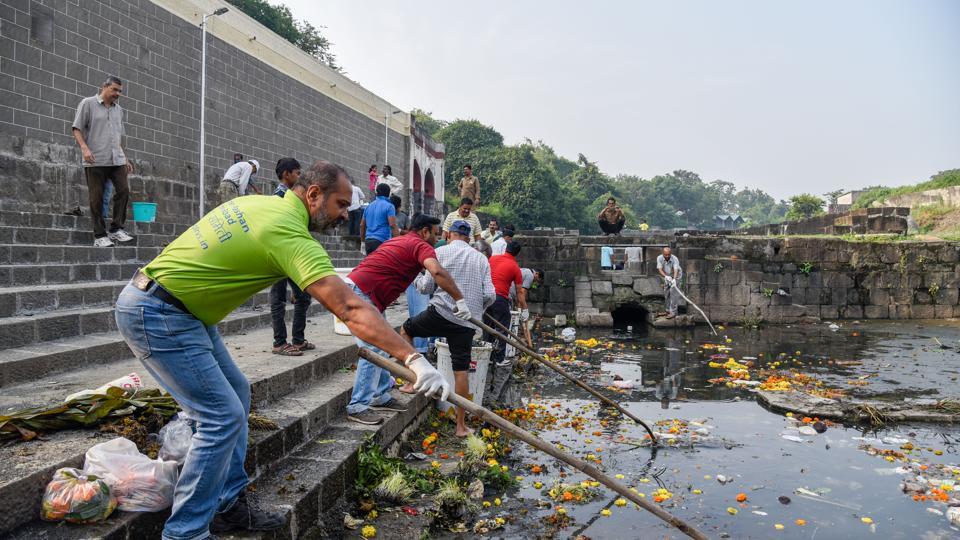
The mission is an initiative by Kirloskar Vasundhara along with 12 other environmental organisations. Kirloskar Vasundhara began work in 2019 and in 2020, it began its student mission. Under its student mission, Kirloskar Vasundhara has incorporated 33 colleges, 25 schools, 100 environmental experts, local politicians and other residents. The organisation’s website defines the aim of the mission as: “The mission’s aim is to restore the Ram Nadi, nearest to its former state of continuous pure flow, and to bring back the glory of this small and once beautiful river.”
An official on condition of anonymity said, “The 19.20 km long river has been divided into nine stretches of around 2 km each. And each stretch has been allotted three colleges. For 2022-2023, we have created a 40-point programme for the children. It includes: cleaning the water body; natural farming; workshops on filmmaking; and competitions like elocution, photography and painting. After Diwali, they will have essay writing and the treasure-from-track competition. In this competition, students will be encouraged to create artefacts from garbage they retrieve from in and around the Ram Nadi. For natural farming lessons, the school authorities will be requested for some land near their schools.”
“In the second stage of the mission namely ‘Ram Nadi Parikrama’, students will visit the river. This will help them later when they are taught to make films on the ailing river. Finally in January or February, there will be a three-day ‘Green Fest’ wherein the films, plays, skits and other things produced by the students will be screened. And the artefacts they create for the treasure-from-track competition will be exhibited. On the last day, they will have a valedictory ceremony,” the official said.
Virendra Chitrav, coordinator of the mission, said, “We believe that school children are the strongest catalyst between the Ram Nadi restoration mission and the society. In our initiative, we have adopted 1.5 lakh students. When we teach them, they in turn educate their families about the cause.”
“One of the programmes is ‘cleaning from home’. This means encouraging the children to shift to sustainable practices that do the least harm to nature. It could be educating them on alternatives to normal toothpastes, soaps or detergents. During Covid-19, we painted about the sad reality and what our mission was doing on the walls of the schools. We did six to seven paintings in each school,” said Chitrav.
Jayashree Hande, who teaches at Sant Tukaram Primary School, said, “Today’s introductory programme was really informative. Even though most students are from near the Ram Nadi , they don’t know much about the river. Anil Gaikwad, who is the coordinator of this event, is very familiar with the kids here. Before the lockdowns, he coordinated with us for cleaning the banks of the river.”
The mission has already accomplished tasks such as setting up of Pune’s first lotus lake at the Khatpewadi lake, reed bed near the Someshwarwadi temple in Pashan and so on. The Ram Nadi begins in the Sahyadris and flows through Bhukum, Bhugaon, Bavdhan, Pashan, Aundh and Baner before joining the Mula river in Pune. “There are almost 4 lakh citizens living around the river. And it is also the Khatpewadi lake, Manas lake and Pashan lake. We intend to influence them to protect the Ram Nadi . Next year, 15 schools from the zilla parishad will also be added to the plan,” said Chitrav.


