In a first-of-its-kind initiative in India, the National Centre for Radio Astrophysics (NCRA) is repurposing decommissioned satellite communication antennas to strengthen the capabilities of the Giant Metrewave Radio Telescope (GMRT).
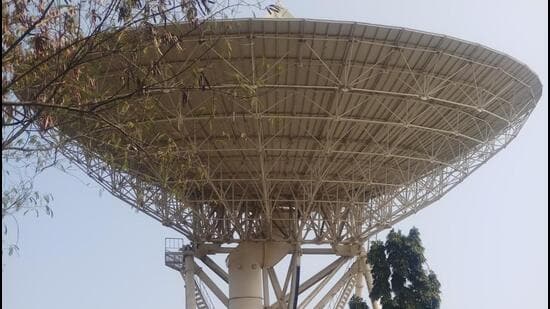
The antennas, earlier used by Bharat Sanchar Nigam Limited (formerly Videsh Sanchar Nigam Limited), are located near Arvi on the Narayangaon-Junnar route. They were once part of India’s international satellite communication network but became obsolete following the shift to optical fibre technology. Recognising their potential, the NCRA began the process of acquiring and relocating them a few months ago.
The facility originally had three large antennas — two with a diameter of 32 metres each, and one measuring 18 metres. However, only two were found suitable for reuse as the oldest had deteriorated and was dismantled earlier. One of the remaining antennas has already been dismantled and moved to the GMRT site where groundwork for installation has begun. The second is under consideration, with discussions underway with Tata Communications which now manages the site.
The project has received approvals and funding from the central government; and tendering and civil work planning are underway.
{{/usCountry}}The project has received approvals and funding from the central government; and tendering and civil work planning are underway.
{{/usCountry}}NCRA director professor Yashwant Gupta said that the antennas will allow observations at frequencies of up to around 10 GHz, going beyond GMRT’s current range. “This adds a completely new capability. Their solid surface design offers much higher precision compared to the mesh dishes currently in use, opening up new areas of research,” he said.
“Building new antennas of this size would cost eight to ten times more. By reusing existing structures, we are saving resources and speeding up development,” Gupta said, adding that the antennas have been acquired at minimal cost with expenses limited to dismantling, transport and installation.
The process however is technically complex. “Reinstalling such large antennas requires high precision and careful planning, but the scientific benefits make it worthwhile,” he said.
Once operational, the antennas are expected to significantly enhance GMRT’s capabilities, especially for high-frequency studies. Scientists estimate that the first unit could become functional within the next two years, marking a major step in using old communication infrastructure for advanced Space research.