In a bid to strengthen public transport connectivity in Pune’s congested urban areas, the Pune Mahanagar Parivahan Mahamandal Limited (PMPML) has submitted a proposal to the central government for 500 new midi buses through union minister of state for civil aviation and Pune MP Murlidhar Mohol. The proposed buses are expected to be particularly useful on narrow roads, internal city routes, and in densely populated localities where operating larger buses can be challenging. The proposal seeks to expand PMPML’s capacity to serve areas with high passenger demand and improve access to public transport within the city.
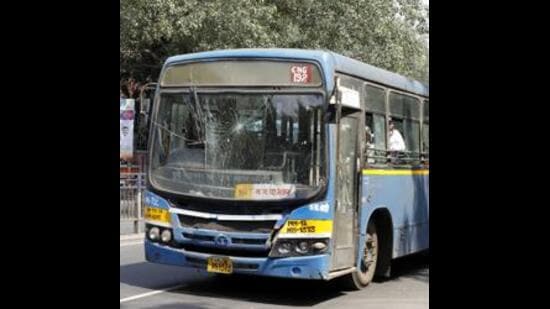
Midi buses, which are smaller than conventional full-size buses, offer greater operational flexibility on routes with limited road space and heavy traffic. Their introduction could help the PMPML connect residential neighbourhoods to major roads, commercial centres, educational institutions and other important destinations. The smaller vehicles could also be deployed on routes where passenger demand and road conditions make larger buses less suitable, allowing the transport undertaking to plan services according to local requirements.
PMPML chairman and managing director (CMD) Mahesh Awhad highlighted the need for smaller buses to improve public transport access in Pune’s older and congested localities. Explaining the rationale behind introducing mini and midi buses, Awhad said that many parts of the city have narrow roads that restrict the movement of standard-sized buses. Smaller buses can help the PMPML cover more internal roads, improve connectivity in densely populated neighbourhoods, and strengthen last-mile services for commuters.
“A large portion of Pune’s older localities has narrow roads where standard buses face serious movement constraints. To address this, the PMPML is actively evaluating the introduction of smaller buses, including mini and midi variants such as 14 to 17-seater buses that will significantly improve accessibility, allow better route coverage in congested areas, and strengthen last-mile connectivity for passengers,” Awhad said.
{{/usCountry}}“A large portion of Pune’s older localities has narrow roads where standard buses face serious movement constraints. To address this, the PMPML is actively evaluating the introduction of smaller buses, including mini and midi variants such as 14 to 17-seater buses that will significantly improve accessibility, allow better route coverage in congested areas, and strengthen last-mile connectivity for passengers,” Awhad said.
{{/usCountry}}The proposal has been routed through Mohol to the central government for consideration. The PMPML currently operates a fleet of around 1,958 buses and has outlined a broader expansion plan targeting 4,647 buses by 2028. Under this plan, the organisation aims to add 1,000 new CNG buses by December 2026, followed by 700 electric buses in 2027, and another 300 electric buses by March 2028. The proposed 500 midi buses form a separate proposal, approval and implementation of which will determine how these buses fit into the overall fleet expansion programme. Alongside fleet expansion, the PMPML is developing supporting infrastructure for electric mobility, including charging stations, depots and parking facilities. Officials have indicated that key infrastructure requirements are targeted for completion by December 2026 to support large-scale electric bus operations across Pune and Pimpri-Chinchwad. The proposed midi buses could complement the larger fleet by providing a more suitable option for specific city routes, while CNG and electric buses would add capacity across the wider transport network.