Revised autorickshaw fares have come into effect across Pune and Pimpri-Chinchwad from Tuesday, with the minimum fare for the first 1.5 km increasing from the previous ₹25 to ₹30 and the fare for every additional kilometre rising from the earlier ₹17 to ₹20. The fare revision, approved by the Regional Transport Authority (RTA) after autorickshaw operators raised concerns over increasing operational costs, is expected to provide some relief to autorickshaw drivers while raising the daily commuting expenses of passengers.
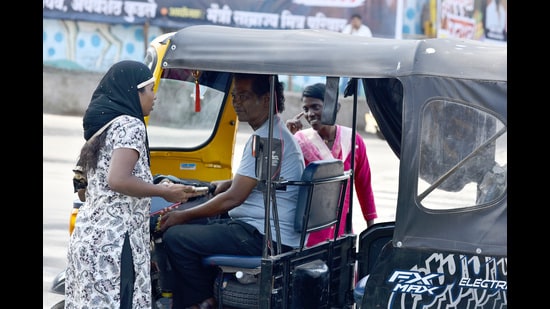
With the new fares coming into force, the Pune Regional Transport Office (RTO) has started monitoring the process of updating and calibrating autorickshaw meters. Drivers have been given six months to complete the calibration process during which time, the official tariff card issued by the RTO will be important for determining the revised fare in cases where the meter has not yet been updated. According to RTO officials, a period of six months has been provided to allow the large number of autorickshaws operating in Pune and Pimpri-Chinchwad to complete the process of meter recalibration without creating unnecessary disruption.
Pune deputy regional transport officer Swapnil Bhosale said that the meter calibration process will begin from Tuesday and continue for the next six months. “From today onwards, the calibration of autorickshaw meters should be carried out over the next six months. We will be monitoring the process and conducting random checks across Pune city to ensure that the revised fares are being implemented properly. Our teams will check whether the meters have been calibrated and whether passengers are being charged according to the approved fare structure. The purpose of the checks is to ensure compliance and prevent passengers from being overcharged during the transition period,” Bhosale said.
The RTO’s random checks are expected to play a key role during the six-month transition period. Officials will monitor whether drivers are following the approved tariffs, displaying the required fare information, and completing meter calibration within the stipulated period. The authorities are also expected to focus on complaints related to overcharging, refusal of fares, and discrepancies between fares shown meters and the revised tariffs. The aim is to ensure uniform implementation of the revised fares while protecting passengers from arbitrary fare demands.
{{/usCountry}}The RTO’s random checks are expected to play a key role during the six-month transition period. Officials will monitor whether drivers are following the approved tariffs, displaying the required fare information, and completing meter calibration within the stipulated period. The authorities are also expected to focus on complaints related to overcharging, refusal of fares, and discrepancies between fares shown meters and the revised tariffs. The aim is to ensure uniform implementation of the revised fares while protecting passengers from arbitrary fare demands.
{{/usCountry}}Autorickshaw drivers have welcomed the fare revision, saying that the increase in fares is necessary considering the rise in operating expenses. “The fare has not been revised for several years while the cost of CNG, servicing and spare parts; and other expenses have increased. The new rates will give us some relief. We will also have to get our meters calibrated within the given period so that passengers and drivers do not face confusion,” said Kishore Gaikwad, an autorickshaw driver operating in Pune.
Another driver Bappu Karve said that the revised fare will help offset the rising cost of running an autorickshaw but stressed that the calibration process should be completed smoothly. “We have been demanding a fare revision because our daily expenses have gone up considerably. The increase in the minimum fare and per-kilometre rate is helpful, but the RTO should ensure that calibration centres are easily accessible and that drivers can complete the process without unnecessary delays,” he said.
However, passengers said that the fare hike will add to their daily commuting expenses, especially for those who regularly depend on autorickshaws for short-distance travel. “The increase from ₹25 to ₹30 may appear small for one journey but for people who use autorickshaws every day, the additional expense will add up over the month. The RTO should ensure that drivers charge only the approved fare and that random checks are carried out effectively,” said Shailesh Kshirsagar, a Pune resident.