The 18th century will be remembered in history as century of Maratha confederacy where almost two third of Hindostan was under direct or indirect control of Marathas.
During ascendancy of Madhavrao, the Peshwa treasury was debt ridden and losses during Panipat had weakened and depleted the army and military resources. Madhavrao I, the young Peshwa, in no time enforced strict discipline and accountability in management of the state affairs. The corrupt and non-performing officers were reprimanded and punished if the performance was poor. Madhavrao I himself was a man of great character and did not overindulge in luxuries offered by his Peshwa position. He was pious at heart, ardent Ganesha worshipper and spent his time in charity and prayers. His strict and ethical behaviour was feared by many, especially the servants at Shaniwarwada!
He made sure that the revenue collection was maximised and efficient through stricter administrative control. It was ensured that the revenue was channelised for activities related to people’s welfare. Military powers were further strengthened by addition of ungraded artillery and recruitment of able cavalry. His strategic vision and command of various Maratha sardars such as Patwardhans, Phadke, Pethe, Panse and Holkars Scindia and Gaikwead led to massive expansion of Maratha territory and gain of new territory beyond Panipat.
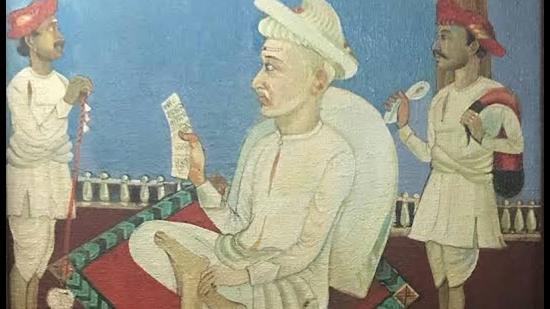
Madhavrao found a great ally in Ram Shastri Prabhine who was apex judge of Maratha empire. Ramshastri hailed from a small village of Mahuli in Satara and had humble beginning. During childhood as he worked as “water-carrier boy” at a Brahmin’s household, he was insulted for coveting the “Bhikbali” ear ornament of head of the house. Enraged with the insult and embarassment, Ramshastri decided to seek the highest scholarship which would gain him recognition in society. He went on to study at Kashi in the North and within no time achieved the great scholarship through learning of Vedas and Dharmashastras. His talent was recognised by Nanasaheb Peshwa in 1751 and quickly rose to the post of judge by 1759 through display of intellect, unimpeachable character and wisdom in granting justice.
When appointed to the post of chief justice, he had taken written assurance from Nana Phadnavis (finance and home minister for Peshwas) and Sakharam Bapu Bokil (a senior minister and diplomat) that there would be no interference from then in running of judiciary affairs. He had, at times, reminded young Madhavrao Peshwa of his responsibility towards welfare of people and state affairs. His integrity and scrupulous conduct established hold over ailing Maratha judiciary system, bringing respite to masses.
{{/usCountry}}When appointed to the post of chief justice, he had taken written assurance from Nana Phadnavis (finance and home minister for Peshwas) and Sakharam Bapu Bokil (a senior minister and diplomat) that there would be no interference from then in running of judiciary affairs. He had, at times, reminded young Madhavrao Peshwa of his responsibility towards welfare of people and state affairs. His integrity and scrupulous conduct established hold over ailing Maratha judiciary system, bringing respite to masses.
{{/usCountry}}Raghunathrao Peshwa, younger brother of Nanasaheb and uncle of Madhavrao, was appointed as regent when Madhavrao was appointed to hold Peshwa office. Raghobadada was a great commander who proved his mantle during Nanasaheb’s reign and had achieved astonishing success. His ambitions of higher power and authority were, however, squashed with Madhavrao’s appointment. Thus, since early days of Madhavrao’s tenure, Raghobadada’s distrustful actions during military campaigns of Marathas turned out to be in direct conflict with Madhavrao’s plans. Raghobadada’s men waged war in Maratha territories and started harassing and looting masses. Madhavrao attempted making peace with uncle Raghunathrao, but was betrayed and defeated by treacherous tactics of Raghobadada. Raghobadada made Sakharam Bapu Bokil his ally and started influencing decision of Peshwa courts.
Angered with the repeated attempts of Raghobadada to overthrow and murder him, Madhavrao finally waged a war against him and put him under house arrest at Shaniwarwada on June 10, 1768 along with Sakharam Bapu.
Madhavrao Peshwa later led a united front of Maratha Sardars to north and employed clever diplomatic tactics to finally resurrect the Maratha empire by establishing hold over Delhi.
However, Madhavrao was infected with tuberculosis around 1770s and within two years, it brought an unfortunate end of young Peshwa. Nearing his end, Madhavrao released Raghobadada and made him take vow in front of Peshwa family deities to protect and look after younger brother Narayanrao Peshwa. Seventeen-year-old, Narayanrao (younger brother of Madhavrao and third son of Nanasaheb) was appointed as next Peshwa and once again, the Peshwa position eluded Raghoba. Released from prison and appointed as regent, Raghobadada’s ambitions could not be satiated and he began plotting against naive Narayanrao.
Narayanrao in his time tried emulating his brother Madhavrao, adopted stringent measures against uncle Raghunathrao and put him under informal house arrest at Shaniwarwada. This further infuriated Raghobadada whose rebellious and intentions knew no bounds. Naive Narayanrao, however, was unaware of conspiracy Raghobadada had been hatching with aid of Sumer Singh Gardi. Sumersingh was promised charge of three forts and 10 lakh rupees in return of catching the young Peshwa.
On the fateful day of August 30, 1773, ten-month-old Peshwa, visited Parvati hill as part of his daily ritual and stopped by maternal uncle’s mansion Sardar Raste to discuss administrative affairs. Planning to solve payment related disputes after the lunch, Narayanrao went to Shaniwarwada to have food and quick nap.
Sumer Singh and Muhammad Isaf made their way to Peshwa’s private chambers, killing the servants and placing their own soldiers in the chambers. Hearing commotion, Narayanrao woke up and on enquiry, his servant informed him of the squirmish outside. Narayanrao went first to Parvatibai who advised him to hide. But, Narayanrao wishing to defend himself, started making his way towards Devghar where Raghunathrao was performing prayers. He sought refuge with uncle and pleaded “ Uncle save me, Uncle, save me!”
Raghobadada took pity on him and asked Sumer Singh to spare his life and capture him. But Sumer Singh refuse to follow his order point blank, fearing punishment and killed young Peshwa, ruthlessly. The legend goes that the content of letter send to Sumer Singh had been modified from “capturing Peshwa” to “killing Peshwa”! Legends blame this act on Anandibai, wife of Raghoba, who exercised great control over Raghoba.
This horrific act at the heart of royal mansion, Shaniwarwada, send chills all across entire Maratha empire. It is said that Narayanrao’s dead body was cut into pieces and cremated on the river bank. Raghunathrao tried to take over the power, but Chhatrapati refused to acknowledge his claim. It was the band of able ministers, “Barbhai” under leadership of Nana Phadnavis who saw that the perpetrators were punished and their properties were confiscated. The chief justice, Ramshastri Prabhune passed the most crucial judgement of punishing this heinous act with death sentence to Raghunathrao Peshwa and those involved.
Raghunathrao fled Pune, was captured by “Barbhai” and kept under house arrest along with his wife Anandibai till his last days. This horrific incidence casted a long shadow on future of Maratha empire leading to political debacles on top positions within empire.
The city lore claims that the Narayanrao’s ghost wanders the ruins of Shaniwarwada to present day calling out “Uncle, save me!”
Saili Palande-Datar is an indologist, environmentalist, history researcher and farmer. She can be reached @ sailikdatar@gmail.com